
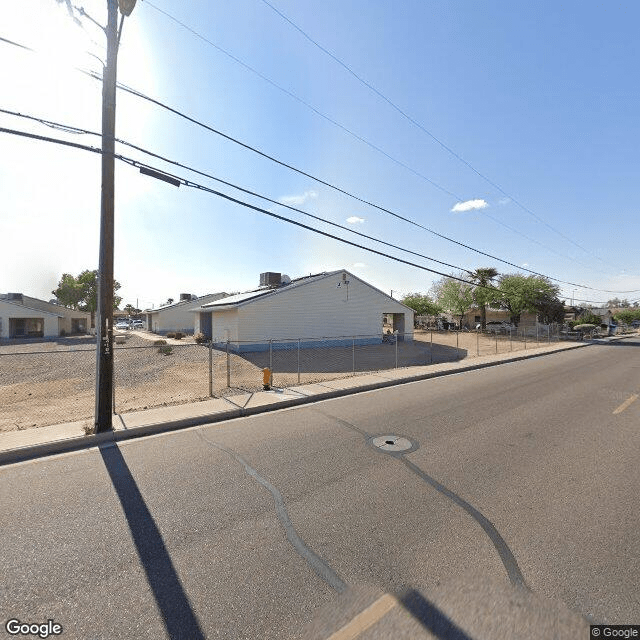
750 S 4th St, Avondale, AZ 85323
To contact a resident: (623) 932-2036
For more information about senior living options: (866) 208-4318
Overall Review of Vianney Villas Apartments
Pros
 The property manager demonstrated dedicated care and involvement in the community.
- She was always looking for donations or free services for residents and the broader community she managed.
- It was comforting to know someone cared about the residents and showed love and commitment through her time and energy.
- She was a great cook who prepared meals for many residents and handled cleanup.
- She was a truly loving person who cared deeply for her residents.
Cons
 The apartments are no longer the same environment they moved into years ago.
- New management seems only capable or vested enough to keep the place 'just' inhabitable.
- What used to be a compassionate and safe living space is now aloof and so far removed from the original spirit of the property.
- No one is ever available.
- They evicted a tenant during the pandemic for not being at home.
- There are never funds to replace appliances, leaving tenants without a working appliance for months.
- They gossip and do nothing when there’s a problem.
- They show favoritism toward residents within the community.
Review
Vianney Villas Apartments in Avondale is best suited for independent seniors who want to stay in a familiar, long-standing community and manage their own day-to-day needs with limited on-site services. It works for residents who prize continuity, a quiet neighborhood feel, and a lower-cost entry point in senior housing, so long as there is tolerance for aging infrastructure and sporadic, sometimes unreliable management. The appeal rests on a sense of history and place rather than a turnkey senior-living experience.
Those guiding a loved one who requires predictable upkeep, rapid maintenance, or consistent, visible on-site management should consider alternatives. The current pattern at Vianney Villas shows a disconnect between resident needs and administrative availability, with some reviews noting hours that disappear or mislead about when the office is open. For seniors who depend on timely repairs, clear communication, and a responsive staff, a resort to a more actively managed independent living community, or a facility offering daily assistance, may be warranted to avoid daily frustrations and safety risks.
On the plus side, the property’s long-tenured residents point to a genuine community fabric that endured for years. When management operated with care, residents recall attentive, even familial, support, an atmosphere shaped by a manager who sought donations and services for the whole community and who was described as genuinely compassionate. That legacy hints at what the place can feel like when the human touch is present: a space where neighbors look out for one another and staffs’ involvement translates into practical, small-scale support for residents.
The weight of the cons, however, shifts the balance decisively. The present management is criticized as aloof and uneven in responsiveness, with reports that staff members prioritize favorites and neglect routine problems. Communication gaps are a recurrent theme: difficulty reaching the office, inconsistent hours, and a website that contradicts itself about when the office is open. Maintenance issues are described as chronic, appliances wear out and are not replaced promptly, leaving tenants without essential devices for extended periods. The financial logic follows a troubling line: repairs tied to wear and tear are not funded, while tenants who cause damage may be asked to cover replacements immediately. Evictions during the pandemic, whether justified or not, underscore a climate of rigidity and fear that can erode trust and stability for residents who are already financially vulnerable or emotionally attached to their homes.
These cons do not occur in a vacuum; they intersect with the few clearly stated positives to form a jagged risk profile. The historical care delivered by a former property manager and the community-driven spirit suggested by past outreach offer a roadmap for what Vianney Villas could be, if management were to re-commit to resident-centered service. In other words, the pros show what is possible when staff are present, accessible, and willing to invest time in residents’ well-being. The current reality, however, is that those strengths are not consistently present, and the gap between expectation and experience grows larger with each unreturned call, delayed repair, or missed appointment.
For families evaluating options, the practical path is to press for clarity and measurement. Ask for concrete targets: current average maintenance response times, a recent schedule of completed work, and a transparent policy on appliance replacement, who approves funds, what qualifies as wear and tear, and what timeline tenants should expect. Demand a meet-and-greet with the current manager and an opportunity to speak with several residents about day-to-day realities. If continuity, proactive outreach, and dependable on-site support are non-negotiable, Vianney Villas should be weighed against other Avondale options that offer more predictable operations and clearer escalation pathways. If daily or near-daily assistance is anticipated, or if a longer trajectory of reliable management is not achievable, exploring independent living communities with stronger administrative oversight, or assisted living if care needs are approaching that threshold, will likely yield greater peace of mind and fewer daily friction points.
 Day Program
 Independent Living
 Phoenix Sky Harbor International (19 miles away)





 Fecal Incontinence in Older Adults: A Comprehensive Guide
 Recognizing the Journey: Understanding and Navigating Anticipatory Grief
 Encouraging Participation in Adult Day Care: A Guide to Supporting a Hesitant Parent