
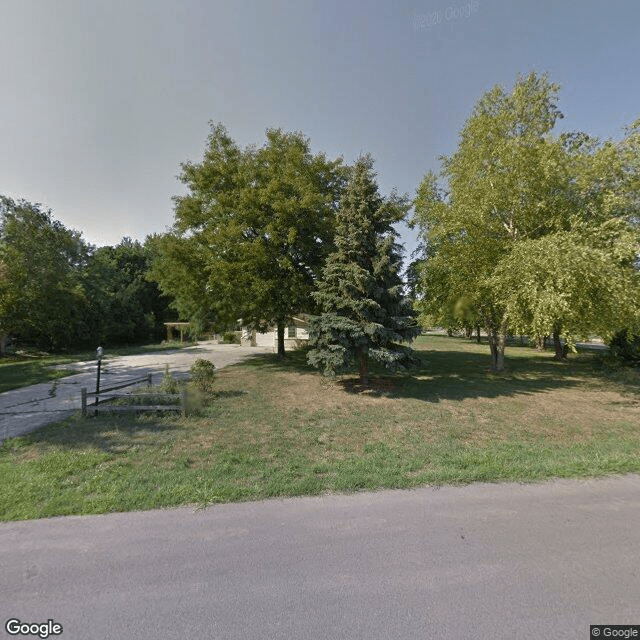
18950 Benington Dr, Brookfield, WI 53045
To contact a resident: (262) 784-6726
For more information about senior living options: (866) 208-4318
Benington Home Costs & Pricing
Benington Home offers competitive pricing for its residents compared to the surrounding Waukesha County and the broader state of Wisconsin. For a semi-private room, Benington Home's monthly cost is $3,450, which not only undercuts the county average of $4,369 but also provides a more affordable option than the state average of $3,977. Similarly, for private accommodations, Benington Home's fee of $5,070 remains reasonable when juxtaposed with Waukesha County's average of $4,205 and Wisconsin's average of $4,339. Overall, Benington Home presents a compelling choice for those seeking quality care without the burden of excessive costs.
| Floor plans | Benington Home | Waukesha County | Wisconsin |
|---|---|---|---|
| Semi-Private | $3,450 | $4,369 | $3,977 |
| Private | $5,070 | $4,205 | $4,339 |
Senior living communities with a similar price nearby
-
About the same

Dolphin Manor
$3,500 / month21.6 miles away -
from -$350 / mo
Serenity Villa
$3,100 to $5,500 / month19.8 miles away -
from -$650 / mo
Deerwood Crossing Senior Residence
$2,800 to $3,200 / month12.1 miles away -
from -$300 / mo
Home Share North Shore House
$3,150 / month13.7 miles away -
from -$360 / mo
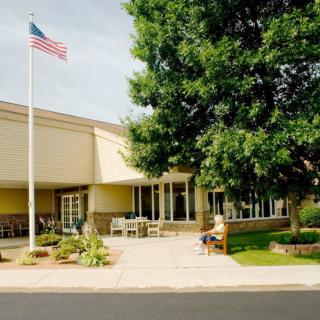
Wellington Place at Hartford
$3,090 to $4,020 / month21.3 miles away
Overall Review of Benington Home
Cons
 The owner is not a nurse.
- She has a nurse on staff, but fears that a resident's mother would require too much care.
- There is only one person on staff at all times to take care of all of the residents.
Review
Benington Home in Brookfield operates best for residents who are largely independent but want some nursing oversight in a small, home-like setting. The arrangement includes a nurse on staff, but the owner is not a nurse, and there is typically only one person on duty at any given time to care for all residents. That combination creates a baseline level of health oversight without 24/7 nursing coverage. For someone who can handle most daily tasks with light assistance and values intimate, personalized attention, this model can feel sufficient. The important reality is that care capacity is defined by a single on-site caregiver rather than a full team.
Families should consider alternatives if the loved one requires frequent or complex care, constant supervision, or rapid response to urgent needs. A resident who needs multiple caregivers on duty, two-person transfers, or around-the-clock nursing oversight will likely outpace what Benington can reliably provide. In short, those seeking robust clinical management or a hospital-style cadence should look elsewhere. The setting’s advantages, intimacy, a nurse on site, and a non-nurse owner, do not reliably translate into the continuous, highly responsive care some seniors require. The decision hinges on whether light support plus on-site nursing meets the individual’s risk tolerance and daily routine.
On the upside, the presence of a nurse on staff offers essential medical oversight and the ability to supervise medications and routine tasks that touch health, which is a meaningful asset in a small home setting. That nurse can monitor conditions and provide reassurance to families about medical touchpoints. Yet this advantage barely offsets the core limitation: one person on duty for all residents. When emergencies happen, or when several residents need assistance at the same moment, meals, toileting, transfers, the response time can stretch. For someone who can tolerate occasional delays and does not require intensive level-of-care, this may be acceptable; for others, it is a red flag.
Another caveat is the owner’s background. With the owner not being a nurse, daily clinical leadership rests on the on-site nurse and any visiting professionals, which can create variability. Families should probe who makes care decisions, how consistent those decisions are, and what the plan is for nights and weekends. Evaluate whether there is a clear escalation path, on-call nursing coverage after hours, and documented policies for falls, medication management, and emergency procedures. If the resident’s plan envisions regular care tasks that routinely require two caregivers, or if falls risk is high, these gaps will become more pronounced.
For decisive steps, request concrete information during tours: exact staff-to-resident ratios by shift, hours of coverage, and how many residents a single caregiver is expected to support simultaneously. Ask to meet the nurse on staff and review credentials, scope of practice, and on-call arrangements. Review a sample care plan, medication administration protocol, and incident logs to gauge responsiveness and communication. Seek copies of resident agreements that spell out what happens when care needs escalate and what options exist if the setting cannot meet evolving needs. Finally, consider a short trial period or observation to confirm alignment with expectations and daily routines.
Bottom line: Benington Home serves a niche audience, older adults who want a small, home-like setting with nursing oversight but do not require round-the-clock, multi-staff care. For families prioritizing intimate ambience and a defined nurse presence, this can be a workable choice if the loved one’s needs stay light and predictable. For those whose care demands include constant supervision, rapid-response needs, or higher-level medical management, alternatives with higher staffing ratios and stronger clinical leadership are advisable. The decision should align with the resident’s daily rhythm, safety requirements, and the family’s risk tolerance, with a clear plan for escalating care if circumstances change.
 Board and Care Home
 Cats allowed
 Dogs allowed
 General Mitchell International (15 miles away)
 Diabetic care
 High acuity care
 Fully furnished with 24/7 supervision and comprehensive care.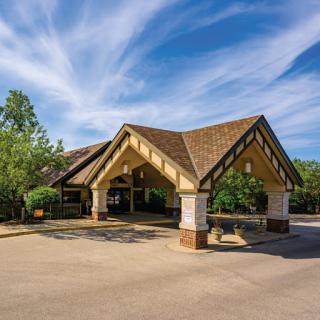
 Exploring Nonmedical Home Care: Understanding Services, Costs, and Financial Approaches
 Engaging Brain Games and Innovative Apps to Keep Senior Minds Active
 Effective Strategies for Keeping Seniors' Minds Active: A Deep Dive into Brain Games and Apps