
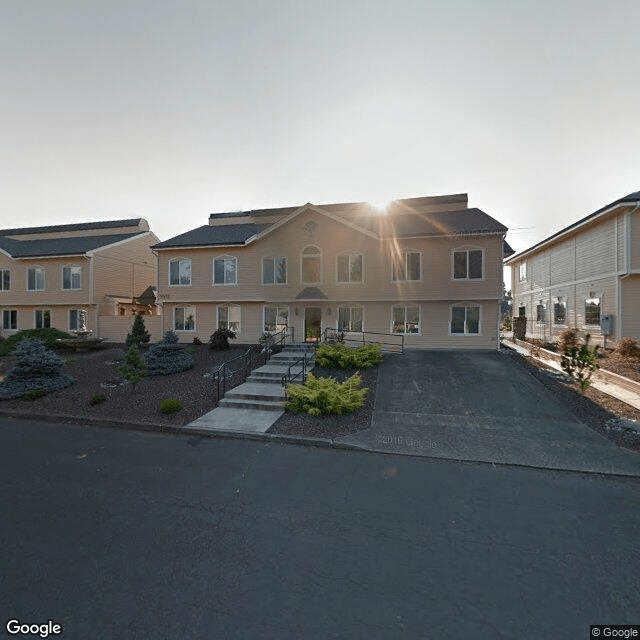
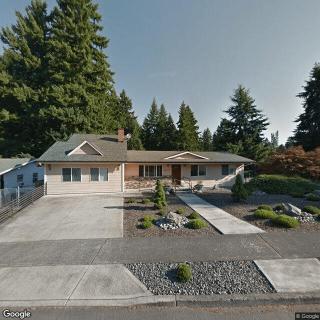
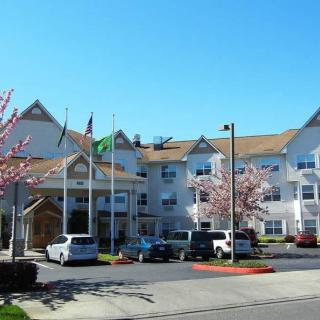
9501 NE 116th Ave, Vancouver, WA 98662
To contact a resident: (360) 253-7661
For more information about senior living options: (866) 208-4318
Orchards Highland II Costs & Pricing
At Orchards Highland II, the monthly cost for a private room is competitively priced at $3,000. This figure stands in contrast to the averages for Clark County, which are approximately $3,992, and the broader state of Washington, where costs escalate further to about $4,772. This pricing structure positions Orchards Highland II as an attractive option for individuals seeking quality care in a well-regarded facility while also being mindful of budget considerations. The lower cost relative to county and state averages underscores its commitment to providing accessible and affordable living options without compromising on the level of care and services provided.
| Floor plans | Orchards Highland II | Clark County | Washington |
|---|---|---|---|
| Private | $3,000 | $3,992 | $4,774 |
Senior living communities with a similar price nearby
-
About the same
A Piece of Heaven
$3,000 / month18.5 miles away -
from -$500 / mo
Mapleview Manor, LLC
$2,500 / month18.6 miles away -
About the same
Yamhill Senior Care Home
$3,000 / month12.3 miles away -
About the same
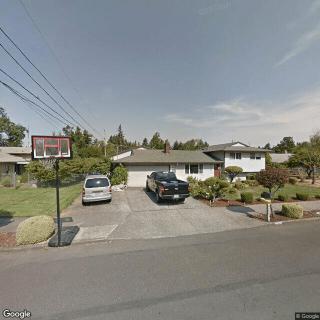
Peaceful Lighthouse Adult Care Home
$3,000 / month11.8 miles away -
from +$500 / mo
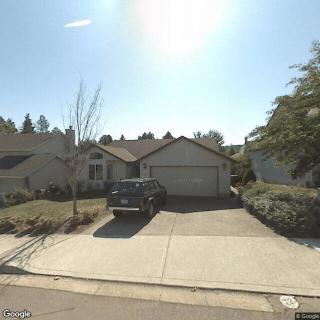
Fulga's ACH
$3,500 / month21.1 miles away
Overall Review of Orchards Highland II
Pros
 It is a very special place.
- The program helps residents prepare for a brighter future with compassion and on-site professional counseling.
- There is a wonderful nursing staff and CNAs who support daily living and guide residents toward independence with patience.
- The ultimate goal is to help residents feel confident and safe.
- The chef makes good food.
- The CEOs demonstrate a lot of compassion and work to help each resident.
Review
Orchards Highland II in Vancouver, WA is best suited for seniors who want a purpose-driven, compassion-forward program that emphasizes independence within a well-supported framework. This community caters to residents who value on-site counseling, steady nursing care, and direct daily assistance that is tempered with patience and guidance designed to help individuals stay as self-reliant as possible. The emphasis on real-world preparation, helping residents gain confidence for what comes after care, makes it a strong fit for those who want meaningful daily structure rather than a purely custodial experience. Food quality also matters here, with a capable chef contributing to a satisfying dining experience, which can make daily life more pleasant and motivating.
The core strengths sit in the people and the philosophy. An on-site professional counselor, paired with a capable nursing staff and attentive CNAs, creates a dependable support network for everyday living and future planning. The leadership is portrayed as genuinely compassionate, with administrators who demonstrate care for each resident’s well-being. This combination helps residents feel seen and secure, a crucial factor when dependence on care is part of the daily routine. The program’s aspirational aim, to nurture confidence and safety while preserving dignity, resonates with families seeking human-centered care rather than a sterile, process-driven environment.
That said, Orchards Highland II presents a profile that may not fit every senior’s needs. For those requiring intensive, around-the-clock medical oversight, specialized memory-care programming, or highly structured clinical supervision, alternatives with a deeper medical footprint are worth exploring. Likewise, families seeking a broader, more diverse activity calendar or fewer tiers of independence support may find other communities more aligned with expectations. A lower rating in a single review signals that experiences can diverge, and the overall mix of scores suggests a spectrum of resident satisfaction. In practical terms, this means the setting can be ideal for some, while others may encounter mismatches between personal goals and program intensity.
The most meaningful con to acknowledge is that the environment prioritizes independence and supportive caregiving rather than 24/7 clinical rigidity. That emphasis can feel insufficient for residents who need constant supervision, urgent medical responsiveness, or memory-care-centric routines built around cognitive support and safety guarantees. Yet that same emphasis is precisely what makes the community appealing to families who want dignity-preserving care that still feels personal and warm. The presence of an on-site counselor helps mitigate mental-health concerns, while nursing staff and CNAs keep daily needs met without turning care into a clinical bottleneck. The risk is simply misalignment with those who expect more medical or specialized programming from morning to night.
The strength of Orchards Highland II lies in how well the humane, independence-focused model offsets its potential gaps. Compassion from staff, the ability to address emotional and practical needs in real time, and an emphasis on gradual, real-world readiness can produce meaningful improvements in quality of life and peace of mind for families. When daily meals, social interactions, and purposeful routines come together under this approach, residents often experience a sense of belonging and progress that can be hard to find in more clinical settings. In short, the positives, supportive, patient caregiving; accessible counseling; and a resident-centered energy, can substantially offset the drawbacks for residents who prize autonomy and personal dignity.
For families weighing options, the decision points are clear. If independence with guided support and a compassionate, hands-on leadership team align with a senior’s priorities, Orchards Highland II is a strong candidate worth meeting in person. Prospective residents should inquire about the specifics of the daily schedule, the exact role of the on-site counselor, nurse-to-resident ratios, and how everyday independence tasks are scaled as needs evolve. If, however, the priority is constant medical supervision, a formal memory-care track, or lower caregiver-to-resident ratios with more clinical programming, alternatives in the region will likely serve better. Conduct a thorough tour, seek candid feedback from current residents and families, and compare the program’s philosophy to what a resident envisions for daily life.
 Board and Care Home
 Activities off-site
 Beautician on-site
 Devotional services off-site
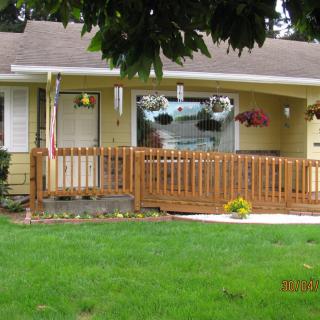
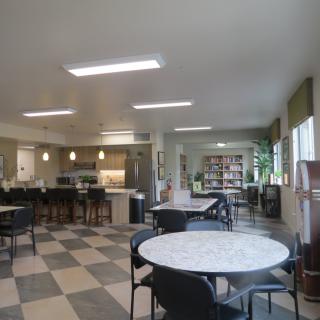
 Indoor common areas
 Outdoor common areas
 Private
 Private bathrooms
 Respite or short term stays offered
 Wheelchair accessible showers
 Portland International (7 miles away)
 Diabetic care
 High acuity care
 Incontinence care
 Medication management
 Kosher


 In-Home Care Costs in 2025: A Detailed State-by-State Exploration
 Understanding Home Health Care: A Comprehensive Guide
 Home Health Care Demystified: A Comprehensive Guide for Families and Caregivers