
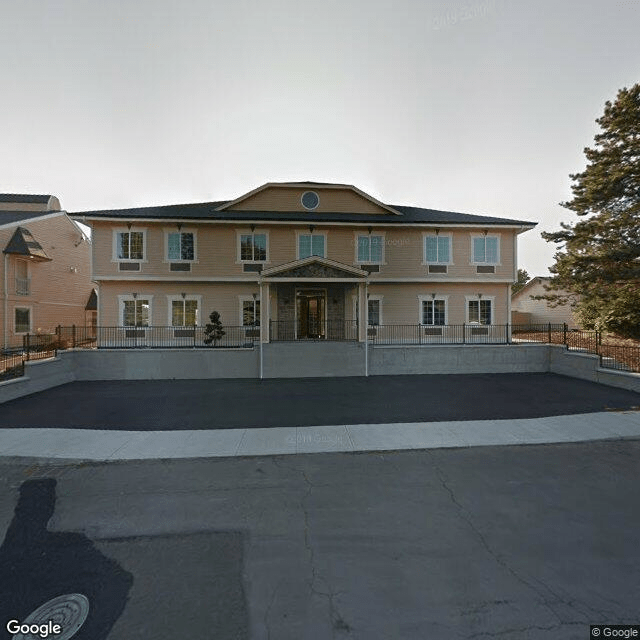
9409 NE 116th Ave, Vancouver, WA 98662
To contact a resident: (360) 882-8252
For more information about senior living options: (866) 208-4318
Overall Review of Apple Tree Assisted Living
Pros
 The place is very special.
- The program helps residents prepare for a brighter future with compassionate on-site counseling, a wonderful nursing staff, and attentive CNAs guiding daily living and independence.
- The ultimate goal is to help residents feel confident and safe.
- The chef makes good food.
- The CEOs show a lot of compassion and work to help each resident.
- It is a very caring place.
Review
Apple Tree Assisted Living in Vancouver, Washington, is best suited for seniors who want a warm, intimate setting with engaged leadership and a program oriented toward independence and practical life skills. The community tends to work well for residents who value hands-on support from a compassionate owner-operator team, an on-site counselor, and a caregiving staff that coaches daily living with patience. It is not a cookie-cutter facility; it favors relationship-driven care and real-world preparation over a clinical, institutional vibe. Families that expect a large campus with broad memory-care specialization or a clinical focus should consider alternatives. The mixed reviews, strong praise for empathy and leadership paired with some dissatisfaction, signal that outcomes hinge on leadership consistency and fit with the resident’s goals.
Among the clear strengths are leadership and caregiving quality. Owners and CEOs are described as deeply compassionate and actively involved, with an on-site professional counselor anchoring a program designed to build confidence rather than merely supervise. The nursing staff and CNAs provide daily hands-on help, enabling residents to keep as much independence as possible while staying safe. The emphasis on patience, steady guidance, and real-world preparation supports dignity and progress. Food quality is consistently noted as a plus, with meals that fit into routines and preferences. Taken together, these elements create a culture of nurture and stability, the kind of environment that reduces anxiety about transitions and supports steady aging in place.
Yet the experience is not uniformly positive, and the rating reflects a spectrum of outcomes. Two reviews rate the community at the low end, suggesting moments when leadership interaction or day-to-day responsiveness did not meet expectations. The strongest praise centers on direct access to ownership; where that access is perceived as lacking, families may encounter communication gaps or perceived inconsistency. For residents needing intensive medical oversight or specialized memory care, this setting may fall short unless outside services are arranged. The lack of public detail about clinical capabilities means families must probe during tours to understand whether the care level aligns with medical needs and risk tolerance.
Pros such as compassionate leadership, strong daily caregiving, and an independence-forward program offset many potential downsides when goals align. A resident who thrives on personal attention and a predictable routine will likely experience fewer surprises, with staff who know preferences and progress. The counselor’s presence, together with the nursing team, offers emotional and medical continuity that can prevent declines and hospital visits. The small-community vibe fosters quicker problem-solving and more proactive outreach from ownership, translating into timely adjustments as needs evolve. When expectations match what the program delivers, the care experience can feel steady, respectful, and genuinely uplifting.
Decision makers should approach the evaluation with a disciplined checklist. Inquire about staff stability and turnover, since continuity shapes daily life; request a tour that includes the on-site counselor, the director, and several direct-care staff to gauge responsiveness. Ask for a realistic daily schedule and a sample menu, plus examples of programs that promote independence, safety training, supervised outings, cognitive coaching. Clarify how medical needs are managed, who coordinates outside providers, and how care plans are updated. Above all, align the questions with resident goals: if independence and personal growth are the aim, Apple Tree can be a strong fit; if robust medical oversight and memory-specific programming are non-negotiable, exploration elsewhere is prudent.
Bottom line: Apple Tree Assisted Living offers a compassionate, relationship-driven option in Vancouver that works best for seniors seeking a nurturing, small-community setting with visible leadership and a clear commitment to independence. The trade-off is potential variability in experience and a fit that depends on aligning resident needs with the program’s strengths. For families valuing direct access to owners, a steady on-site counselor, and a daily rhythm built around dignity and growth, this community can deliver solid, stabilizing care. If the resident requires heavy clinical oversight, specialized memory support, or a more institutional atmosphere, alternative options should be pursued. When expectations are clear and tours confirm consistency, Apple Tree provides practical stability, dignity, and forward momentum that make aging in place a purposeful, manageable transition.
 Board and Care Home
 Portland International (7 miles away)




 Caring for Those Who Care: Recognizing, Understanding, and Overcoming Caregiver Burnout
 Caregiver Exhaustion: Recognizing the Signs and Restoring Your Well-Being
 Understanding Hospice Care at Home: Comprehensive Services, Key Benefits, and Eligibility