
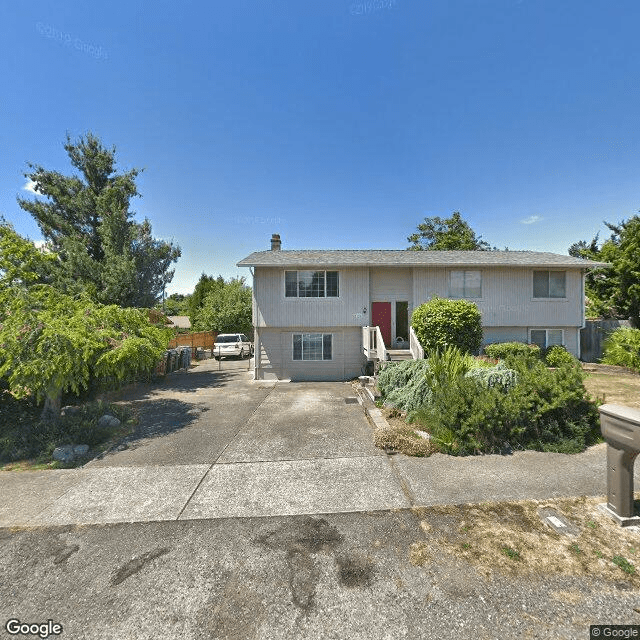
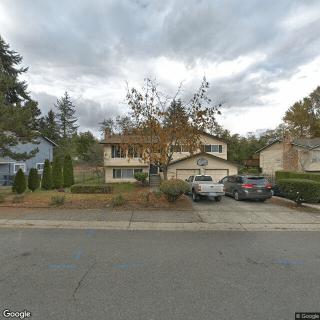
5128 Beverly Ave NE, Tacoma, WA 98422
To contact a resident: (253) 927-1077
For more information about senior living options: (866) 208-4318
Browns Point Adult Family Home Costs & Pricing
Browns Point Adult Family Home offers competitive pricing for its care services in comparison to the surrounding region. The monthly costs at Browns Point are set at $6,000 for a semi-private room and $6,500 for a private room. These rates are notably higher than the average monthly costs in Pierce County, which stand at approximately $4,264 for semi-private accommodations and $4,623 for private rooms. Similarly, on a state level, Washington's average monthly fees reflect similar pricing trends - $4,267 for semi-private and $4,772 for private units. While Browns Point's rates exceed those typical of both the county and the state averages, they may be reflective of additional services or amenities offered by the facility that enhance resident care and quality of life.
| Floor plans | Browns Point Adult Family Home | Pierce County | Washington |
|---|---|---|---|
| Semi-Private | $6,000 | $4,264 | $4,272 |
| Private | $6,500 | $4,623 | $4,774 |
Senior living communities with a similar price nearby
-
from -$500 / mo

Twin Lake Adult Family Home
$5,500 to $6,500 / month2.4 miles away -
from +$1000 / mo
Fairwood Care Home
$7,000 / month16.5 miles away -
from +$1000 / mo
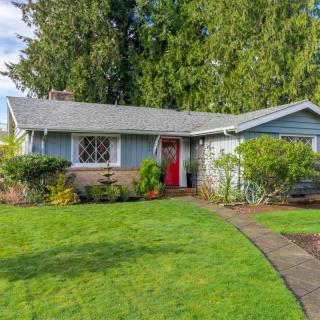
Gloria's House Adult Family Home
$7,000 / month4.5 miles away -
About the same

Valley Senior Care Center
$6,000 to $7,000 / month18.8 miles away -
About the same

Blue Horizon Adult Family Home
$6,000 to $7,000 / month19.5 miles away
Overall Review of Browns Point Adult Family Home
Pros
 The home is described as beautiful and family-oriented.
- The reviewer loved the atmosphere and praised the care for caregivers and patients.
- The staff coped well with her difficulties and did a good job.
Cons
 The operator is driven by greed in every move.
- The caregiver’s routine is described as fake and insincere.
- She does not fulfill her obligations and won’t address dietary needs.
- The patient has to buy their own food.
- She is described as insane and uses insults toward others to feel better about herself.
Review
Browns Point Adult Family Home in Tacoma, WA, is best suited for families seeking a warm, home-like setting where care feels personal and intimate. The property emphasizes a familial atmosphere and a small-scale operation, making it appealing to seniors who thrive on direct, caregiver-level attention and a routine that mirrors a private home. This setting tends to work well for residents who are moderately independent but need regular companionship, daily assistance, and a supportive, approachable staff. It is a practical match for those who prize warmth and a sense of belonging over formal, institution-like amenities, and for families that want to stay actively involved in daily care decisions.
However, considerations should be given to residents with higher medical complexity or those who require strictly defined accountability and formal governance. The reviews raise questions about management clarity, particularly around how dietary needs are addressed and how transparency is maintained in billing and day-to-day care decisions. Families with residents who have significant dietary restrictions, complex schedules, or stringent service expectations should weigh whether a small, intimate operation can consistently meet those needs. The small scale can limit resources and oversight when compared with larger facilities that have broader clinical support and standardized policies.
On the plus side, the strongest positives center on atmosphere and caregiver receptivity. One reviewer highlights a beautiful, family-centered home where caregivers and patients alike are treated with care and respect, suggesting high morale among staff and a culture that values relationships. Another comment commends the staff for coping well with a difficult loved one, implying that the team can remain attentive and patient even when behavioral challenges arise. Taken together, these voices suggest that when residents align with the home’s pace and expectations, the environment can feel genuinely supportive and nurturing.
The most significant caveat is the inconsistent picture regarding governance and responsiveness to resident needs. The negative review describes perceived greed and a lack of accountability from the operator, including unmet dietary obligations and tension-filled interactions. While this is a single, harsh voice among a small sample, it is not a risk that can be dismissed. A decision-maker should treat this as a red flag worth exploring: what are the policies for meal planning, dietary accommodations, and family communication? How transparent are charges, and who oversees care plans across shifts? These questions matter, because harmony between caregiver dedication and administrative clarity is what sustains trust in a small home setting.
For families considering Browns Point AFH, a structured due-diligence process is essential. Schedule a tour and observe how meals are offered and modified for dietary needs; request sample menus and proof of dietary accommodations; ask to speak with several staff members and, if possible, the operator, to understand governance practices. Clarify the care planning process, the frequency of family involvement in updates, and how emergencies or behavioral changes are managed. Verify licensing status, inspection results, and any corroborating references. In short, verify that the home’s strengths, warmth, personalized attention, and staff morale, are matched by reliable policies, transparent communication, and consistent care delivery.
Ultimately, Browns Point AFH presents a viable option for families who value a true home environment and close-knit caregiving, provided due diligence confirms that governance, dietary management, and responsiveness meet the resident’s needs. For seniors with substantial medical complexity, strict dietary requirements, or those requiring robust oversight, alternatives, larger facilities or other adult family homes with clearer governance and more formal policies, may offer greater reassurance. The decision should hinge on concrete, verifiable assurances about meals, care plans, and family involvement, balanced against the undeniable appeal of a warm, caretaker-centered setting.
 Board and Care Home
 Activities on-site
 Beautician on-site
 Devotional services on-site
 Indoor common areas
 Outdoor common areas
 Private
 Respite or short term stays offered
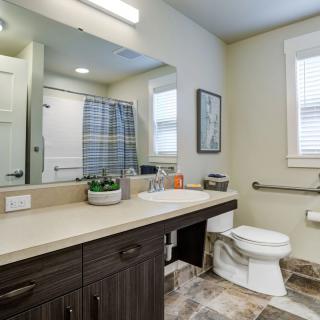
 Wheelchair accessible showers
 Seattle-Tacoma International (11 miles away)
 Ambulatory care
 Diabetic care
 High acuity care
 Incontinence care
 Medication management
 Kosher




 Financing Long-Term Nursing Home Care Through Social Security: A Thorough Exploration
 Essential Knowledge on Pneumonia in Older Adults
 Exploring Palliative Care in the Home: A Comprehensive Overview