
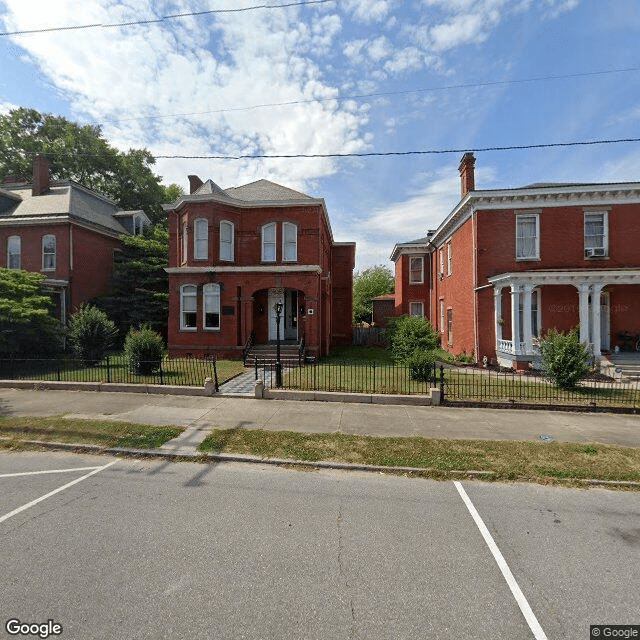
309 W. Washington Street, Petersburg, VA 23803
To contact a resident: (804) 732-4530
For more information about senior living options: (866) 208-4318
Overall Review of The Hamilton West Adult Home
Pros
 The Petersburg Home for Ladies is beautiful and spacious inside.
- The staff give visitors a home-like greeting.
- Petersburg Home for Ladies is an A++ place to live.
- Teresa Weeks, the director, is someone to speak with when more supervision is needed for a loved one.
- The facility is recommended for planning a safer home for an elderly family member.
- The Petersburg Home for Ladies is a wonderful place to work and live.
- The facility has a quality team of staff, a strong activities program, and a beautifully kept building.
Cons
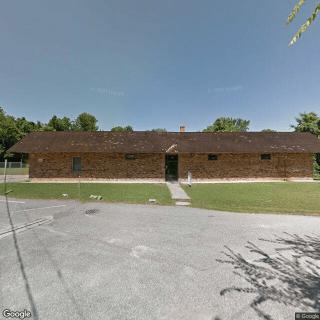
 The outside looks small compared to the large interior.
- The exterior appears small despite the interior being spacious.
- The exterior doesn’t match the interior’s size.
Review
This community is best suited for seniors who want a warm, home-like atmosphere, where staff greet residents with genuine hospitality and daily life is built around connection, routine, and meaningful activity. Families looking for a facility that feels less like a clinical setting and more like a well-kept, welcoming home will find the strongest alignment here. The combination of a spacious, well-maintained interior, an engaged activities program, and a staff culture that treats residents like family makes it a standout option for those prioritizing social engagement, dignity, and personal attention over clinical ambiance.
Those who may want to consider alternatives are seniors with higher medical needs or memory-care requirements. The reviews highlight a strong team and an impressive programming calendar, yet they do not describe on-site advanced nursing supervision, specialized dementia care, or intensive rehab services. For families whose loved ones require around-the-clock skilled nursing, rapid rehabilitative services, or dedicated memory-support environments, evaluating options with explicit memory-care units or more robust medical staffing may be prudent. In short, this community shines as a home-like, activity-rich setting, but may not be the best fit for residents needing heavy medical oversight.
Key advantages drive decision-making here. The facility’s exterior belies a surprisingly expansive, bright interior that fosters a sense of openness and comfort. A genuine “home away from home” ethos permeates the experience, with staff who greet visitors and residents in a way that reinforces security, belonging, and daily stability. The combination of a dedicated, high-quality staff, a robust activities program, and meticulous maintenance contributes to a lively, predictable routine that supports social ties, cognitive engagement, and overall well-being. In practical terms, families can expect a welcoming environment where residents are continually encouraged to participate, socialize, and maintain independence where possible.
These strengths offset potential gaps by delivering consistent companionship, structured enrichment, and visible pride in the building and its culture. While medical oversight may not be highlighted as a core feature, the emphasis on staffing quality and program variety provides a meaningful layer of oversight through daily supervision, safety-focused routines, and proactive engagement. The result is a setting that minimizes boredom and isolation while maximizing personal connection, which often translates into better mood, steadier daily rhythms, and more predictable caregiving conversations with family members. That balance, safety and sociability without a sterile medical vibe, appears to be the facility’s core value proposition.
Practical steps for families evaluating this option are clear. Schedule a thorough tour and use it to gauge comfort levels beyond the marketing vibe: observe how staff interact with residents, assess the responsiveness during routine tasks, and ask for a sample activities calendar to gauge diversity and frequency. Engage with leadership, notably the director referenced by reviewers, Teresa Weeks, to understand staffing patterns, intake processes, and how care plans are coordinated with external providers. Clarify medical capabilities: what levels of nursing support are on-site, how medications are managed, what specialized services exist for memory care or chronic conditions, and how transitions to higher levels of care would be handled. Finally, obtain a transparent view of pricing, what is included, and what would trigger additional charges, ensuring the financial plan aligns with expected care needs.
In the end, this community stands out for families seeking a practical, emotionally supportive environment where warmth, staff quality, and an active lifestyle take center stage. It is especially compelling for those who value a polished, home-like setting and measurable social engagement over a clinical atmosphere. If the priority is a vibrant daily life, strong interpersonal connections, and a building that feels cared for and welcoming, this option merits serious consideration. For residents whose needs extend into intensive medical supervision or specialized dementia care, exploring alternatives with more explicit medical infrastructure is advisable. When alignment exists between desired social vitality and the facility’s capabilities, the result is a decision that feels both prudent and emotionally sound.
 Assisted Living
 Activities on-site
 Devotional services off-site
 Indoor common areas
 Richmond International (20 miles away)
 Ambulatory care
 Diabetic care
 Meals provided


 Understanding the True Cost of Assisted Living in 2025: A Comprehensive Guide
 Understanding Medicaid Coverage for Assisted Living: A Comprehensive Guide
 How and When Medicaid May Cover Assisted Living Costs