
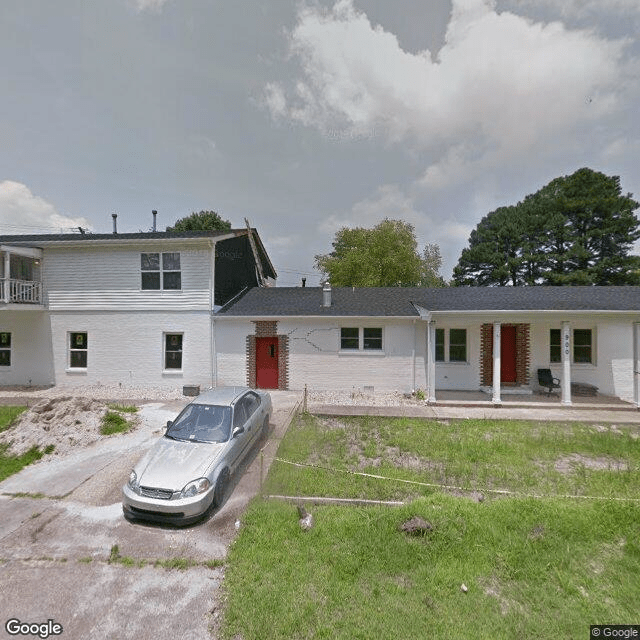
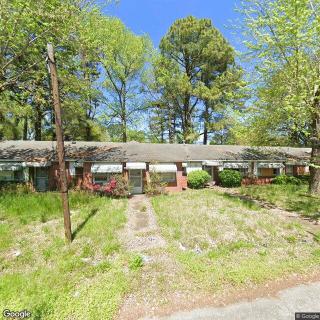
900 George Washington Hwy N, Chesapeake, VA 23323
To contact a resident: (757) 487-9073
For more information about senior living options: (866) 208-4318
Deep Creek Manor, Inc. Costs & Pricing
Deep Creek Manor, Inc. offers competitive pricing for its accommodations, with monthly costs significantly lower than both Chesapeake City and the broader state of Virginia. For example, a studio at Deep Creek Manor is priced at $1,950, which stands in stark contrast to Chesapeake City's average of $3,083 and the state's figure of $4,436. Similarly, the semi-private room option is equally affordable at $1,950 compared to Chesapeake's $2,300 and Virginia's average of $3,991. Those seeking a one-bedroom unit will find that Deep Creek Manor's rate of $2,200 remains well below both local and state averages - $3,467 in Chesapeake City and $4,257 statewide. This clear advantage in cost positions Deep Creek Manor as an attractive option for individuals or families considering quality living arrangements without the premium price tag typically found elsewhere.
| Floor plans | Deep Creek Manor, Inc. | Chesapeake city | Virginia |
|---|---|---|---|
| Semi-Private | $1,950 | $2,300 | $3,991 |
| Studio | $1,950 | $3,083 | $4,436 |
| 1 Bedroom | $2,200 | $3,467 | $4,257 |
Assisted Living communities with a similar price nearby
-
from +$345 / mo

The Devonshire
$2,295 to $3,399 / month19.5 miles away -
from -$195 / mo

Carebridge Assisted Living
$1,755 to $1,925 / month4.7 miles away -
from +$168 / mo

Emily Green Shores
$2,118 to $2,569 / month4.3 miles away -
from -$219 / mo
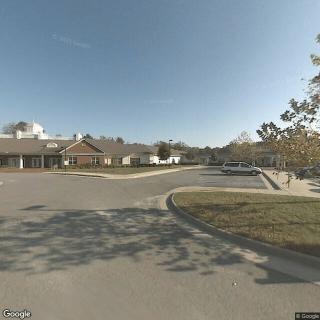
Lake Prince Woods
$1,731 to $11,500 / month15.3 miles away -
from +$350 / mo
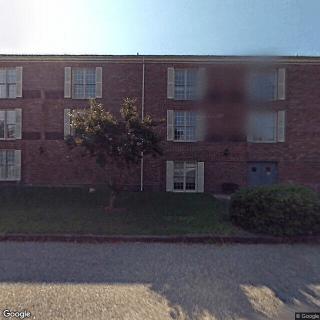
Governor's Inn Retirement Center
$2,300 to $3,800 / month22.4 miles away
Overall Review of Deep Creek Manor, Inc.
Pros
 Most of the ladies are very friendly.
Cons
 The place always smells like urine.
- Some of the ladies are not very friendly.
- The facility did not have a lockdown and would not use any monitoring.
Review
Deep Creek Manor is best suited for seniors who do not require a locked-down, highly secure environment and for families prepared to stay actively involved in oversight. The reviews point to a social, communal setting where many residents are friendly and engaged, which can help ease isolation for someone who does not need intensive supervision. This implies a right fit for a resident who can tolerate a casual level of structure and who benefits from casual, everyday interactions with neighbors. However, this suitability hinges on accepting a reality where safety and cleanliness are not consistently upheld and where staff dynamics can be uneven from day to day.
For families weighing options, the biggest red flags point toward alternatives that offer stronger security and more predictable oversight. Those who cannot tolerate the absence of a lockdown or monitoring system should consider other communities that provide wander-protection and consistent staff presence. If a resident has cognitive challenges or a tendency to wander, a facility with secure entrances and trained monitoring would likely be a non-negotiable requirement. In short, this community should be ranked lower for anyone prioritizing rigorous safety and highly predictable care routines.
The most evident positives lie in social interaction. The facility appears to foster a sense of community, with many residents described as friendly and willing to engage. When staff relationships align with warmth and familiarity, daily activities and meals can be comfortable and sociable. For residents who value companionship and a lively house atmosphere, these human assets can create moments of genuine connection and reduce feelings of isolation, even if other aspects of care are not optimal.
Yet the drawbacks are consistently substantial and difficult to overlook. A persistent odor of urine in common areas signals fundamental cleanliness and maintenance concerns that directly affect resident comfort and perceived dignity. The absence of a locked-down option or any commitment to monitoring schemes translates into tangible safety vulnerabilities, particularly for residents with memory impairment or mobility issues. Inconsistent staff treatment, described as friendly by some but not by others, injects uncertainty into care, response times, and the overall reliability of assistance when needs arise.
From a practical perspective, the benefits of sociability cannot fully offset the safety and hygiene gaps. A warm, neighborly environment helps with morale, but it does not substitute for a solid safety plan or routine cleanliness that residents and families must rely on day after day. Families evaluating this community should test whether staff ratios, supervision policies, and housekeeping practices meet essential standards for the residentā€™s health and risk profile. The missing piece here is a clear, actionable plan for elevating safety and odor control without sacrificing the social benefits that do exist.
Bottom line: Deep Creek Manor may work for residents who prize companionship and can tolerate a looser security framework and imperfect odor control, provided a vigilant family remains actively engaged. For any resident who requires a built-in safety net, such as locked entries, monitoring, consistent staffing, and a consistently clean environment, alternatives should be pursued. Prospective buyers should insist on concrete details about odor management, staffing consistency, and safety measures, even in the absence of a formal lockdown. If those elements are non-negotiable, move on to other communities; if they are negotiable with proper advocacy and oversight, approach this option with a clear, structured plan and a candid understanding of the trade-offs involved.
 Assisted Living
 Activities on-site
 Devotional services off-site
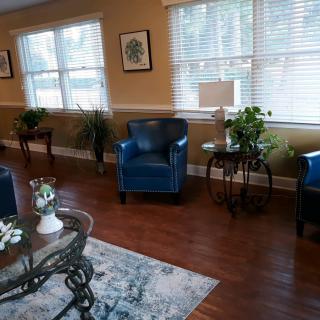
 Indoor common areas
 Norfolk International (12 miles away)
 Ambulatory care
 Diabetic care
 Meals provided



 Understanding the True Cost of Assisted Living in 2025: A Comprehensive Guide
 Understanding Medicaid Coverage for Assisted Living: A Comprehensive Guide
 How and When Medicaid May Cover Assisted Living Costs