Residents consistently describe engaging activities and frequent parties.
Many reviews talk about busy calendars with parties, outings, and events that make daily life feel social. Families specifically mention holiday gatherings like Valentine’s Day and Halloween, and several describe staff-led engagement that keeps residents active and connected. Residents also describe enjoying games, crafts, music, and recurring social traditions with other residents and visiting family.
common15 reviews mention this
Food quality is a frequent highlight
Food and dining experiences are repeatedly praised by families.
Reviews commonly mention that meals are good, with some calling out standout items and restaurant-style quality. Families describe enjoying holiday meals and luncheons together, and several reviews tie the dining experience to how welcomed they feel during visits. The community provides meals, aligning with how often dining comes up in resident and family feedback.
common20 reviews mention this
Staff kindness and responsiveness come through
Residents and families frequently describe staff as kind and supportive.
Across reviews, the most consistent theme is how much families feel the staff notices them and treats residents with care. Multiple reviewers mention friendliness, patience, and staff involvement in everything from daily support to planning celebrations. Several also highlight communication and how quickly concerns are handled during their time there.
common8 reviews mention this
Clean facilities and welcoming spaces
Reviews often note a clean, well-kept facility.
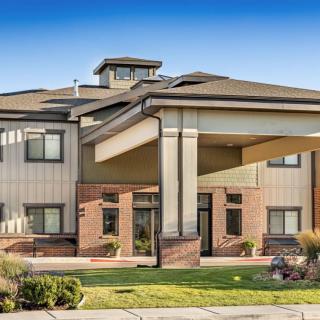
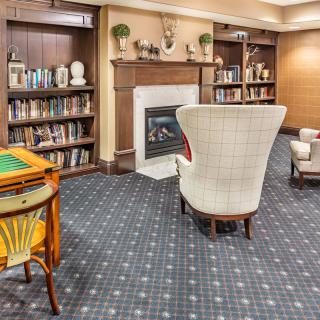
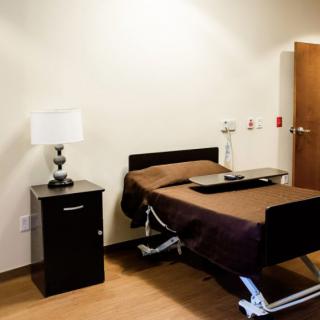
A number of reviewers describe the building as spotless, neat, and welcoming when they visit or move in. Some specifically mention cleanliness alongside a comfortable, positive atmosphere. The facility’s indoor common spaces and on-site activities also align with why families and residents describe spending time there comfortably.
caveat2 reviews mention this
Memory care has medication and safety concerns
Two reviews raise concerns about memory care medication handling and safety during incidents.
While many memory care reviews are positive, at least two describe serious problems tied to medication management and safety following behavioral incidents. One review reports an emergency response after an altercation during a visit and suggests medication oversight was insufficient, while another describes difficulties after a hospital-related episode and concerns about how medication and behaviors were handled. These accounts also include disappointment about how situations were communicated and managed during transitions.
How we summarize
Counts show how many written reviews mention each theme; a review can touch several themes, and only frequently mentioned themes are displayed.
Features
Types of Care
Assisted Living
Independent Living
Memory Care
Amenities
Activities on-site
Devotional services off-site
Indoor common areas
Care Services
Ambulatory care
Diabetic care
Dining
Meals provided
Activities
Activities on-site
Devotional activities offsite
Nearby Places of Interest
Pharmacies
Maple Mountain Pharmacy (0.1 miles)
Walmart Pharmacy (1.8 miles)
Art City Pharmacy (2.7 miles)
Walgreens (2.8 miles)
Macey's Food & Pharmacy (2.9 miles)
Macey's, Happy Shopping (2.9 miles)
SOS Drug Store (2.9 miles)
Places of Worship
Church of Jesus Christ of Latter Day Saints (0.2 miles)
Church of Jesus Christ of Latter Day Saints (2.3 miles)
Church of Jesus Christ of Latter Day Saints (2.8 miles)
Church of Jesus Christ of Latter-Day Saints the, Wards, Spring Creek, Eighteenth (3.8 miles)
Church of Jesus Christ of Latter Day Saints (7.1 miles)
Provo City Center Temple (8.3 miles)
Parks
Ira Allen Park Mapleton Utah (0.7 miles)
Mapleton City Park (1.1 miles)
Spring Acres Arts Park (2.4 miles)
Spanish Fork Dog Park (2.8 miles)
Bartholomew Park (2.9 miles)
Springville Community Park (4.1 miles)
Bicentennial Park (6.7 miles)
Transportation
Enterprise Rent-A-Car (2.2 miles)
UTA FrontRunner Provo Station (7.9 miles)
Provo Municipal Airport (PVU) (9.3 miles)
Restaurants
McDonald's (2.2 miles)
Chili's Grill & Bar (2.3 miles)
Chick-Fil-A (2.4 miles)
Super Chix (2.5 miles)
Cubbys Spanish Fork (2.6 miles)
Jake's Brookside (2.7 miles)
Taco Bell (3.1 miles)
Physicians
Utah Valley Pediatrics (2.4 miles)
Revere Health (2.5 miles)
Summit Oral & Maxillofacial Surgery (2.5 miles)
Hobble Creek Medical Clinic (2.7 miles)
Intermountain Healthcare (2.8 miles)
Aspen Dermatology & Aesthetics (2.9 miles)
Intermountain Medical Group (3.1 miles)
Theaters
Cinemark Spanish Fork And Xd (2.5 miles)
Cinemark 16 (7.4 miles)
Cafes
Starbucks (2.5 miles)
Hospitals
Utah Valley Hearing and Balance (2.6 miles)
Intermountain Health Care (3.1 miles)
Levi J. Berry, DPM - Canyon Foot and Ankle (3.4 miles)
Choosing between assisted living and nursing homes involves evaluating emotional and financial factors, with assisted living offering independence and support for daily activities at a lower cost, while nursing homes provide intensive medical care for individuals with significant health needs. The decision is influenced by personal preferences, health status, cognitive function, and varying Medicaid coverage across states.
The article presents eight strategies for preserving cognitive health and memory in older adults, emphasizing a nutrient-rich diet, regular exercise, intellectually stimulating activities, adequate sleep, social connections, stress management techniques, limiting harmful substances, and regular medical checkups to mitigate age-related memory decline.
Activities of Daily Living (ADLs) are fundamental tasks vital for an individual's independence, particularly in older adults over 85, and include functions like bathing and dressing; assessing ADLs alongside Instrumental Activities of Daily Living (IADLs) helps determine the level of required assistance due to age-related health challenges. Tailored support plans, involving family and community resources, are essential for maintaining dignity and autonomy in assisted living environments.
Get PricingAsk A QuestionSchedule A TourContact Senior Advisor
By clicking submit, you agree to our Partner's Terms of Use. You
also consent to receive calls and texts, which may be autodialed, from our Partner. Your consent is not a condition to
using our Partner's service. Please visit our Partner's Privacy Policy for information about their privacy practices.

 Assisted Living
 Independent Living
 Memory Care
 Activities on-site
 Devotional services off-site
 Indoor common areas
 Ambulatory care
 Diabetic care
 Meals provided
 Comprehensive care options (assisted/memory care) with 24/7 supervision, move-in coordination, and furnished, maintenance-free apartments.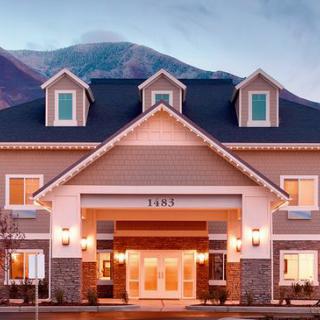
 Choosing the Right Senior Care: A Detailed Exploration of Assisted Living and Nursing Homes
 Safeguarding Your Memory Through the Golden Years: Eight Ways to Preserve Cognitive Health
 Comprehensive Insights into Activities of Daily Living (ADLs) and Their Assessment