
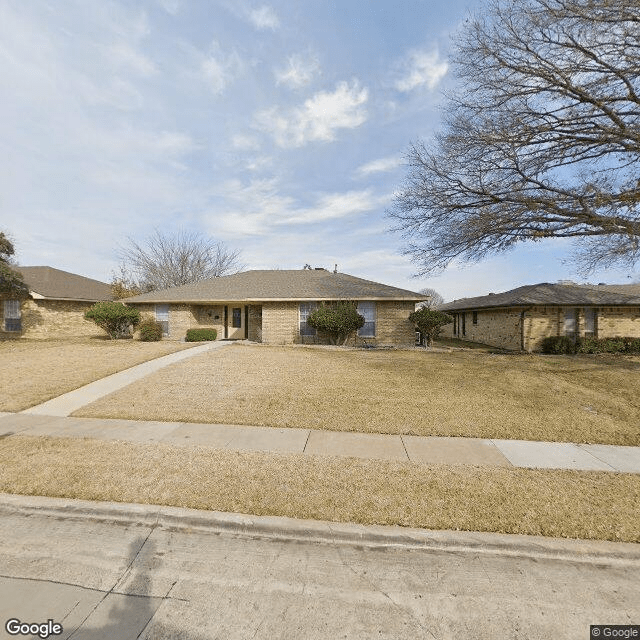
2517 Downing Dr, Plano, TX 75023
To contact a resident: (469) 688-4635
For more information about senior living options: (866) 208-4318
Arms of Hope Costs & Pricing
At Arms of Hope, the monthly costs for accommodations reflect a commitment to providing quality care while remaining competitive within both Collin County and the broader Texas market. For a semi-private room, Arms of Hope charges $4,000 per month, which is slightly higher than the county average of $3,950 but remains just above the state average of $3,680. In terms of private accommodations, the cost at Arms of Hope is $4,500, positioning it somewhat above both Collin County's average of $4,324 and Texas's statewide figure of $4,096. These cost structures may be indicative of the enhanced services and supportive environment that Arms of Hope offers to its residents.
| Floor plans | Arms of Hope | Collin County | Texas |
|---|---|---|---|
| Semi-Private | $4,000 | $3,950 | $3,680 |
| Private | $4,500 | $4,324 | $4,096 |
Senior living communities with a similar price nearby
-
from -$200 / mo
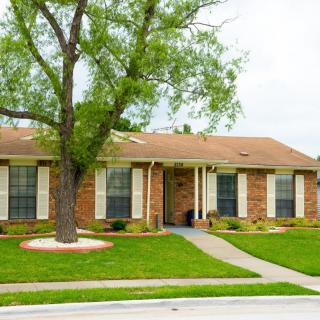
Silver Oaks Residential Assisted Living
$3,800 / month8.4 miles away -
About the same
A Caring Home with Friends
$4,000 to $4,250 / month10.6 miles away -
from -$534 / mo

Avalon Memory Care - Allen
$3,466 to $6,475 / month7.3 miles away -
from -$500 / mo
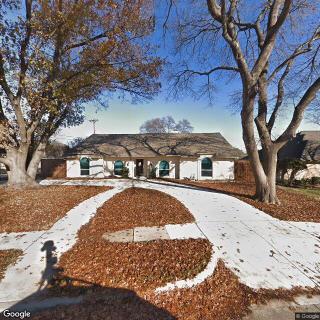
Locardia Homecare Living
$3,500 to $4,500 / month2.2 miles away -
from -$500 / mo

Nedges Nest
$3,500 to $4,000 / month6.7 miles away
Overall Review of Arms of Hope
Pros
 The sign clearly designates a donation drop-off point.
- The signage communicates an intention to accept donations at this location.
- The layout shows an organized approach to receiving donations.
- The signage helps donors know where to go to contribute.
- There is an implied plan to have staff present to accept donations.
Cons
 There was no one here to accept donations, despite the sign.
 - The site was unattended, making it impossible to drop off donations.
- No staff were present, which made the donation process inconvenient.
- The lack of attendants undermined the donation experience.
Review
Arms of Hope in Plano is best suited for families seeking a small, mission-driven living option that feels more like a close-knit campus than a sprawling senior community. The setting likely suits residents who value personal contact, simple routines, and an atmosphere centered on community involvement. It is not the pick for those requiring highly polished programming, intensive staffing, or a rigid, predictable care plan every day. A notable operational cue is the presence of a donation drop-off area, which suggests a culture built around philanthropy and volunteer activity rather than a purely traditional assisted-living model. For families prioritizing a warm, intimate vibe over formal amenities, this campus offers a distinctive, if uneven, home-like alternative.
Those who should consider alternatives are families prioritizing consistent, professional care with robust medical oversight, extensive activity schedules, and clear governance. The limited number of reviews, two total, combined with a mid-range 3.5 average signals variability in experience. A standout 5-star report points to moments of excellent, personalized attention, but the companion 2-star critique underlines that reliability and execution can fluctuate. Prospective residents who need strong nurse-on-site coverage, routine therapeutic offerings, and transparent care-management processes may find this option falls short. In such cases, nearby well-established assisted-living communities with documented staffing and programming present a safer, more predictable path.
The main positives hinge on the intimate scale and potential for genuine resident-staff connections. A smaller setting can translate into more direct communication, quicker responses, and flexibility to accommodate individual preferences within its resource limits. For families drawn to a community where staff can know residents well and where involvement in the broader charitable or campus activities feels meaningful, these are meaningful advantages. However, these strengths are tempered by the observable gaps: the donation drop-off anecdote hints at episodic operational lapses and possible gaps in front-line coverage. When staff coverage wavers, even the most well-intentioned programming can feel inconsistent and leave residents without the seamless support expected in assisted living.
The offset between strengths and weaknesses rests on what matters most to the resident and family. If the priority is a warm, small-community feel and the resident values a sense of contribution within a mission-driven setting, the pros can compensate for thinner programming. If, however, stability, comprehensive medical oversight, and predictable daily routines are non-negotiables, the downsides are not easily dismissed. The mixed feedback underscores that care quality and resident experience may swing with staffing fluctuations, leadership presence, and available resources. For a family prepared to assess and advocate, the environment can work, but it requires careful, ongoing oversight.
Practical due diligence should shape any decision to pursue Arms of Hope. Visit more than once and at varying times to gauge consistency in reception, caregiving attention, and responsiveness. Inquire directly about on-site nursing presence, medication management, meal service, transportation, and the range of activities offered each week. Request to meet the administrator or director of care, review current care plans, and confirm licensing and inspection records. Ask for recent family references and how often residents interact with the governance structure. Clarify the facility’s policies around donor-related activities to understand how such duties are integrated into daily life without compromising care. With these checks, families can determine whether the community’s intimate, mission-driven character aligns with the resident’s safety, dignity, and day-to-day needs.
In conclusion, Arms of Hope may serve as a good fit for a niche audience: families who value a small, engaged setting and can tolerate some variability in services. It is not the default choice for those seeking unwavering consistency, extensive programming, or assured medical oversight. A candid assessment, armed with targeted questions and multiple visits, will reveal whether the pros genuinely offset the cons for a particular senior. When the answer aligns, the result can be a satisfying, home-like environment; when it does not, pursuing alternatives with steadier staffing and clearer care protocols becomes the prudent course.
 Board and Care Home
 Activities on-site
 Devotional services off-site
 Indoor common areas
 Private
 Dallas Love (16 miles away)
 Ambulatory care
 Diabetic care
 Medication management
 Meals provided
 BBQs or picnics
 Birthday parties






 Nurturing Our Loved Ones: A Daughter's Journey in Caring for Her Mother
 Nurturing Our Elders: Linda's Journey of Supporting Her Mother
 A Comprehensive Exploration of Common Misunderstandings about Powers of Attorney