
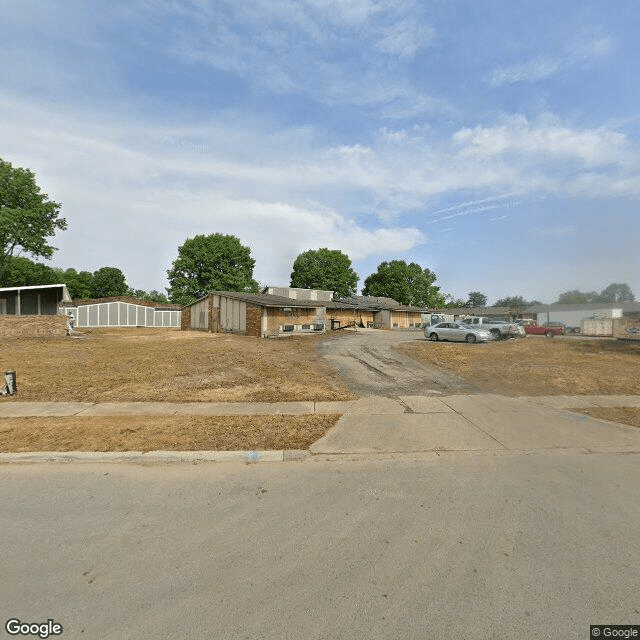
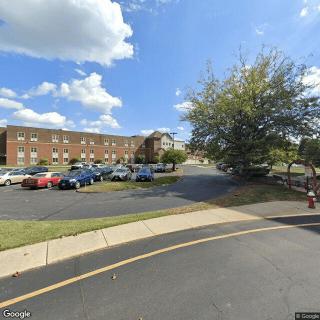
2469 Kimberly Pkwy E, Columbus, OH 43232
To contact a resident: (614) 866-2080
For more information about senior living options: (866) 208-4318
The Woodlands at Eastland Costs & Pricing
The Woodlands at Eastland offers a compelling value for residents seeking quality accommodations in a supportive environment. With monthly costs for a one-bedroom unit at $1,150, the facility significantly undercuts both Franklin County's average of $3,645 and the statewide average of $3,712. This trend continues with two-bedroom units priced at $1,850 compared to Franklin County's $3,237 and Ohio's higher average of $3,501. Even semi-private and studio options remain competitively priced at $2,100 and $2,250 respectively, well below the county's averages of $4,507 for semi-private rooms and $3,788 for studios. Overall, The Woodlands at Eastland stands out as an affordable choice without compromising on the quality of care and community experience.
| Floor plans | The Woodlands at Eastland | Franklin County | Ohio |
|---|---|---|---|
| 1 Bedroom | $1,150 | $3,645 | $3,712 |
| 2 Bedrooms | $1,850 | $3,237 | $3,501 |
| Semi-Private | $2,100 | $4,507 | $3,965 |
| Studio | $2,250 | $3,788 | $3,727 |
Overall Review of The Woodlands at Eastland
Pros
 The current management is great.
- The care staff are nice and responsive to residents' needs.
- The reviewers are pleased with the facility.
Cons
 The majority of the workers are rude and unprofessional.
- The manager Stella Nsong is almost never there to oversee what goes on.
- There is a lack of management, leading to poor supervision and corners being cut, resulting in inadequate care.
- The facility is rarely properly supplied, with shortages of diabetic supplies, gloves, and incontinence products.
- Aids/caregivers do not have to be certified, which means they are not always able to properly and safely care for residents.
- New employees are often thrown on the floor after only a day or two of training due to insufficient staffing.
- There was a serious bed bug outbreak, and staff often tried to handle it themselves rather than calling professionals.
- The reviewer would not recommend the facility for anyone to seek employment or place a loved one there.
- A staff member treated a job applicant with rude and insulting behavior, including condescending remarks about wearing a head scarf due to religion.
- The place smells bad.
Review
Best suited for families who can act as an ongoing advocate and tolerate variability in day-to-day operations. The Woodlands at Eastland can deliver responsive care when the on-shift team is engaged and management is present, but those benefits depend heavily on who is supervising and how well staffing is maintained. For residents with moderate care needs who value personal attention from caregivers and a facility that can respond when issues arise, there is a workable core. Yet this is not a setting to count on a consistently smooth experience; the balance tips toward inconsistency in most weeks, which makes it a fit only for families prepared to monitor quality closely.
Explicitly, those who may want to consider alternatives include families prioritizing rock-solid reliability, strong clinical oversight, and a uniformly professional culture. If a calm routine, predictable staffing, and transparent communication are non-negotiables, look elsewhere. The risk profile here includes recurring concerns about supervision gaps, staff morale, and the capacity to sustain basic supplies. Service interruptions, concerns about caregiver training, and instances of poor professionalism have been reported. Families with residents who require steady, high-level supervision or quick escalation of problems should scrutinize options that demonstrate more consistent operational discipline.
The strongest positives center on occasional, commendable staff effort and the perception that management can be responsive when present. One reviewer notes that the current management is great and that care staff can be nice and responsive to a residentā€™s needs. When those conditions align, care can be attentive and personal. That said, such bright spots are intermittent rather than guaranteed, and they rely on a stable leadership presence and well-functioning teams on each shift. The practical takeaway is that strong moments exist, but they are not reliably sustained across all shifts and days.
The most troubling themes are systemic: a pattern of rude or unprofessional conduct by some staff, limited on-site management presence, and insufficient supervision that allows lapses in care. Reported supply shortfalls, diabetic supplies, gloves, incontinence products, and the claim that aides may lack proper certifications point to vulnerabilities in daily operations. Recurrent staffing challenges, with new hires placed on the floor quickly, raise questions about training depth and ongoing competency checks. A bed bug outbreak was described, with concerns about the handling of the infestation. Taken together, these factors erode trust in consistently safe, dignified care.
From a resident-experience standpoint, the risk calculus tilts toward caution. For families, the practical path is to probe deeply during tours: ask about current nurse-to-resident ratios, staff training programs, and how admissions and daily care plans are coordinated. Request recent remediation steps for any past infestations, concrete assurances of medical-supply availability, and a clear escalation path for concerns. If choosing this community, demand transparent reporting, visible leadership presence, and a commitment to steady, staff accountability on every shift. Without those assurances, the gains from occasional caring moments cannot overcome the potential for inconsistent, uneven care.
In sum, The Woodlands at Eastland is a conditional best-choice: suitable only for families who can maintain active oversight and insist on accountability, while recognizing that with some shifts and staff, the experience can be positive. For anyone prioritizing consistency, professional culture, and uninterrupted service, exploring alternatives is prudent. The decision hinges on whether reliable leadership, steady supplies, and uniform staff competency can be verified and sustained; if not, the recommended course is to seek a community with a more resilient core of operations.
 Assisted Living
 Independent Living
 Cats allowed
 Dogs allowed
 Activities off-site
 Bath tubs
 Beautician on-site
 Devotional services off-site
 Indoor common areas
 Outdoor common areas
 Respite or short term stays offered
 Wheelchair accessible showers
 John Glenn Columbus International Airport (5 miles away)
 Ambulatory care
 Diabetic care
 Meals provided

 Choosing the Right Senior Care: A Detailed Exploration of Assisted Living and Nursing Homes
 Understanding the True Cost of Assisted Living in 2025: A Comprehensive Guide
 Understanding Medicaid Coverage for Assisted Living: A Comprehensive Guide