The Living Center of Concord presents a competitive pricing structure for its residents, particularly when compared to both Cabarrus County and the broader North Carolina region. For semi-private accommodations, the monthly fee at The Living Center stands at $2,200, significantly lower than the county average of $3,167 and the state average of $3,584. Similarly, for studio apartments, residents can expect to pay $3,000 per month - again undercutting the local and state averages of $3,981 and $4,020, respectively. This positions The Living Center of Concord as an appealing option for those seeking quality care in a more affordable setting without compromising on the level of services provided.
Floor plans
The Living Center Of Concord
Cabarrus County
North Carolina
Semi-Private
$2,200
$3,167
$3,584
Studio
$3,000
$3,981
$4,020
Assisted Living communities with a similar price nearby
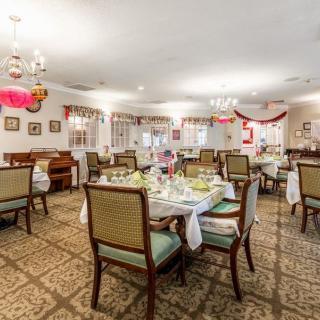
Dining stands out with consistently positive comments about meals and the dining room.
Several residents and family members describe meals they enjoy, including preferences like special diet accommodating and regular dining-room service. Multiple reviews also mention specific favorites (like bacon) and note that residents eat three meals a day plus snacks. Others point to the dining room as a place residents look forward to, though a few reviews say the food was not flavorful or was disappointing. Overall, dining is one of the more consistent strengths residents cite.
differentiator8 reviews mention this
Pricing is a key draw
The community is repeatedly described as affordable for assisted living.
Affordability comes up often in reviews, with several people saying the monthly cost or value felt good compared with alternatives. Some reviewers also frame the pricing as a reason they chose (or recommended) the community, especially when resources are tight. A few comments also compare private rooms to shared options, describing the difference as modest. While affordability is a theme, reviews still vary on cleanliness and staffing.
common20 reviews mention this
Staff is often described as kind
Residents and families frequently describe staff as attentive and caring.
In many reviews, people say the staff is friendly, helpful, and responsive to questions and day-to-day needs. Several family members describe staff going out of their way to support residents, and a few mention specific types of help like bringing meals to residents or assisting with care tasks. At the same time, there are also reviews that criticize staff behavior and management, so the experience is not uniformly positive. Still, positive staff impressions show up more than any other day-to-day theme.
caveat13 reviews mention this
Cleanliness and odors are a concern
Some reviews describe the facility as unclean or having strong odors.
A recurring negative theme is cleanliness, including comments about unpleasant smells and dirty conditions. Multiple reviews mention issues like rooms not being cleaned, unhygienic conditions, or pest-related concerns. There are also a few reports of older-looking facilities and areas described as messy, including during tours. On the positive side, other reviews say the building is clean and well maintained, but the negative cleanliness reviews are frequent enough to stand out.
common9 reviews mention this
Activities and social time vary
Activities are repeatedly mentioned, ranging from bingo nights to days out.
Many reviews describe residents participating in activities such as bingo, movies, and scheduled events, with some people saying there are multiple activities each day. Several also mention transportation and outings, and a few describe resident socializing and making friends. However, other reviews call activities slim or not as plentiful as expected. Overall, activities appear available, but the amount and variety are perceived differently by different reviewers.
How we summarize
Counts show how many written reviews mention each theme; a review can touch several themes, and only frequently mentioned themes are displayed.
Features
Housing
180 resident community capacity
Types of Care
Assisted Living
Amenities
Activities off-site
Activities on-site
Air-conditioning
Bath tubs
Beautician on-site
Beauty salon
Cable or satellite TV
Computer center
Devotional services off-site
Devotional services on-site
Dining room
Fitness room
Fully furnished
Gaming room
Garden
Ground floor units
Handicap accessible
Housekeeping services
Indoor common areas
Kitchenette
Move-in coordination
Outdoor common areas
Outdoor space
Private bathrooms
Respite or short term stays offered
Restaurant-style dining
Small library
Telephone
Wellness center
Wheelchair accessible showers
Wi-Fi/high-speed internet available
Transportation
Charlotte Douglas International (23 miles away)
Community operated transportation
Transportation arrangement
Transportation arrangement (non-medical)
Transportation to doctors appointments
Care Services
12-16 hour nursing
24-hour call system
24-hour supervision
Activities of daily living assistance
Assistance with bathing
Assistance with dressing
Assistance with transfers
Diabetes diet
Diabetic care
Incontinence care
Meal preparation and service
Medication management
Mental wellness program
Special dietary restrictions
Dining
Diabetes diet
Guest meals
Low / no sodium
Meals provided
No Sugar
Restaurant style dining
Special dietary restrictions
Activities
Activities off-site
Activities on-site
Art classes
Community-sponsored activities
Concierge services
Day trips and outings
Devotional activities offsite
Devotional activities on-site
Fitness programs
Karaoke
Live musical performances
Planned day trips
Resident-run activities
Scheduled daily activities
Stretching classes
Trivia games
Visiting chaplain or priest
Wii bowling
Nearby Places of Interest
Pharmacies
Cannon Pharmacy (0.5 miles)
CVS Pharmacy (5.4 miles)
Walgreens (5.4 miles)
CVS Pharmacy (8.3 miles)
CVS Pharmacy (9.6 miles)
Walgreens (9.8 miles)
CVS Pharmacy (9.8 miles)
Physicians
Weddington Internal Medicine and Pediatrics (1.6 miles)
Orthocarolina (8.9 miles)
University Family Physicians (9.6 miles)
Suburban Pediatrics (9.7 miles)
Greater Carolinas Womens Center PA (10 miles)
Novant Health Lakeside Family (10.4 miles)
Carolina Asthma & Allergy (10.4 miles)
Parks
Frank Liske Park (2.2 miles)
J.W. Mc Gee, Jr Park (2.4 miles)
Dorton Park (4.1 miles)
Richard Barry Park (13.6 miles)
Glen Oak Green Park (15.2 miles)
Cafes
Starbucks (5.6 miles)
Starbucks (9.5 miles)
Starbucks (12.5 miles)
Panera Bread (14.4 miles)
Smelly Cat Cof (15.1 miles)
Hex Coffee (16.3 miles)
Villanis Bakery (17 miles)
Transportation
Concord Regional Airport (JQF) (USA) (6.1 miles)
LYNX UNC Charlotte - Main Station (9.6 miles)
LYNX University City Boulevard Station (11.4 miles)
Sugar Creek Station (14.3 miles)
Theaters
AMC Concord Mills 24 (7 miles)
AMC Northlake 14 (14.1 miles)
Restaurants
Armored Cow Brewing (10 miles)
Chick-Fil-A (10.3 miles)
Burger King (10.3 miles)
Zaxby's (11.4 miles)
Arby's (11.7 miles)
McDonald's (12.9 miles)
Chick-Fil-A (13.4 miles)
Places of Worship
Liberty Baptist Church (14.2 miles)
Cove Church (17 miles)
Hospitals
Novant Health Huntersville Medical Center (14.5 miles)
The Living Center of Concord presents a competitive pricing structure for its residents, particularly when compared to both Cabarrus County and the broader North Carolina region. For semi-private accommodations, the monthly fee at The Living Center stands at $2,200, significantly lower than the county average of $3,167 and the state average of $3,584. Similarly, for studio apartments, residents can expect to pay $3,000 per month - again undercutting the local and state averages of $3,981 and $4,020, respectively. This positions The Living Center of Concord as an appealing option for those seeking quality care in a more affordable setting without compromising on the level of services provided.
Choosing between assisted living and nursing homes involves evaluating emotional and financial factors, with assisted living offering independence and support for daily activities at a lower cost, while nursing homes provide intensive medical care for individuals with significant health needs. The decision is influenced by personal preferences, health status, cognitive function, and varying Medicaid coverage across states.
Assisted living in 2025 offers a crucial balance of independence and support for seniors, with costs varying from $2,500 to over $7,000 per month based on factors such as location and care level. Understanding pricing complexities, including regional differences and potential hidden fees, is essential for families to plan financially while ensuring quality care for their loved ones.
The guide outlines the complexities of Medicaid coverage for assisted living, highlighting significant state-to-state variations, limited coverage often restricted to personal care services, and the existence of specialized waivers for certain needs like memory care. It advises families to consult local Medicaid offices for options while emphasizing the importance of understanding state-specific regulations and facility policies.
Get PricingAsk A QuestionSchedule A TourContact Senior Advisor
By clicking submit, you agree to our Partner's Terms of Use. You
also consent to receive calls and texts, which may be autodialed, from our Partner. Your consent is not a condition to
using our Partner's service. Please visit our Partner's Privacy Policy for information about their privacy practices.

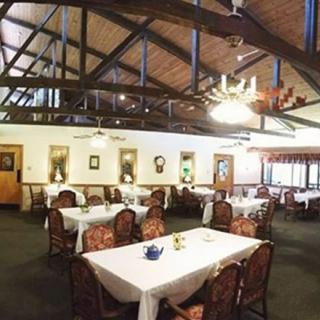
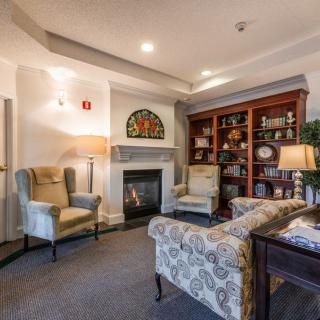
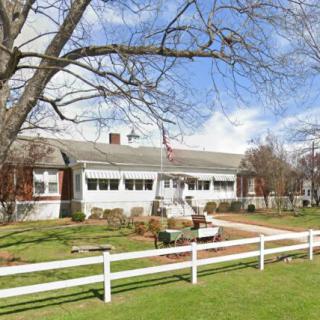
 180 resident community capacity
 Assisted Living
 Activities off-site
 Air-conditioning
 Bath tubs
 Beautician on-site
 Cable or satellite TV
 Computer center
 Devotional services off-site
 Dining room
 Fitness room
 Fully furnished
 Gaming room
 Garden
 Ground floor units
 Handicap accessible
 Housekeeping services
 Indoor common areas
 Kitchenette
 Move-in coordination
 Outdoor common areas
 Private bathrooms
 Respite or short term stays offered
 Restaurant-style dining
 Small library
 Telephone
 Wellness center
 Wheelchair accessible showers
 Wi-Fi/high-speed internet available
 Charlotte Douglas International (23 miles away)
 Community operated transportation
 12-16 hour nursing
 24-hour call system
 Assistance with bathing
 Assistance with dressing
 Assistance with transfers
 Diabetes diet
 Diabetic care
 Incontinence care
 Medication management
 Mental wellness program
 Special dietary restrictions
 Art classes
 Concierge services
 Day trips and outings
 Karaoke
 Live musical performances
 Trivia games
 Visiting chaplain or priest
 Wii bowling
 Small, intimate 6-bed home with personalized care and comprehensive services (diabetes/dietary accommodations, 24-hour supervision).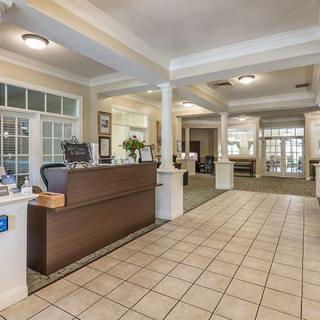
 Choosing the Right Senior Care: A Detailed Exploration of Assisted Living and Nursing Homes
 Understanding the True Cost of Assisted Living in 2025: A Comprehensive Guide
 Understanding Medicaid Coverage for Assisted Living: A Comprehensive Guide