

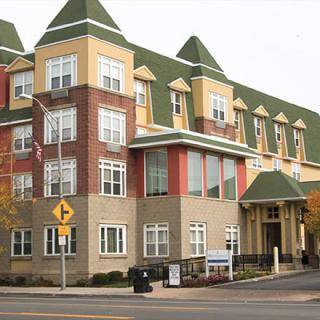
284 Main Street, Tonawanda, NY 14150
To contact a resident: (716) 692-2322
For more information about senior living options: (866) 208-4318
Kibler Senior Apartments Costs & Pricing
Kibler Senior Apartments offers an attractive and affordable option for seniors, with monthly rental rates significantly lower than both Erie County and the broader New York state averages. For instance, a one-bedroom unit is priced at just $512 per month, in stark contrast to the county average of $2,855 and the state average of $4,307. Similarly, the two-bedroom apartments at Kibler are available for $580 per month, which is considerably more economical than Erie County's average of $2,736 and New York state's average rate of $4,786. These competitive prices highlight Kibler Senior Apartments as a valuable choice for seniors seeking budget-friendly housing without sacrificing quality or community engagement.
| Floor plans | Kibler Senior Apartments | Erie County | New York |
|---|---|---|---|
| 1 Bedroom | $512 | $2,855 | $4,307 |
| 2 Bedrooms | $580 | $2,736 | $4,786 |
Senior living communities with a similar price nearby
-
About the same
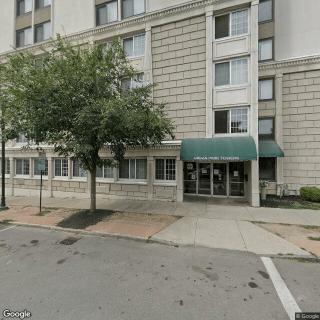
Urban Park Towers
$500 / month14.6 miles away
Overall Review of Kibler Senior Apartments
Pros
 The walls are thick, so residents don’t hear their neighbors.
- There is a gorgeous downstairs gathering room with plenty of tables.
- The atmosphere is nice.
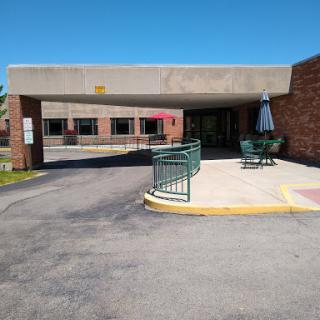
- The facility has easy access for disabled people.
- The space is kept very clean.
Cons
 The hallway smells like cigarettes and weed.
Review
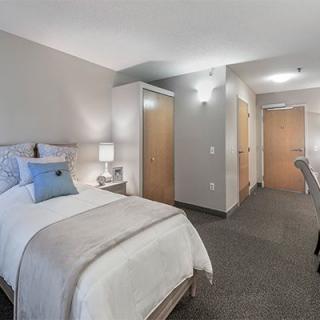
Kibler Senior Apartments in Tonawanda is best suited for independent seniors who want affordable rental living with real accessibility and a quiet, privacy-focused environment. The layout centers on upstairs rental units with a welcoming downstairs gathering room that invites casual socializing without requiring travel far. Thick walls translate into meaningful privacy, meaning residents won’t be kept awake by neighboring activity. The downstairs space is described as attractive and practical, with plenty of tables and a pleasant atmosphere that supports small gatherings and community connection. Accessibility features matter here: doors are easy to open and maneuver for disabled residents, reducing daily friction. Cleanliness across common areas reinforces the sense of order and reliability in a building designed for straightforward, independent living. In short, Kibler works well for seniors who prize independence, predictable maintenance, and a low-friction living environment rather than a care-forward campus.
That said, certain realities mean alternatives deserve consideration. The property does not read as a full-service care facility, and residents who anticipate needing daily personal assistance, on-site caregiving, or meals as part of the package should scrutinize whether Kibler can meet those needs. The upstairs rental arrangement raises practical questions for anyone who cannot navigate stairs or who would benefit from elevator access; confirm before committing whether real elevator access exists and how it functions day-to-day. A significant caveat is the odor in the hallway, smells of cigarettes and weed, which can be jarring for non-smokers or those with sensitivities to air quality. For families or residents who require a truly smoke-free environment, this dynamic is a meaningful reason to explore other options. In short, those seeking a pristine, cigarette-free atmosphere or stronger on-site support should consider alternatives.
The strongest positives at Kibler offset a lot of potential friction for the right resident. The thick walls that cushion noise contribute to a peaceful, private living experience, which matters for restful evenings and personal space. The downstairs social room provides a built-in venue for connection without leaving the building, supporting practical, low-effort social life that can reduce isolation. Cleanliness in common areas reinforces trust in maintenance and routine operations, a familiar and reassuring baseline for seniors who value reliability. The atmosphere in the downstairs space, described as welcoming, adds a tangible sense of community without demanding elaborate programming. These practical benefits create a reliable foundation for a comfortable, independent life. Yet the corridor odor remains a real counterweight, tempering the otherwise solid value proposition for individuals who are particularly odor-sensitive or who demand a consistently smoke-free environment.
To make a well-informed decision, prospective residents should prioritize a focused tour with specific questions. Verify whether upper-floor units truly require stairs or if elevator access exists, and ask about which parts of the building are designated non-smoking areas or subject to smoking policies. Inquire about air quality controls, ventilation, and the frequency of air exchange in hallways and common areas, since odor perception can vary with building dynamics. Assess on-site support opportunities: Is there staff available for maintenance requests or resident assistance, and what are typical response times? Check safety features for disabled residents, including entry accessibility, non-slip flooring, grab bars in bathrooms, and shower accommodations. Evaluate the downstairs gathering room in real life, noise levels during events, hours of use, and accessibility for guests, to gauge how feasible it is to sustain an active social life without leaving the property. Parking, visitor access, and the overall security posture are also worth confirming.
For families weighing Kibler against alternatives, the differences matter. If daily living tasks are expected to require regular help, an assisted living community or another model with on-site care will deliver more comprehensive support, meals, and around-the-clock supervision. If a truly smoke-free environment is non-negotiable, seek housing options that enforce strict no-smoking policies or offer complete smoke-free campuses. If elevator access is essential for one or more residents, confirm definitive building specifications and any anticipated changes. For those seeking richer programming, transportation, or amenities beyond a single downstairs room, compare other local senior housing options that can deliver a more robust social ecosystem. In short, Kibler stands out for independence and simplicity, but it is not a one-size-fits-all solution for seniors who anticipate needing substantial assistance or stricter air-quality controls.
The final assessment, then, positions Kibler Senior Apartments as a solid, practical option for independent seniors who value privacy, cleanliness, straightforward accessibility, and a modest, built-in social hub. The main caveat is the hallway odor, which can undermine comfort for residents sensitive to smoke or who require a smoke-free environment. For those who prize quiet living, clear maintenance responsibilities, and easy access to a communal space without heavy services, Kibler delivers a dependable, budget-conscious home base. For anyone anticipating the need for daily personal care, elevator-reliant upper-floor living, or an air-quality policy that excludes tobacco and cannabis use indoors, exploring alternatives is strongly advised. A focused tour that confirms elevator access, air-quality management, and the scope of on-site support will ensure decisions rest on current, concrete features rather than impressions. When aligned with real needs, Kibler Senior Apartments can be a pragmatic, low-drama choice that keeps daily life predictable and manageable.
 Active Adult Communities (55+)
 Cats allowed
 Dogs allowed
 Activities on-site
 Indoor common areas
 Buffalo Niagara International (9 miles away)

 Compassionate Conversations: How to Comfort Someone Who Is Grieving
 Home Health Care Aides: Understanding Their Role and Supporting Your Family
 Urinary Tract Infections in Older Adults: Comprehensive Insights on Symptoms, Treatment, and Prevention