
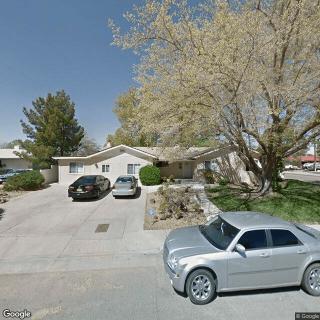
6303 Fourth Street Northwest #10, Albuquerque, NM 87107
To contact a resident: (505) 792-8230
For more information about senior living options: (866) 208-4318
Addus Healthcare Costs & Pricing
Addus Healthcare presents a competitive pricing structure for its services in Bernalillo County, New Mexico. For a semi-private room, the monthly cost at Addus is $3,395, which is slightly above the county's average of $3,285 and the state's average of $3,324. When it comes to one-bedroom accommodations, Addus charges $4,795 - considerably higher than both county and state averages of $4,162 and $4,055 respectively. While Addus Healthcare's rates may be elevated compared to local benchmarks, they reflect the quality of care and range of services provided. This pricing strategy is designed to support their commitment to delivering personalized healthcare solutions while remaining conscientious of regional market trends.
| Floor plans | Addus Healthcare | Bernalillo County | New Mexico |
|---|---|---|---|
| Semi-Private | $3,395 | $3,285 | $3,324 |
| 1 Bedroom | $4,795 | $4,162 | $4,055 |
Senior living communities with a similar price nearby
-
from -$595 / mo

Home Sweet Home - Palomas Drive
$2,800 to $3,500 / month4.5 miles away -
from -$195 / mo
Aspen Care
$3,200 to $3,500 / month4.3 miles away -
About the same

Vista Sandia Assisted Living
$3,400 to $4,500 / month5.4 miles away -
from -$145 / mo

Harmony House
$3,250 to $3,600 / month6.6 miles away -
from +$405 / mo

Bee Hive Homes of Albuquerque West
$3,800 / month4.1 miles away
Overall Review of Addus Healthcare
Pros
 The owner was really good.
- The aide they sent provided the care and assistance that was needed.
- The caregivers were very pleasant.
- Families were very happy with the care and residents seemed well taken care of.
- The driving service was pleasant and would be used again if needed.
Cons
 They were unprofessional and unorganized.
- They had to wipe each fingertip with a Clorox bleach wipe multiple times, leaving their fingertips raw.
- The fingerprinting technician did not help roll their fingerprints and had them do it themselves, getting frustrated when not perfect.
- They should go somewhere else for fingerprinting.
- They discovered bed sores because staff didn’t turn or check on the resident until late at night.
- The owner was sometimes good, but if she didn’t come, no one else would unless someone pressed them constantly.
- The service was not dependable or reliable; the first caregiver never showed up and got lost.
- The second caregiver came, did a few tasks, and left before the mom returned, leaving the dad alone.
- Getting in touch with Addus Healthcare was hard; it took multiple attempts to get a callback, and the aide was not particularly personable or friendly.
Review
This community is best suited for families seeking flexible, light-to-moderate assistance and practical transportation options, rather than round-the-clock medical oversight. The strongest fit is a senior who mostly needs help with errands, getting in and out of bed with occasional mobility support, and some companionship, while tolerating variability in staffing and responsiveness. When staff are present and the administrator is engaged, the experience can feel competent and approachable; there are moments where the care team appears capable and friendly, and the driving/transport service can ease daily logistics for non-driving seniors.
Those evaluating alternatives should consider options designed for steadier, more predictable staffing and stronger clinical oversight. If dependable caregiver schedules, consistent assignments, proactive monitoring, or rapid escalation of care are essential, other agencies or local facilities with a demonstrated track record in continuity of care and wound-prevention protocols may be a better fit. Families who cannot tolerate inconsistent communication or gaps in daily care should plan to explore other providers that prioritize predictable coverage and clearer accountability.
On the positive side, the reviews repeatedly highlight pleasant, personable aides and a transportation function that works well when in use. For families relying on occasional rides or assistance with errands, this can translate into meaningful, practical support without the friction that sometimes accompanies more medically intensive settings. The anecdote of an actively involved owner suggests that when leadership is present, issues receive attention and care plans can be adjusted. In short, there is substantive value for straightforward, non-urgent support needs delivered by a courteous caregiving team.
Yet the main drawbacks loom larger for anyone with more demanding care requirements. Reliability appears inconsistent: there are documented instances of a caregiver not showing up and others leaving patients alone or without timely attention. Communication is uneven, with some families reporting difficulty getting returned calls or timely updates. The most concerning element is the care quality captured in the bed-sore incident, which underscores a risk that a resident may not be turned or monitored as frequently as necessary. When administrative lapses intersect with direct care gaps, the potential for harm or deterioration increases noticeably.
Administratively, a pattern emerges: unorganized processes and frustrated interactions during onboarding or routine contact can color the entire experience. The fingerprinting episode, frustration, raw fingertips, and a sense that the process was mishandled, serves as a proxy for broader operational friction. While this is not a clinical failure in itself, it signals a culture that may struggle to respond quickly or with the level of precision families expect. Prospective clients should come with explicit expectations around communications, caregiver assignments, and a clear point person who will follow through on concerns and care adjustments.
Decision-ready guidance: request a formal, written care plan with assigned caregivers for a minimum two-week rotation, and insist on a dedicated supervisor who will provide weekly check-ins and rapid escalation if turning, skin checks, or daily oversight are slipping. Ask for references from families with residents who have similar needs and verify the exact process for scheduling, changes, and respite coverage. If the priority is robust reliability and proactive medical-follow-through, power the conversation with concrete metrics, response times to calls, caregiver continuity, and documented turning schedules. If these elements cannot be guaranteed, families should consider alternatives that deliver steadier oversight and more consistent day-to-day care.
 Albuquerque International (8 miles away)








 Navigating Medicare Coverage for In-Home Care Services
 In-Home Care Costs in 2025: A Detailed State-by-State Exploration
 Understanding Home Health Care: A Comprehensive Guide