Residents and families describe both attentive care and unmet needs.
Many reviewers say nurses and other staff are attentive, professional, kind, and responsive, with call lights answered quickly and concerns followed up. Several others describe long waits for help, unreliable follow-through, and staff behavior that felt rude or dismissive. A few reviewers also mention that staffing levels affected care, including situations where residents waited for basic assistance.
common
Facility cleanliness stands out
Reviews frequently mention a clean, well-kept building.
Positive reviews repeatedly highlight cleanliness, including rooms and common areas that feel maintained and free of odors. Other reviewers report the opposite, describing dirty rooms, bathroom cleanliness problems, and concerns about infection control practices. Overall, cleanliness is a noticeable theme that can go either way depending on the reviewer’s experience.
common
Rehab and therapy support
Therapists are described as encouraging and skilled.
Several reviews credit physical and occupational therapy for helping residents regain mobility after surgery or injury, with staff described as attentive and focused on progress. Some reviewers also mention speech therapy as part of their rehabilitation experience. On the negative side, a number of critiques describe therapy that felt limited or inconsistent, including concerns about time spent and safety during care.
common
Dining quality is a frequent note
Food quality comes up often in reviews.
Multiple reviewers praise meals as delicious and describe dining experiences in the cafeteria/dining area as pleasant and accommodating, with friendly servers. Others say food was only okay or that meals were incorrect or forgotten. A few negative comments also connect meal experiences to broader concerns about care follow-through.
caveat
Short staffing affects care
Some reviews say understaffing delayed basic help.
A recurring criticism is that the facility can be short staffed, with reports that nurses were expected to cover additional roles and that call lights weren’t answered promptly. Some reviewers describe residents being left waiting for assistance with toileting, transfers, and bedside needs. Several accounts connect these delays to safety concerns and a higher burden on family members.
caveat
Medication and care-safety issues
Some families describe serious medication and safety problems.
Several negative reviews describe medication-related mistakes or missing care, including issues around diabetic medication being overlooked and problems with medication administration timing. Others describe safety breakdowns during rehabilitation, such as concerns about incomplete attention to health changes or delayed responses to urgent situations. While other reviewers describe safe, professional care, these reports are consistent enough to be a major caution flag.
How we summarize
We summarize when many written reviews mention each theme; a review can touch several themes, and only frequently mentioned themes are displayed.
Features
Types of Care
Assisted Living
Memory Care
Skilled Nursing Facility
Amenities
Activities on-site
Devotional services off-site
Indoor common areas
Transportation
Lambert-St Louis International (11 miles away)
Care Services
Ambulatory care
Diabetic care
Dining
Meals provided
Activities
Activities on-site
Devotional activities offsite
Nearby Places of Interest
Parks
Faust Park (0.8 miles)
Chesterfield Central Park (2.7 miles)
Creve Coeur Park (4.2 miles)
Queeny County Park (4.9 miles)
Vlasis Park (5.5 miles)
Schaefer Park (5.5 miles)
Vogt Brothers Park (5.6 miles)
Pharmacies
Schnucks (1.6 miles)
Dierbergs Markets (1.7 miles)
Walgreens (1.8 miles)
Dierbergs (3 miles)
Dierbergs (3.7 miles)
CVS Pharmacy (3.8 miles)
Schnucks (4.6 miles)
Cafes
Panera Bread (1.7 miles)
Panera Bread (3.3 miles)
Starbucks (5.3 miles)
Starbucks (6 miles)
Panera Bread (6.5 miles)
Restaurants
The Cheesecake Factory (2.3 miles)
St Louis Bread Co. (2.8 miles)
Olive Garden (3.4 miles)
Cooper's Hawk Winery & Restaurant (3.7 miles)
Chick-Fil-A (3.9 miles)
54th Street Grill & Bar (4 miles)
Syberg's Chesterfield (4.1 miles)
Hospitals
Barnes-Jewish West County Hospital (3.5 miles)
St John's Mercy Surgery Center (5.1 miles)
DePaul Hospital (7.4 miles)
Places of Worship
Jungs Station Baptist Church (5.1 miles)
Church of Christ-Lafayette (6 miles)
Harvester Nazarene NMI (6.2 miles)
St John Church (6.4 miles)
Transportation
Enterprise Rent-A-Car (6 miles)
Million Air (6.3 miles)
TAC Air (6.4 miles)
Theaters
Marcus Theatres (6 miles)
AMC Streets Of St Charles 8 (6.6 miles)
Physicians
SSM Family Medicine (6.5 miles)
Ssm St Joseph Medical Park (6.5 miles)
Walsh, Martin Ssm Health Outpatient Center Veterans Memorial Parkway (6.6 miles)
Dementia, including Alzheimer’s disease, is often mischaracterized in terms of lethality as it leads to complications that can be fatal rather than being a direct cause of death; it causes a progressive decline in cognitive and physical health, making patients vulnerable to infections and other health crises. Effective management of nutrition, hydration, and communication is crucial in patient care, with palliative care becoming vital in advanced stages to enhance comfort and quality of life while caregivers play a key role amidst the challenges posed by the disease.
Reminiscence therapy helps individuals with dementia recall past memories through structured discussions and meaningful objects, enhancing mood, relationships, and sense of identity while celebrating their lives. It can be practiced in formal settings or at home, requiring sensitivity to personal histories and cultural backgrounds.
Reminiscence therapy is a structured method for older adults, especially those with dementia, to share life stories using prompts and sensory cues, fostering emotional well-being, social engagement, and self-identity. It aims to improve quality of life by enhancing interpersonal connections and cognitive stimulation while requiring careful facilitation to avoid distressing memories.
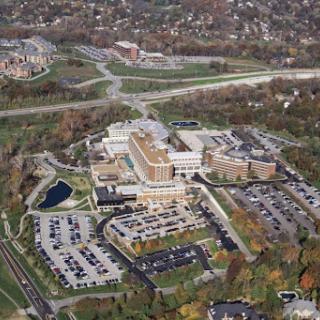
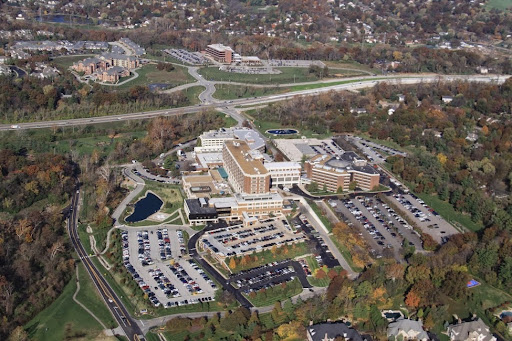
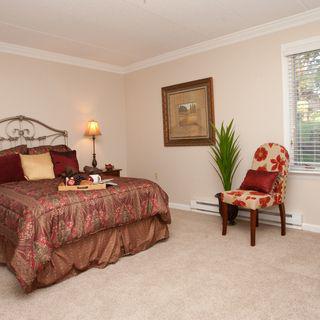
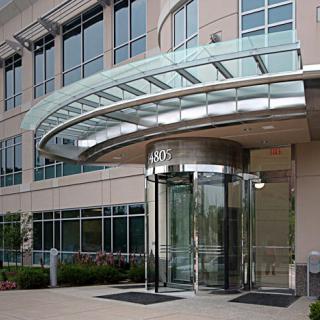
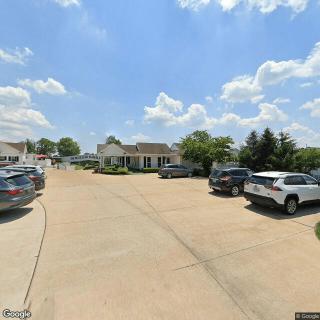
Landscaping, Building, Nature, Parking, and Aerial View
Get PricingAsk A QuestionSchedule A TourContact Senior Advisor
By clicking submit, you agree to our Partner's Terms of Use. You
also consent to receive calls and texts, which may be autodialed, from our Partner. Your consent is not a condition to
using our Partner's service. Please visit our Partner's Privacy Policy for information about their privacy practices.

 Assisted Living
 Memory Care
 Skilled Nursing Facility
 Activities on-site
 Devotional services off-site
 Indoor common areas
 Lambert-St Louis International (11 miles away)
 Ambulatory care
 Diabetic care
 Meals provided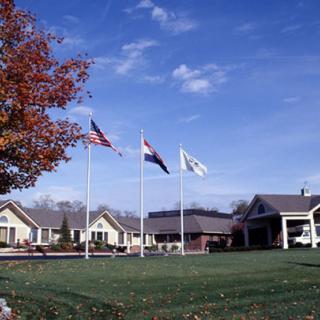
 24-hour supervision with comprehensive care (ADL assistance, medication management) plus amenities and transportation for medical appointments.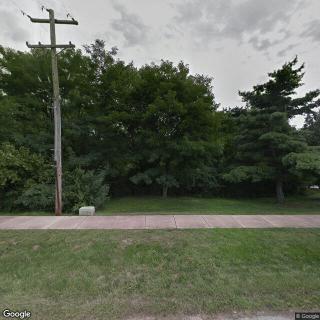




 Are Dementia and Alzheimer's Disease Lethal? A Comprehensive Exploration
 Exploring the Power of Reminiscence Therapy for Individuals With Dementia
 An In-Depth Look at Reminiscence Therapy in Dementia Care