
350 Stevens Street West, St Paul, MN 55107
For more information about senior living options: (866) 208-4318
Specialized Home Health Care Services Costs & Pricing
When considering specialized home health care services in Ramsey County, Minnesota, costs vary significantly depending on the type of accommodation. For a studio setting, the average monthly cost for specialized care is approximately $3,885, which is slightly higher than the county's average of $3,546 but less than the statewide average of $3,617. Semi-private rooms are priced at $4,100 for specialized services, again exceeding both county and state averages of $3,915 and $4,051 respectively. In contrast, private room rates present a different scenario; here the specialized service fee of $4,995 falls below Ramsey County's typical charge of $5,162 but remains competitive against the state average of $5,090. For those seeking more spacious accommodations such as a one-bedroom unit with additional support services, the cost escalates to $5,295 - substantially above the county's low rate of $2,287 and state average of $2,893. This price differentiation underscores the premium placed on specialized health care provisions in home settings across varying living arrangements within Ramsey County compared to broader state trends.
| Floor plans | Specialized Home Health Care Services | Ramsey County | Minnesota |
|---|---|---|---|
| Studio | $3,885 | $3,546 | $3,617 |
| Semi-Private | $4,100 | $3,915 | $4,051 |
| Private | $4,995 | $5,162 | $5,090 |
| 1 Bedroom | $5,295 | $2,287 | $2,893 |
Memory care communities with a similar price nearby
-
from +$715 / mo

Comforts of Home Memory Care - River Falls
$4,600 to $4,700 / month24.0 miles away -
from -$545 / mo
The Fountains at Hosanna
$3,340 to $4,440 / month16.9 miles away -
from +$410 / mo
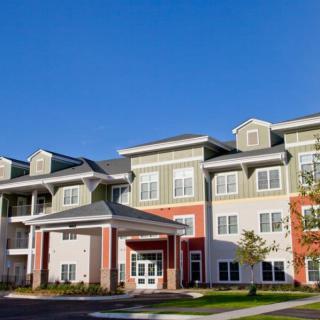
Keystone Place at LaValle Fields
$4,295 to $5,695 / month16.8 miles away -
About the same
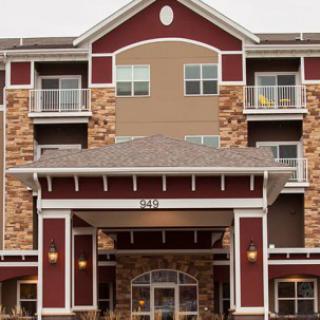
Lilydale Senior Living
$3,780 / month2.5 miles away -
from -$385 / mo

Atlas Villas Memory Care
$3,500 / month17.7 miles away
Overall Review of Specialized Home Health Care Services
Pros
 Abdi is a calm and encouraging nurse and teacher.
- He is highly professional, kind, and consistently positive.
- He is wise beyond his years and always has thoughtful and encouraging ideas to share.
- He asks how the patient is doing, really listens, and responds with helpful suggestions.
- Abdi has been a true blessing during the recovery.
- Serenity should be proud to have such an extraordinary professional in their company.
- The care provided was amazing, and the team is very helpful.
Review
This community is best suited for adults who need skilled home health care with tight clinical oversight, particularly those recovering from surgery or managing conditions that require airway management, wound care, and regular physiological monitoring. The model centers on delivering professional nursing into the patient’s home, emphasizing wound care, bandage changes, and ongoing checks of physical and mental health. For families prioritizing meticulous clinical supervision and a calm, encouraging caregiver presence, this provider offers a highly reliable path to safer, steadier recovery in a home setting and should be seriously considered.
Those who may want to consider alternatives are families seeking more than medical oversight. If the goal is a social, activity-rich environment with meals, shared living space, and 24/7 on-site supervision, an assisted living or memory care facility will be a better fit. Similarly, if a consistent, single-point caregiver relationship and more extensive daytime companionship are priorities, a residential option with built-in programming may outperform a specialized home health model. This service excels at care quality, but it is not a substitute for a community that emphasizes social life and round-the-clock housing support.
The positives are substantial and meaningful in real-world recovery. The nursing care is conveyed with a rare blend of technical excellence and empathetic, steady behavior. A clinician described as calm, encouraging, and highly professional provides not only skilled services but also reassurance during a vulnerable phase. Care encompasses wound management, routine checks of blood pressure and oxygen, and mental health monitoring, yielding a holistic approach to health. An important practical strength is the ability to teach patients and families how to perform essential tasks at home, such as changing dressings or managing trach ties, which reduces dependence on visiting staff between appointments. The provider’s proactive problem-solving, advocating for supplies and coordinating resources, translates into tangible recovery advantages.
There is a workable, if modest, constraint to acknowledge: certain procedures, like trach ties, require two people, which can complicate scheduling and potentially slow response times when staffing is tight. This is a legitimate consideration for families planning care around specific routines or faster turnaround. However, the overall clinical caliber and the staff’s logistical responsiveness, evidenced by hands-on teaching, careful monitoring, and quick action to secure needed supplies, greatly offset the scheduling wrinkle. When recovery hinges on precise, consistent care and on a clinician who can adjust plans responsively, the strengths here diminish the impact of the two-person requirement.
For decision-makers weighing options, the clear takeaway is that this service is a practical match for scenarios centered on skilled nursing at home, not on social programming. It delivers high-level clinical practice, transparent communication, and caregiver empowerment, elements that materially support safety and progress in recovery. If the priority is maximizing independence at home through rigorous medical oversight and education, this setting earns strong consideration. If instead the aim is constant social engagement or live-in supervision, alternatives with built-in living arrangements should be explored.
Bottom line: in St Paul, MN, this specialized home health option stands as a compelling choice for patients needing rigorous skilled nursing and close medical oversight within the home. The standout value lies in the nursing staff’s expertise, calm demeanor, and proactive, patient-centered approach. The main caveat, two-person requirements for certain procedures, must be planned around with scheduling and caregiver coordination. With those realities acknowledged, this service offers a practical, effective path to safer, steadier recovery and ongoing health maintenance in a home setting.
 21 resident community capacity
 Assisted Living
 Memory Care
 Beauty salon
 Cable or satellite TV
 Dining room
 Fully furnished
 Garden
 Housekeeping services
 Kitchenette
 Move-in coordination
 Outdoor space
 Restaurant-style dining
 Small library
 Telephone
 Wi-Fi/high-speed internet available
 Minneapolis-St Paul International (7 miles away)
 24-hour call system
 Activities of daily living assistance
 Assistance with bathing
 Assistance with dressing
 Assistance with transfers
 Diabetes diet
 Medication management
 Mental wellness program
 Special dietary restrictions

 Dementia Behaviors: In-Depth Understanding and Effective Coping Strategies
 5 Early Indicators of Dementia and What You Can Do
 8 Important Indicators That Memory Care May Be Necessary