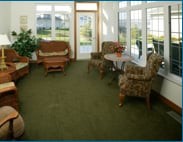




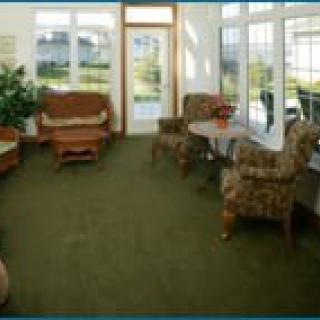





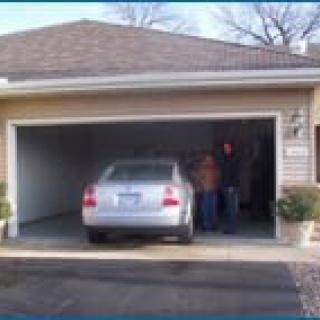
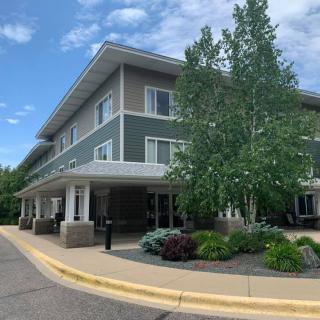
13417 Lake Street Extension, Minnetonka, MN 55305
For more information about senior living options: (866) 208-4318
Overall Review of Emerald Crest Of Minnetonka
Pros
 The staff treated her with respect and dignity beyond expectations.
- Visitors are welcomed and feel like family.
- The pastor Arlen is loving and compassionate with all residents.
- Emerald Crest Minnetonka is a beautiful, peaceful, and loving place for loved ones.
- Emerald Crest Minnetonka has been a wonderful placement for families.
- Families feel grateful for ECM’s services and care.
- The staff respond quickly and professionally to family needs.
- Many would highly recommend Emerald Crest Minnetonka for memory care.
Cons
 Emerald Crest Memory Care is like a prison for the elderly.
- A relative starved themselves to death at this facility because they were depressed and had no control over their life.
- Another family member placed their relative there against their will, exaggerating memory problems.
- The power of attorney did not want funds spent on caregiving, preferring not to drain resources.
- The relative had no way to call out to talk to people.
- Other residents would enter the relative's room to take things, and staff did not monitor everyone.
- The relative became depressed, lost their appetite, and grew too weak to eat without assistance because staff did not help.
- The facility is understaffed, and the manager is heartless; people are locked in the building.
- Only two staff members were on site most of the time, and doors were locked, trapping residents and visitors.
- The staff were hard to find for assistance, endangering safety.
Review
Emerald Crest Minnetonka is best suited for families seeking a warm, intimate memory-care setting where residents are treated with dignity and personal warmth, and where faith-based and community activities help anchor daily life. The model works well for seniors who prefer a homelike environment, where visitors are welcome and staff are proactive in building relationships. The emphasis on respect, gentle caregiving, and accessibility to volunteer and pastoral support makes it a strong choice for relatives who want to stay closely connected to their loved one and who value social engagement and routine. It may be less suitable for those needing intense, around-the-clock supervision or a facility with highly structured, highly regulated safety programs.
On the positive side, residents often benefit from a culture of courtesy and responsiveness. Several accounts describe staff and caregivers as welcoming, kind, and attentive, with families feeling like part of a larger community. The presence of a pastor who actively engages residents and families adds a meaningful layer of support for those who value spiritual and social programming. The memory-care setting is repeatedly depicted as beautiful and peaceful, with visitors encouraged to participate, reinforcing a sense of belonging and purpose. When these elements align, the environment delivers genuine emotional and social nourishment that can be hard to find elsewhere.
However, there are serious cautions raised in other accounts. Critics describe chronic understaffing and inconsistent availability of help, especially during critical moments. Disturbing allegations recount residents being left unattended, difficulty summoning assistance, and experiences suggesting restricted movement within the facility. Food quality and meal provisioning are raised as concerns in some reports, with meals perceived as unappealing or not prepared to standard. The sharpest concerns revolve around safety and autonomy, claims that slow or absent help can erode health, and, in at least one recollection, a tragic outcome that family members attribute to neglect. Taken together, the negative experiences underscore a fragile balance between care culture and operational capacity.
These strengths and weaknesses compete in real life; the deciding factor is whether strong, visible staffing and proactive management can sustain the compassionate culture. When staff are present, calls are answered promptly, and residents have meaningful opportunities to engage and socialize, the positive experiences can significantly offset concerns about gaps in operations. The pastoral and communal components provide essential emotional support that many families cannot easily replicate at home, especially for memory-care residents who crave routine and familiarity. In short, the environment can deliver a high quality of life, so long as the facility maintains adequate staffing and ensures residents are not left waiting for basic assistance.
Families should also examine alternatives that offer similar memory-care strengths but different staffing models. Look at nearby memory-care communities with documented higher caregiver-to-resident ratios, clearer safety protocols, and transparent incident records. For those who prioritize independence and home-like routines, in-home care or a smaller non-locked setting may be preferable. The decision should hinge on firsthand observations: tour during multiple shifts, observe wait times for assistance, speak with several staff members about daily routines, and ask how management handles complaints and critical incidents. The right match balances human connection with dependable safety, and that balance is what ultimately determines whether Emerald Crest Minnetonka is the prudent choice.
 33 resident community capacity
 Assisted Living
 Beauty salon
 Cable or satellite TV
 Dining room
 Fully furnished
 Garden
 Housekeeping services
 Kitchenette
 Move-in coordination
 Outdoor space
 Telephone
 Wi-Fi/high-speed internet available
 Minneapolis-St Paul International (12 miles away)
 24-hour call system
 Activities of daily living assistance
 Assistance with bathing
 Assistance with dressing
 Assistance with transfers
 Diabetes diet
 Meal preparation and service
 Medication management
 Mental wellness program
 Special dietary restrictions
 Transportation arrangement (medical)
 Transportation to doctors appointments




 Vibrant Senior Living: A Comprehensive Guide for Active Older Adults
 When to Transition from Assisted Living to Memory Care: Key Indicators, Steps, and Finding the Right Community
 Assisted Living and Memory Care: Understanding Their Core Differences