
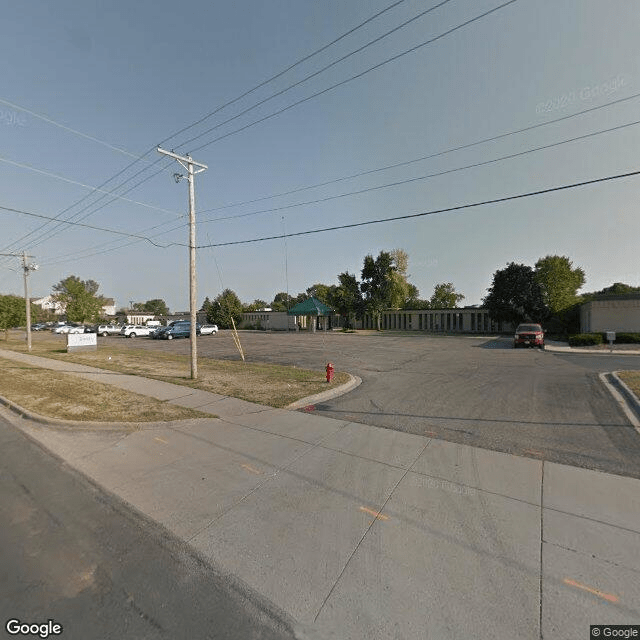
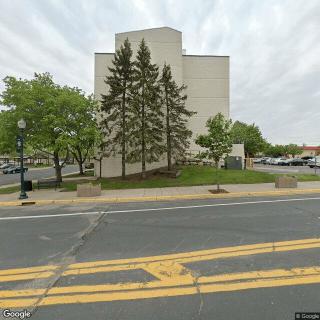
905 Elm St, Farmington, MN 55024
To contact a resident: (651) 463-7818
For more information about senior living options: (866) 208-4318
Farmington Health Services Trinity Campus Costs & Pricing
Farmington Health Services Trinity Campus offers competitive pricing for various room types when compared to both Dakota County and the broader Minnesota landscape. For instance, a studio at Trinity Campus is priced at $1,300, significantly lower than the county average of $3,683 and the state average of $3,617. Similarly, the one-bedroom units are available for $1,440, which not only makes them more affordable than Dakota County's rate of $2,715 but also below Minnesota's average of $2,893. The two-bedroom option at $2,205 remains appealing against both county and state averages that sit notably higher. Even in semi-private and private room accommodations - priced at $2,500 and $3,500 respectively - Trinity Campus continues to stand out as a more economical choice compared to the county rates of $3,691 and $5,040 as well as statewide averages. This cost-effectiveness positions Farmington Health Services Trinity Campus as an attractive option for individuals seeking quality care without compromising their financial stability.
| Floor plans | Farmington Health Services Trinity Campus | Dakota County | Minnesota |
|---|---|---|---|
| Studio | $1,300 | $3,683 | $3,617 |
| 1 Bedroom | $1,440 | $2,715 | $2,893 |
| 2 Bedrooms | $2,205 | $2,580 | $2,955 |
| Semi-Private | $2,500 | $3,691 | $4,051 |
| Private | $3,500 | $5,040 | $5,090 |
Memory care communities with a similar price nearby
-
from -$245 / mo

Norris Square
$1,055 to $4,430 / month15.4 miles away -
from +$237 / mo
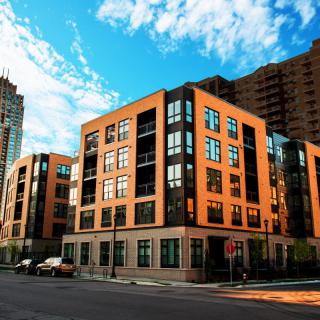
Abiitan Mill City
$1,537 to $2,396 / month24.3 miles away -
from +$146 / mo
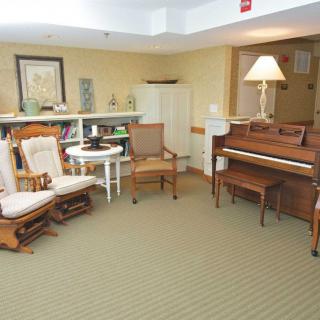
Oak Meadows
$1,446 to $3,500 / month23.4 miles away -
from -$200 / mo
Presbyterian Homes Of Inver Grove Heights
$1,100 to $2,900 / month15.6 miles away -
from -$88 / mo
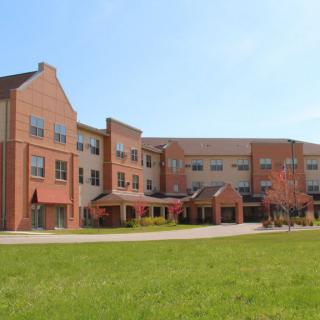
The Villages of Lonsdale
$1,212 to $6,478 / month17.6 miles away
Overall Review of Farmington Health Services Trinity Campus
Pros
 The staff have been wonderful with the mom.
- The RAs love on her and treat her with care and respect.
- The business person has been helpful getting mom settled and started on therapies.
- There is plenty of food at mealtimes, and the mom really likes the food.
- There is always something going on and many activities the mom enjoys, such as painting, Bingo, card games, workouts, and manicures.
- The staff there have been incredibly helpful and supportive.
- The mom is really happy there.
- Trinity Care Center is beautiful and the staff are caring and personable.
- The center offers amenities like a hair salon and physical therapy, and bingo is a regular activity.
Cons
 One reviewer notes that everything can use an improvement.
Review
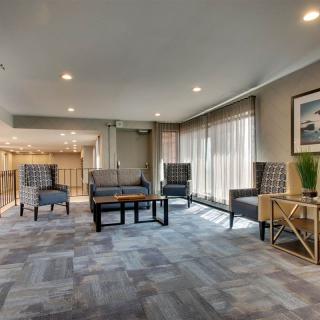
This community is best suited for seniors who want a warm, social, care-inclusive environment on a single campus, with dependable staff engagement and a robust activities calendar. The Trinity Campus shines for residents who value person-centered care delivered with kindness, where front-line staff show real warmth and attentiveness. Families repeatedly note that aides treat their loved ones with care and respect, and that management helps families settle in, set up therapies, and stay informed. The setting supports both independence and supported living because the campus offers senior living, assisted living, and nursing care in one place, along with convenient amenities like a hair salon and on-site physical therapy. The layout, the central dining area surrounded by rooms, cobblestones, and a waterfall, fosters a welcoming, home-like atmosphere that can make transitions feel natural rather than disruptive.
Alternative choices should be considered by families who crave a more contemporary, minimalist design or who require highly specialized, memory-focused programming beyond what a mixed campus can routinely provide. While Trinity Campus is beautifully designed and deeply personable, the reviews acknowledge that “everything can use an improvement,” a reminder that the facility is not a flawless model of perfection. For households seeking cutting-edge technology, ultra-modern interiors, or strictly regimented clinical routines, a different community may offer a better fit. Similarly, those with tighter budgets or narrower care needs may find other options that better align with financial or medical priorities.
The strongest proline here lies in people: staff who are consistently described as helpful, supportive, and genuinely caring. Families report that communication is excellent, with staff answering questions and keeping relatives in the loop about therapies and daily routines. The care team’s continuity, plus the ability to move within the campus from assisted living to skilled nursing as needs evolve, reduces the stress of arranging new placements and multiple transfers. This continuity is a meaningful offset to any minor service gaps, because it preserves familiar faces and a predictable routine at a time when consistency matters most.
Meal quality and social engagement are standout positives that further offset potential drawbacks. Residents have ample food at mealtimes, with options and a salad bar noted at lunch, and staff are willing to accommodate individual tastes, one resident’s preference for soup is explicitly mentioned as being respected. The abundance of activities, from painting and Bingo to card games, workouts, and manicures, helps residents stay connected, meet peers, and maintain a sense of purpose. The combination of tasty meals, responsive dining service, and a lively activity calendar translates into a tangible quality-of-life uplift that families value when evaluating daily-life feasibility.
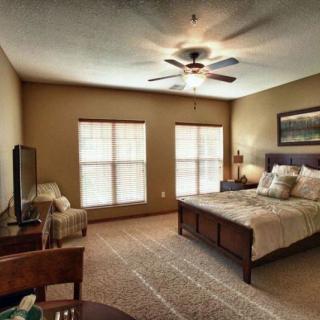
The practical realities of a multi-level campus come into sharper focus when weighing decisions. The presence of a hair salon, regular physical therapy, and frequent social events adds to the sense of home and normalcy, particularly for residents who thrive in a busy, engaging environment. Room size and layout are also favorable assets, with generous closet space and the ability to accommodate personal belongings comfortably. On balance, Trinity Campus effectively balances warmth, care, and convenience, even as any facility faces ongoing opportunities for refinement. For families needing a stable, mission-driven community with strong staff relationships and easy access to escalating levels of care, this campus delivers.
When forming a plan, prospective residents and families should prioritize in-person observations: meet front-line staff and the business team, tour the dining area during a meal, sample the menu, and participate in an activity or two to gauge fit. Ask about how care levels transition on campus and what the daily schedule looks like for a typical resident at each stage. Check in on communication cadence with families and request recent examples of how concerns were addressed. If the aim is a socially active environment with heartfelt support and clear pathways to greater care if needed, Trinity Campus stands out as a confident, practical choice. If those elements are not the top priority, or if a more modern, specialized setting is necessary, consider alternatives that foreground those specifics.
 Assisted Living
 Independent Living
 Memory Care
 Cats allowed
 Dogs allowed
 Activities on-site
 Air-conditioning
 Bath tubs
 Beautician on-site
 Devotional services on-site
 Full kitchen
 Ground floor units
 Handicap accessible
 Indoor common areas
 Outdoor common areas
 Private bathrooms
 Wheelchair accessible showers
 Minneapolis-St Paul International (17 miles away)
 Ambulatory care
 Diabetic care
 High acuity care
 Incontinence care
 Medication management
 Guest meals
 Stretching classes
 Exploring the Power of Reminiscence Therapy for Individuals With Dementia
 An In-Depth Look at Reminiscence Therapy in Dementia Care
 Dementia-Related Hallucinations: Causes, Experiences, and Practical Approaches