
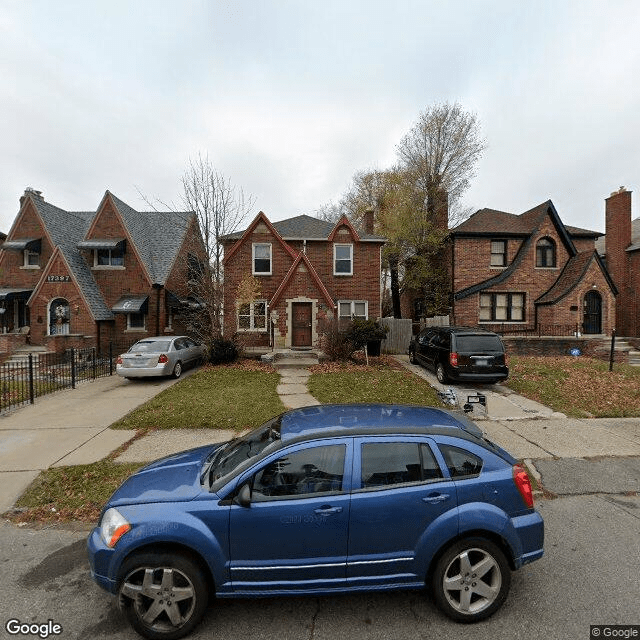
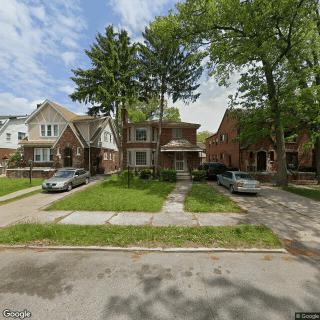
17403 Prairie, Detroit, MI 48221
To contact a resident: (313) 574-1285
For more information about senior living options: (866) 208-4318
Providential Support Services - Melody Costs & Pricing
Providential Support Services - Melody offers competitive pricing for its accommodations compared to both Wayne County and the broader state of Michigan. For semi-private rooms, the cost is set at $1,000 per month, significantly lower than the county average of $2,860 and the state average of $3,191. Similarly, private rooms are priced at $1,500 per month, which also represents a substantial savings compared to Wayne County's average of $3,335 and Michigan's state-wide average of $3,675. This pricing structure makes Providential Support Services - Melody an attractive option for those seeking affordable yet quality support services in a welcoming environment.
| Floor plans | Providential Support Services - Melody | Wayne County | Michigan |
|---|---|---|---|
| Semi-Private | $1,000 | $2,860 | $3,189 |
| Private | $1,500 | $3,335 | $3,674 |
Senior living communities with a similar price nearby
-
from -$150 / mo

Loving Care Home #1
$850 to $1,000 / month2.6 miles away -
from -$150 / mo
Loving Care Home #3
$850 to $1,000 / month2.6 miles away -
from -$100 / mo

King Special Care
$900 to $2,500 / month8.4 miles away -
About the same

Marian Oakland
$997 to $2,227 / month10.3 miles away -
from +$99 / mo

Imperial Senior Suites
$1,099 to $1,399 / month8.7 miles away
Overall Review of Providential Support Services - Melody
Pros
 The care team provided excellent hospice care.
- Providence staff were helpful and compassionate.
- Most of the staff are in the right field.
- The organization is a wonderful Christian organization that cares about patients and their families.
- The services were greatly appreciated.
Cons
 The place does not value employees.
- Anyone is replaceable and they will move on to the next one.
- Communication on employees' serious personal life issues does not happen.
- Such concerns are not even considered by management.
- Workers are treated as workers, rather than as people.
Review
Providential Support Services - Melody in Detroit is best suited for families seeking hospice-aligned, faith-infused senior care where compassionate, patient-centered support is the core promise. The setting leans into a warm, family-oriented approach, with clear emphasis on comfort, dignity, and spiritual considerations. The care story is strongest when the goal is attentive end-of-life or palliative support, delivered by staff whose dedication and empathy are repeatedly highlighted by families. In practice, Melody earns its stripes from the way caregivers engage with patients and their loved ones, creating a sense of steadiness during trying transitions.
Those evaluating Melody should also explicitly consider alternatives for two kinds of needs. First, families that require consistently seamless, management-level communication about personal issues and a demonstrable value on employee engagement may want to screen other providers. A recurring criticism centers on how personal matters are handled at leadership levels, with some staff feeling undervalued and a sense that “you are a worker” rather than a person. Second, families seeking highly reliable staff retention and aggressive HR practices may find it prudent to compare facilities with stronger governance and more transparent channels for addressing caregiver concerns.
The main pros at Melody, exceptional hospice-style care, authentic compassion, and a culture that prioritizes patients and their families, often offset substantial emotional strain. Positive care experiences are grounded in staff who appear to be in the right field, delivering warmth, attentiveness, and practical support when it matters most. The Christian orientation is not a marketing line but a lived value, resonating with families who want to see faith-informed comfort, prayerful moments, and a sense that the care environment respects religious perspectives. These strengths create meaningful gains in quality of life for residents facing serious illness or end-of-life needs.
Yet the strongest gains can be undermined by the weight of the consistency gaps. The most salient downside is a perception of poor employee valuation and limited responsiveness from management on personal life issues. When communication falters or staff feel dispensable, the very reliability of everyday care can be called into question, especially for families monitoring nuanced needs or seeking steady advocacy on behalf of their loved one. For families where administrative clarity and proactive outreach are non-negotiable, these concerns can erode trust and complicate decision-making, even when direct patient care remains compassionate and competent.
In practical terms, families choosing Melody should be prepared to verify two things early in the process. First, obtain a clear picture of how care coordinators, social workers, and nursing leadership coordinate with families, and what escalation paths exist for sensitive personal matters. Second, probe the stability of staffing and the facility’s approach to employee development and retention, so expectations about consistency can be aligned with real-world practice. A visit that includes conversations with direct caregivers, a tour of the care routines, and discussions about spiritual support can illuminate whether the environment will meet both clinical and emotional needs of a loved one.
Bottom line: Melody offers a compelling option for those prioritizing compassionate, faith-aligned hospice care, with a proven record of caring for patients and families in meaningful ways. The decisive caveat is the inconsistency some families report in management responsiveness and in valuing frontline staff, which can color day-to-day experience even where care quality shines. For families who prize warmth, empathy, and a Christian-care ethos, Melody stands out as a strong choice. For those who demand flawless administrative communication and rock-solid staff consistency, it is prudent to weigh alternatives where governance and HR practices are more robust and less prone to leaving caregivers feeling unseen.
 Board and Care Home
 Private
 Detroit Metropolitan-Wayne County (18 miles away)
 High acuity care
 Medication management




 Navigating the Financial Road to Nursing Home Care: In-Depth Guidance and Resources
 Supportive Employee Benefits That Help Caregivers Attain Better Work-Life Harmony
 Top Cars for Senior Drivers and Essential Safety Innovations