Overall Review of Quail Run Assisted Living Building 4
differentiator3 reviews mention this
Memory care feels tailored
Residents and families describe memory care support as hands-on and individualized.
Several reviewers specifically mention memory care and dementia support, including staff helping address changing behaviors and finding an appropriate fit. One review says the team worked to get a resident on proper treatment for Alzheimer’s-related behaviors. Another describes long-term memory care with staff adapting care as cognitive losses progressed and supporting visits between family members.
common2 reviews mention this
Outdoor setting with deer
The grounds and outdoor areas stand out in resident and family descriptions.
Two reviewers point to the setting outdoors as part of what makes visits feel comfortable, including access to outdoor seating and walking areas. One mentions enjoying a deck view of deer, and another highlights the grounds as well kept with deer on-site.
common2 reviews mention this
Meals described as homemade
Residents’ food is described as healthy and homemade in multiple accounts.
At least a couple of reviewers call out that the food is homemade and describe it positively. One notes meals are healthy and homemade, and another praises the food while describing individualized serving approaches for residents’ needs.
caveat2 reviews mention this
Some families cite care issues
A small number of reviews raise serious concerns about care and management.
Two reviewers describe negative experiences involving care and facility management, including complaints about neglect and inadequate response. One also alleges problems related to COVID procedures and testing, while the other reports bedding and hygiene concerns that were not corrected until the reviewer intervened.
How we summarize
Counts show how many written reviews mention each theme; a review can touch several themes, and only frequently mentioned themes are displayed.
Features
Housing
16 resident community capacity
Types of Care
Assisted Living
Board and Care Home
Respite Care
Amenities
Cable or satellite TV
Dining room
Fully furnished
Garden
Housekeeping services
Move-in coordination
Outdoor space
Telephone
Wi-Fi/high-speed internet available
Transportation
Baltimore-Washington International (19 miles away)
Care Services
24-hour supervision
Activities of daily living assistance
Assistance with bathing
Assistance with dressing
Assistance with transfers
Coordination with health care providers
Diabetes diet
Meal preparation and service
Medication management
Special dietary restrictions
Transportation arrangement (medical)
Transportation to doctors appointments
Dining
Diabetes diet
Special dietary restrictions
Activities
Community-sponsored activities
Scheduled daily activities
Nearby Places of Interest
This part of Parkville, Maryland offers a variety of amenities and services that cater to the needs of seniors. With several pharmacies located within a few miles, access to medications and healthcare is convenient. There are also multiple cafes and restaurants nearby for socializing and dining out. The availability of physicians and hospitals in the area ensures easy access to medical care. Additionally, there are places of worship for spiritual fulfillment, parks for outdoor recreation, theaters for entertainment, and transportation options for getting around the area. Overall, this neighborhood provides a well-rounded community with resources that can support a fulfilling senior living experience.
Pharmacies
CVS Pharmacy (0.8 miles)
Walgreens (1.1 miles)
Walgreens (1.6 miles)
Walgreens (1.9 miles)
CVS Pharmacy (2 miles)
Giant (2.6 miles)
CVS Pharmacy (4 miles)
Cafes
Starbucks (0.9 miles)
Panera Bread (3.2 miles)
Starbucks (3.6 miles)
Starbucks (7 miles)
Panera Bread (7.5 miles)
Starbucks (7.9 miles)
Restaurants
Chick-Fil-A (0.9 miles)
Looney's Pub Perry Hall (1 miles)
Taco Bell (2.5 miles)
McDonald's (2.5 miles)
McFaul's Ironhorse Tavern (2.6 miles)
McDonald's (2.7 miles)
Remo's of NY (2.7 miles)
Physicians
Patient First (0.9 miles)
Johns Hopkins White Marsh (2.8 miles)
Overlea Personal Physicians (3.2 miles)
Maryland Vascular Specialists (3.7 miles)
Asthma, Allergy & Sinus Center (3.7 miles)
Katzen Eye Group (3.9 miles)
Pediatric Partners (4.7 miles)
Places of Worship
St Demetrios Greek Ort (2.1 miles)
Open Bible Christian Academy (5.4 miles)
Church of the Immaculate Conception (6.2 miles)
Church of the Nativity (7 miles)
Brown Memorial Woodbrook Presbyterian Church (7.5 miles)
Activities of Daily Living (ADLs) are fundamental tasks vital for an individual's independence, particularly in older adults over 85, and include functions like bathing and dressing; assessing ADLs alongside Instrumental Activities of Daily Living (IADLs) helps determine the level of required assistance due to age-related health challenges. Tailored support plans, involving family and community resources, are essential for maintaining dignity and autonomy in assisted living environments.
Medicare does not cover assisted living costs, as it focuses on acute medical needs and short-term care, with exceptions for certain medically necessary services like physical therapy. Individuals must explore other options such as Medicaid, veterans' benefits, or long-term care insurance to manage these expenses effectively.
Choosing between assisted living and nursing homes involves evaluating emotional and financial factors, with assisted living offering independence and support for daily activities at a lower cost, while nursing homes provide intensive medical care for individuals with significant health needs. The decision is influenced by personal preferences, health status, cognitive function, and varying Medicaid coverage across states.
Get PricingAsk A QuestionSchedule A TourContact Senior Advisor
By clicking submit, you agree to our Partner's Terms of Use. You
also consent to receive calls and texts, which may be autodialed, from our Partner. Your consent is not a condition to
using our Partner's service. Please visit our Partner's Privacy Policy for information about their privacy practices.


 16 resident community capacity
 Assisted Living
 Board and Care Home
 Respite Care
 Cable or satellite TV
 Dining room
 Fully furnished
 Garden
 Housekeeping services
 Move-in coordination
 Outdoor space
 Telephone
 Wi-Fi/high-speed internet available
 Baltimore-Washington International (19 miles away)
 24-hour supervision
 Activities of daily living assistance
 Assistance with bathing
 Assistance with dressing
 Assistance with transfers
 Diabetes diet
 Meal preparation and service
 Medication management
 Special dietary restrictions
 Transportation arrangement (medical)
 Transportation to doctors appointments
 Small, personalized 16-bed setting with 24/7 care and engaging daily activities.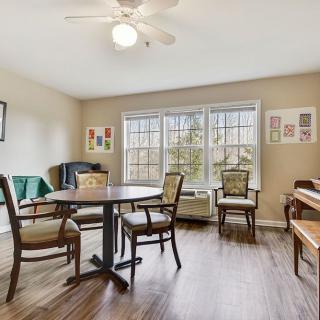

 Comprehensive Insights into Activities of Daily Living (ADLs) and Their Assessment
 Medicare Coverage for Assisted Living: An In-Depth Exploration
 Choosing the Right Senior Care: A Detailed Exploration of Assisted Living and Nursing Homes