
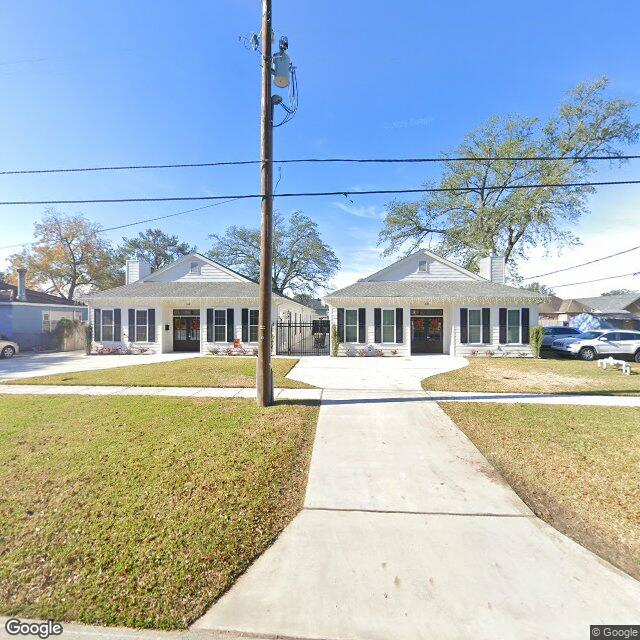
314 Transcontinental Drive, Metairie, LA 70001
For more information about senior living options: (866) 208-4318
Overall Review of St. Michael's Assisted Living
Pros
 Residents have received excellent care.
- Continued physical therapy helped one resident leave her wheelchair and another begin taking steps.
- The staff were attentive and friendly.
- The food looked and smelled delicious.
- The patient enjoyed watching TV in the living room with other residents.
- The patient enjoyed walking outside in the enclosed backyard.
- Her family visited her weekly.
- Her room was nice and she was happy there.
Cons
 She had dementia and sadly passed away.
Review
St. Michael’s Assisted Living in Metairie is best suited for seniors who want attentive daily care, steady rehabilitation progress, and a homey, small-community atmosphere where staff are known to residents and families. The strongest signal from the reviews is that residents receive meaningful, ongoing assistance, with physical therapy yielding tangible mobility gains for at least one resident. The environment supports mobility and social connection, from the living-room gatherings to the enclosed backyard that invites short, safe outdoor time. This combination makes it a practical fit for those who prioritize consistent staff attention, visible PT benefits, and a welcoming setting over a large, campus-style arrangement.
Alternatives should be considered for families seeking deeper or more specialized memory-care environments, higher medical acuity, or a broader program slate. The community’s overall rating sits at 3.8 from four reviews, and one reviewer awarded a lone 1-star score. That variance hints at experiences that can diverge, potentially in areas like level of medical oversight, responsiveness, or program breadth. If a family places a premium on highly structured memory-care protocols, more extensive clinical support, or a larger roster of daily activities, it may be wise to explore other options that foreground those elements.
The principal advantages are concrete and compelling. Attentive, friendly staff emerge as a repeated strength, underscoring reliable day-to-day interaction and a sense of being cared for. Food is described as inviting, appealing in smell and presentation, and dining contributes to a comfortable, sociable routine. The living-room socialization and outdoor access provide opportunities for meaningful engagement with peers, which matters for mood and overall well-being. For residents with dementia or memory challenges, the emphasis on a pleasant room environment and routine could translate into a calmer, more predictable daily experience.
Yet the prominent con of the available feedback is the presence of at least one single negative rating, which signals that not every experience aligns with the positive narratives. While the detailed praise centers on care quality, hospitality, and rehabilitation momentum, the minority view in the rating mix suggests variability in satisfaction possibly tied to specific expectations or moments in care delivery. The good news is that the documented strengths, effective rehabilitation, attentive staff, and a warm, social setting, address many common concerns families raise when evaluating care communities, helping to offset the risk suggested by the lower rating.
Practically, families should verify a few concrete factors before deciding. Ask about current staff-to-resident ratios, especially during peak activity times and after-hours, to gauge consistency of care. Inquire about the ongoing rehabilitation schedule, the availability of PT or OT sessions, and how progress is tracked for residents with mobility goals. Investigate dementia- or memory-care supports, including staff training and the specific routines designed to maintain orientation and safety. Finally, tour the residence, speak with families who have loved ones there, and check room options, visitation norms, and the daily activity calendar to confirm that the anticipated homelike feel matches real-life rhythms.
Overall, St. Michael’s offers a solid, practical value for families prioritizing steady care, rehabilitation momentum, and a friendly, community-oriented atmosphere. For seniors who thrive on personal attention, good meals, and social opportunities in a contained, accessible setting, this community delivers hard-won daily benefits. If the priority is expansive medical oversight, highly specialized memory-care programming, or a significantly larger environment, alternatives may deliver a closer fit. The best choice hinges on matching the care intensity and social rhythm to the resident’s needs and the family’s expectations.
 8 resident community capacity
 Assisted Living
 Activities on-site
 Cable or satellite TV
 Devotional services off-site
 Dining room
 Fully furnished
 Garden
 Housekeeping services
 Indoor common areas
 Move-in coordination
 Outdoor space
 Telephone
 Wi-Fi/high-speed internet available
 New Orleans International (4 miles away)
 24-hour supervision
 Ambulatory care
 Assistance with bathing
 Assistance with dressing
 Assistance with transfers
 Diabetes diet
 Meal preparation and service
 Medication management
 Special dietary restrictions
 Transportation arrangement (medical)
 Transportation to doctors appointments



 Vibrant Senior Living: A Comprehensive Guide for Active Older Adults
 When to Transition from Assisted Living to Memory Care: Key Indicators, Steps, and Finding the Right Community
 Assisted Living and Memory Care: Understanding Their Core Differences