

7004 Schouest Street, Metairie, LA 70003
For more information about senior living options: (866) 208-4318
Schouest House Costs & Pricing
Schouest House offers competitive pricing for its accommodations compared to the broader market in Jefferson Parish and across Louisiana. For semi-private rooms, residents can expect a monthly cost of $3,500, which is notably lower than the parish average of $3,773 and slightly below the state average of $3,598. When it comes to private rooms, Schouest House maintains an attractive rate of $4,000, again offering a more economical option than Jefferson Parish's average of $4,675 and Louisiana's statewide average of $4,521. This positioning not only highlights Schouest House as a financially accessible choice for potential residents but also underscores its commitment to providing quality care at favorable rates.
| Floor plans | Schouest House | Jefferson Parish | Louisiana |
|---|---|---|---|
| Semi-Private | $3,500 | $3,773 | $3,598 |
| Private | $4,000 | $4,675 | $4,521 |
Assisted Living communities with a similar price nearby
-
About the same

Tranquil Living
$3,500 to $4,000 / month11.8 miles away -
from +$250 / mo
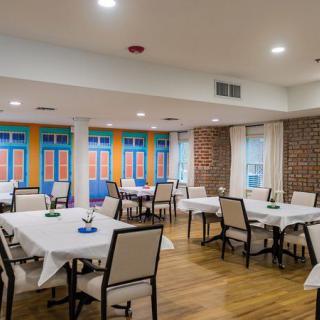
The Suites at Algiers Point
$3,750 to $5,275 / month11.3 miles away -
from +$500 / mo

Beau Maison
$4,000 to $5,600 / month2.9 miles away -
from -$515 / mo

Azaleas Assisted Living At Woldenberg Village
$2,985 to $4,895 / month13.9 miles away -
from +$595 / mo
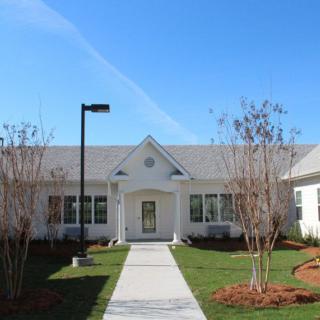
SummerHouse Ashton Manor
$4,095 to $5,665 / month11.1 miles away
Overall Review of Schouest House
Pros
 They really liked this community.
- They really love the owner, Peggy Stahls.
- Peggy Stahls owns a couple of homes in Metairie, and all of them are great.
Cons
 They only have one attendant on staff at all times.
Review
Schouest House in Metairie is best suited for families seeking a small, intimate, home-like assisted living where the owner’s presence shapes daily life and care feels personal. The key appeal is not glossy amenities but a tightly run, owner-led environment in which a familiar face, Peggy Stahls, is likely to know residents and families by name. The sentiment from those who connect with the community centers on warmth, a sense of belonging, and the promise of attentive oversight from someone who operates multiple Metairie homes. For families prioritizing a genuine, neighborly feel over a large, resource-rich campus, Schouest House stands out.
That said, a clear group should consider alternatives. The major caveat here is staffing: the facility operates with a single attendant on duty at all times. For families needing robust, around-the-clock nursing supervision, frequent medical interventions, or rapid response during emergencies, this staffing model may feel insufficient. Larger communities with dedicated nursing teams and more comprehensive on-site programming often provide a safety cushion that this setting cannot guarantee. In short, Schouest House is unlikely to be the best fit for residents with high-acuity needs or those requiring constant, visible medical oversight.
The strongest positives revolve around the personal touch and the owner’s demonstrated commitment. The owner’s involvement across multiple Metairie homes signals consistent standards and a hands-on approach to resident well-being. Families can expect a culture of accessibility and accountability, where concerns are likely addressed with a degree of immediacy and empathy that comes from direct ownership. A small, owner-operated atmosphere tends to foster trust, simplify communication, and create a sense of community that can be harder to achieve in larger facilities. These advantages partly offset the staffing constraint by delivering reassurance, responsiveness, and a familiar, trustworthy leadership.
The reviewer's remarks underline a powerful, qualitative upside: genuine appreciation for the community and for the owner’s leadership. The sentiment that “I really liked this community” and that the owner is highly regarded points to a warm environment where relationships matter and caregivers are likely invested in residents’ comfort and quality of life. That affinity can translate into meaningful daily routines, personalized accommodations, and a feeling that a resident’s voice is heard. Yet, warmth and familiarity must be weighed against the risk that a single attendant may be stretched thin, especially during meal times, transfers, or when a caregiver needs to step away.
From a practical standpoint, families should weigh how the single-attendant model intersects with daily life. A lean staffing structure can limit the pace and scope of assistance during peak activity periods and could affect response times in busy moments. Prospective residents should seek clarity on backup plans, shift coverage, and how emergencies are handled when one caregiver is momentarily occupied. Visiting the community, observing interactions, and asking pointed questions about caregiver-to-resident ratios, medication management, and transfer supports will illuminate whether the home’s strengths align with the resident’s needs. In this setting, the human connection may be impeccable, but operational readiness under strain remains the critical test.
For families weighing options, Schouest House offers a compelling choice for those who prize intimate, owner-driven care and a warm, connected community. It is a strong fit for someone who thrives on personal attention, values a homelike setting, and accepts smaller staffing scales in exchange for consistent leadership and a comfortable, familiar day-to-day rhythm. Conversely, if constant nursing supervision, a larger support staff, or extensive on-site programming are non-negotiables, alternatives should be explored. The prudent path is to arrange a guided visit, probe the specifics of staffing coverage, and verify how the home would coordinate care with external providers to ensure a seamless plan tailored to the resident’s goals and health needs.
 6 resident community capacity
 Assisted Living
 Board and Care Home
 Activities on-site
 Beautician on-site
 Cable or satellite TV
 Devotional services on-site
 Dining room
 Fully furnished
 Garden
 Housekeeping services
 Move-in coordination
 Outdoor space
 Private
 Respite or short term stays offered
 Telephone
 Wheelchair accessible showers
 Wi-Fi/high-speed internet available
 New Orleans International (3 miles away)
 24-hour supervision
 Ambulatory care
 Assistance with bathing
 Assistance with dressing
 Assistance with transfers
 Diabetes diet
 Diabetic care
 High acuity care
 Incontinence care
 Meal preparation and service
 Medication management
 Special dietary restrictions
 Transportation arrangement (medical)
 Transportation to doctors appointments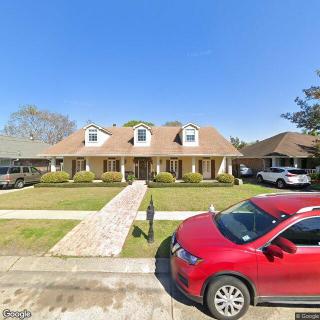





 A Detailed Exploration of Assisted Living Medicaid Waivers Across the United States
 Comprehensive Residential Support and Assisted Living Solutions for Individuals with Disabilities
 Comprehensive Supportive Living Arrangements for Adults with Disabilities