
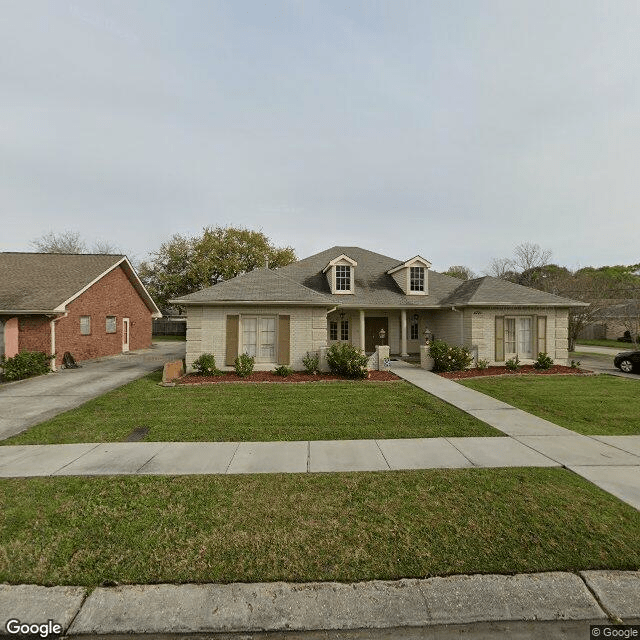
3721 Scofield Street, Metairie, LA 70002
For more information about senior living options: (866) 208-4318
Fidelis Scofield House Costs & Pricing
At Fidelis Scofield House, the monthly costs for accommodations vary based on room type, with semi-private rooms ranging from $3,299 to $4,000 and private rooms priced between $3,958 and $5,000. When compared to average costs in Jefferson Parish and across Louisiana, Fidelis Scofield House offers a competitive edge; semi-private rooms are slightly lower than the parish average of $3,773 and the state average of $3,598. In terms of private accommodations, while the starting price is higher than both local ($4,675) and state averages ($4,521), it provides a range that may accommodate varying budgets. Overall, Fidelis Scofield House positions itself as a viable option within the landscape of senior living facilities in the region.
| Floor plans | Fidelis Scofield House | Jefferson Parish | Louisiana |
|---|---|---|---|
| Semi-Private | $3,299 to $4,000 | $3,773 | $3,598 |
| Private | $3,958 to $5,000 | $4,675 | $4,521 |
Assisted Living communities with a similar price nearby
-
from +$201 / mo
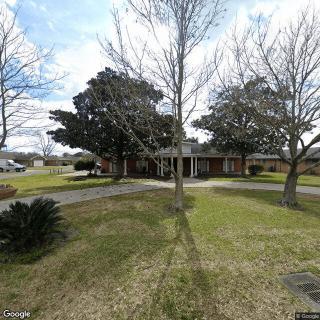
Tranquil Living
$3,500 to $4,000 / month10.0 miles away -
from +$451 / mo
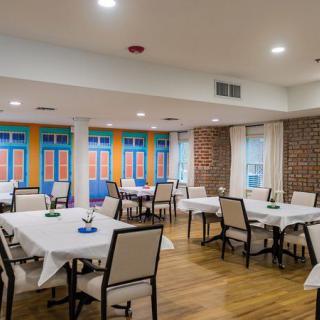
The Suites at Algiers Point
$3,750 to $5,275 / month8.3 miles away -
from -$314 / mo

Azaleas Assisted Living At Woldenberg Village
$2,985 to $4,895 / month11.2 miles away -
About the same

Inspired Living at Kenner
$3,325 to $5,450 / month6.4 miles away -
from -$379 / mo
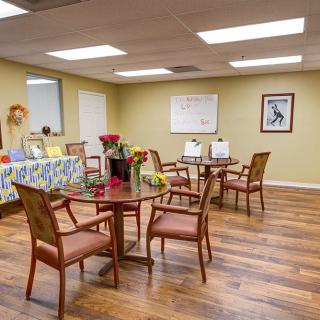
Laketown Village
$2,920 to $4,800 / month5.0 miles away
Overall Review of Fidelis Scofield House
Pros
 Fidelis Scofield House has 6-8 residents, making it a smaller place.
- It was nice and clean.
- The people who worked there were very nice.
- The tour person was very nice.
- They appeared to do everything for the residents.
Cons
 There is only one restroom for men and one for women, which reduces privacy.
- The setup includes a single kitchen with a table to eat in, limiting the atmosphere for residents.
- Residents would be confined to a single area, with no access to different spaces or outdoors like in other communities.
- Staff appeared to do everything for the residents, suggesting limited independence.
Review
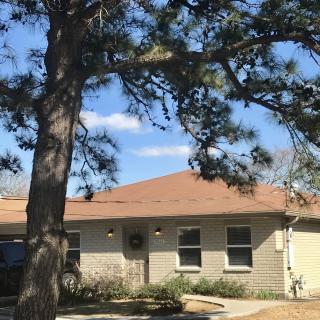
Fidelis Scofield House is best suited for a resident who wants a true home-like, ultra-small setting where supervision is intimate and care is visibly hands-on. With roughly 6-8 residents and only two staff on duty, the environment operates like a small household rather than a traditional campus. The care is personal, the facility remains clean, and the staff members are pleasant, but that closeness comes with clear trade-offs: privacy and mobility are tightly constrained, and the atmosphere skews toward a highly supervised routine rather than a wide range of options.
Those who should consider alternatives are anyone who values privacy, autonomy, and variety in daily life. If a loved one expects multiple restrooms, independent movement through shared common areas, or outdoor access, this setting will feel restrictive. Families prioritizing a rich ongoing social life, diverse common spaces, or frequent opportunities to stroll outside will likely find the layout and programming insufficient. For residents whose needs are more complex or fluctuating, the limited staff coverage and compact footprint can feel ill-suited to evolving care requirements.
The strongest positives, the small, clean, home-like feel and the evident kindness of staff, do offset some concerns but not the core drawbacks. A tight-knit, easy-to-navigate space can reduce confusion and foster quick caregiver response, which is valuable for safety and reassurance. Cleanliness and a calm, predictable routine can be a comfort for someone who dislikes busy, impersonal campuses. Yet these advantages do not fully counterbalance the privacy limitations (shared restrooms by gender), the absence of diverse activity spaces, or the constraint on residents to stay largely within a single area, rather than circulating throughout a more open environment.
Practically, this community serves a specific niche: a resident who is content with a highly supervised, compact setting and who does not require frequent, independent movement or expansive social programming. For a loved one who enjoys variety, different rooms, outdoor time, multiple seating areas, and the chance to navigate a more autonomous daily schedule, this option will feel stifling. The two-staff model, while capable of delivering personal care, also raises questions about capacity during busy moments or overnight hours, especially if care needs intensify.
Before choosing, families should verify several realities. Inquire about the exact caregiver-to-resident ratio across shifts and how care plans are developed and adjusted as needs change. Request a tour at different times of day to observe how mobility, social interaction, and routines unfold, and ask about access to outdoor spaces or alternative activity areas. Clarify restroom privacy, the possibility of arranging additional quiet or private spaces, and whether residents can personalize their day with varying activities or visits to other parts of a larger facility if needed. Finally, probe the level of independence the community genuinely supports versus what is offered primarily through consent and oversight.
In sum, Fidelis Scofield House delivers a clean, compassionate, small-scale living option that can be an excellent fit for someone who values safety, predictability, and a homelike environment over independence, expansive social programming, or spatial variety. For families prioritizing privacy, frequent movement, and richer daily stimulation, this setting is less favorable and alternative communities should be pursued. This recommendation is a practical compass: choose Fidelis Scofield House when the resident benefits from intimate supervision and a quiet, manageable footprint; seek other options when autonomy and a broader array of experiences are paramount.
 10 resident community capacity
 Assisted Living
 Board and Care Home
 Cable or satellite TV
 Dining room
 Fully furnished
 Garden
 Housekeeping services
 Move-in coordination
 Outdoor space
 Private
 Telephone
 Wi-Fi/high-speed internet available
 New Orleans International (6 miles away)
 24-hour supervision
 Activities of daily living assistance
 Assistance with bathing
 Assistance with dressing
 Assistance with transfers
 Diabetes diet
 Meal preparation and service
 Medication management
 Special dietary restrictions
 Transportation arrangement (medical)
 Transportation to doctors appointments





 Assisted Living Support for Veterans: A Complete and Detailed Overview
 Exploring the Contrasts Between Assisted Living and Skilled Nursing
 8 Key Indicators That Suggest It May Be Time to Transition from Assisted Living to Skilled Nursing Care