
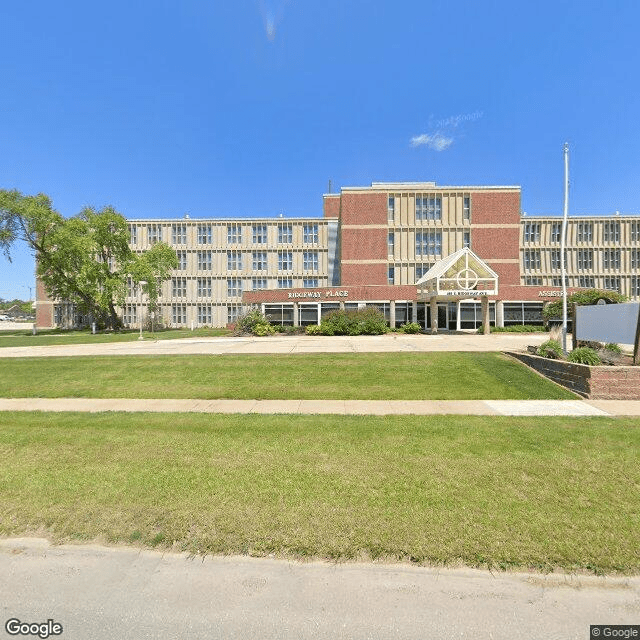
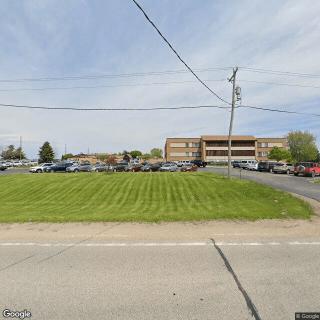
155 E Ridgeway Ave, Waterloo, IA 50702
To contact a resident: (319) 272-2622
For more information about senior living options: (866) 208-4318
Ridgeway Place Costs & Pricing
Ridgeway Place offers competitive pricing for its accommodations, with monthly costs that significantly undercut both Black Hawk County and the broader state averages across various room types. For instance, a studio at Ridgeway Place is listed at $1,115, which is notably more affordable than the county's average of $1,530 and Iowa's statewide average of $3,613. Similarly, the 1-bedroom unit at Ridgeway Place is priced at $1,365, aligning well against Black Hawk County's cost of $1,580 and significantly lower than Iowa's state average of $2,862. The two-bedroom option remains cost-effective as well at $1,852 compared to an astonishing $10,112 in Black Hawk County and a reasonable state price of $3,329. Finally, the private rooms hold steady at $4,500 - on par with the county but slightly below Iowa's typical charge of $4,670. Overall, Ridgeway Place stands out as an attractive alternative for potential residents seeking affordability without sacrificing quality.
| Floor plans | Ridgeway Place | Black Hawk County | Iowa |
|---|---|---|---|
| Studio | $1,115 | $1,530 | $3,609 |
| 1 Bedroom | $1,365 | $1,580 | $2,863 |
| 2 Bedrooms | $1,852 | $10,112 | $3,329 |
| Private | $4,500 | $4,500 | $4,670 |
Overall Review of Ridgeway Place
Pros
 The community appears able to meet a loved one's needs.
- The facility seems capable of providing for a resident's needs.
- The staff could meet a loved one's needs just fine.
Cons
 The reviewer didn’t like the overall feel, describing it as cold and clinical.
- It felt more like a nursing home than a “community.”
- The reviewer didn’t think their loved one would be comfortable there, even though it seemed able to meet their needs.
Review
Ridgeway Place in Waterloo, IA, is best suited for seniors who prioritize reliable, baseline care and clear safety oversight over a warm, home-like living experience. The setting appears to deliver on essential services, routines, and the ability to meet basic daily needs, but it does not project the kind of inviting, resident-centered atmosphere many families associate with a true community. For residents who thrive on warmth, social connection, and a lived-in, homelike feel, Ridgeway Place is unlikely to be the ideal match.
Those considering alternatives should focus on atmosphere as a non-negotiable criterion. If a resident’s well-being hinges on daily interactions, engaging programs, and an environment that feels inviting rather than clinical, other options should be explored. A more residential vibe, with comfortable common areas, upbeat dining experiences, and purposeful activities designed to foster relationships, will likely be preferred by families prioritizing mood and engagement as much as care logistics. In short, Ridgeway Place should not be the first choice for anyone who equates comfort with ambience.
The principal advantage inferred from the available impressions is straightforward: Ridgeway Place can be counted on to provide the necessary level of care. The staff and facility, based on what prospective families observe, seem capable of handling routine needs and ensuring that care services are available when required. This reliability matters for residents who may need steady supervision, assistance with activities of daily living, and predictable routines. However, the value of this strength is tempered by the atmosphere described by visitors, which strongly colors the overall experience and long-term satisfaction.
The major drawback, its “cold and clinical” feel, tends to override the obvious operational benefits for anyone who worries about mood, motivation, and social vitality. When a setting resembles a nursing home more than a welcoming community, it becomes harder for residents to feel at home, even if care tasks are being met. For families, this translates into a higher likelihood that a resident’s emotional well-being may suffer if days lack meaningful engagement, pleasant dining experiences, and interpersonal warmth. In practical terms, comfort and happiness may suffer even when safety and care are adequate.
From a decision-making standpoint, the path is clear: use Ridgeway Place for a needs-driven assessment rather than a lifestyle-driven one. If the primary goal is dependable caregiving with straightforward routines, it can be a sound fit. If, however, the resident benefits from a vibrant social calendar, opportunities to form friendships, and a setting that feels like home, it may be wiser to expand the search. Pros offset cons most meaningfully when care needs are high but the resident is more guarded about atmosphere; cons overwhelm the equation for those who crave companionship and a sense of belonging in daily living.
Families should take a structured approach to decision-making. Ask specific questions during tours: how staff interact with residents, what the activity calendar looks like, the design of common areas, dining ambiance, and how comfort is balanced with safety. Request details on staff-to-resident ratios, routine monitoring, and what differentiates Ridgeway Place from alternatives that emphasize homelike interiors and richer social programming. If an initial impression of coldness persists, insist on viewing a different floor plan or unit with more inviting decor, and seek a longer trial period or guest stay to gauge resident mood over time. The verdict: Ridgeway Place serves as a dependable option for essential care, but it is not the best match for families seeking warmth, sociability, and a genuinely home-like community.
 Assisted Living
 Cats allowed
 Dogs allowed
 Activities off-site
 Beautician on-site
 Devotional services off-site
 Indoor common areas
 Outdoor common areas
 Respite or short term stays offered
 Wheelchair accessible showers
 Waterloo Municipal (6 miles away)
 Ambulatory care
 Diabetic care
 Incontinence care
 Meals provided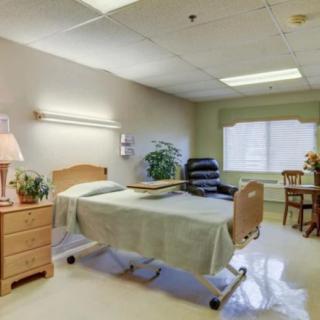



 Is Assisted Living Deductible on Your Taxes? Understanding the Complexities of Assisted Living Expenses and Deductions
 Assisted Living Support for Veterans: A Complete and Detailed Overview
 Exploring the Contrasts Between Assisted Living and Skilled Nursing