
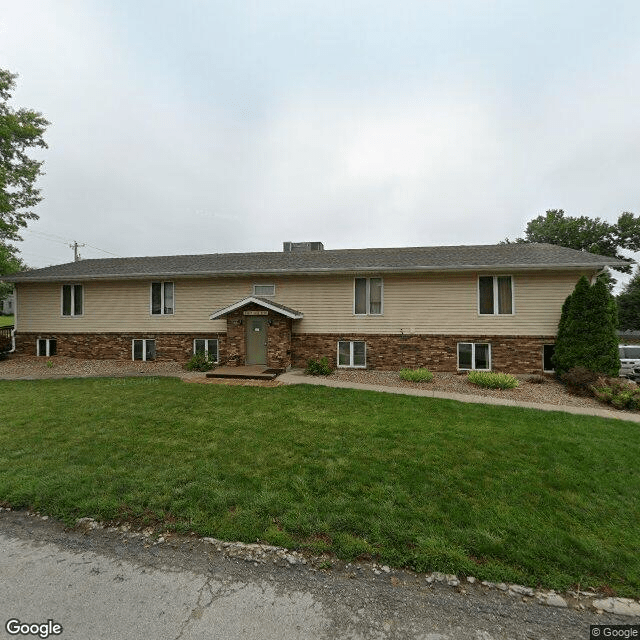
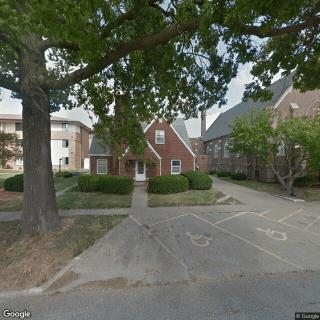
749 W Mary St, Ottumwa, IA 52501
To contact a resident: (641) 684-6253
For more information about senior living options: (866) 208-4318
Mary's Home Costs & Pricing
Mary's Home offers competitive pricing for its accommodations relative to both Wapello County and the broader state of Iowa. For semi-private rooms, residents at Mary's Home pay $2,400 per month, which is notably more affordable than the county's average of $2,700 and significantly less than Iowa's average of $3,885. In the private room category, Mary's Home charges $3,100, again undercutting Wapello County's rate of $3,367 and the state average of $4,670. Interestingly, for one-bedroom units, Mary's rates are a bit higher at $3,500 compared to Wapello County's $3,387 but are still lower than Iowa's average of $2,862. However, the cost for two-bedroom accommodations at Mary's Home stands at $4,200, surpassing both local and state averages of $4,005 and $3,329 respectively. Overall, Mary's Home demonstrates a commitment to offering value across many room types while maintaining competitive pricing in the market.
| Floor plans | Mary's Home | Wapello County | Iowa |
|---|---|---|---|
| Semi-Private | $2,400 | $2,700 | $3,885 |
| Private | $3,100 | $3,367 | $4,670 |
| 1 Bedroom | $3,500 | $3,387 | $2,863 |
| 2 Bedrooms | $4,200 | $4,005 | $3,329 |
Assisted Living communities with a similar price nearby
-
from -$206 / mo
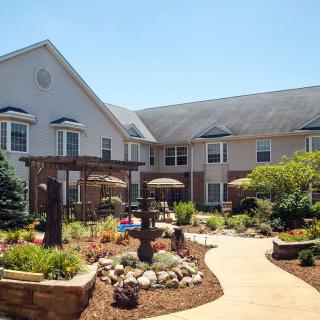
Pennsylvania Place
$2,194 to $3,685 / month3.5 miles away -
from -$105 / mo
Calu Apartments
$2,295 to $3,695 / month24.4 miles away
Overall Review of Mary's Home
Pros
 The church is absolutely beautiful.
- The church is beautiful and serves the community well.
- The church is a nice traditional Catholic church.
- The church has easy access.
- The church is a beautiful old church with stained glass windows and oak pews.
- The church community is kind and supportive, and its diversity enriches Mass.
- The church is welcoming to everyone.
- Members are proud to be part of the church.
Cons
 The reviewer believes the church would be better if there were a complete sacrament of communion.
Review
Mary’s Home in Ottumwa, IA is best suited for seniors and families who prize a traditional, faith-forward living environment anchored by a strong church community. The setting is not merely a place to reside; it’s an entire social and spiritual ecosystem. A beautiful, historic church sits at the heart of daily life, with easy access and a built-in rhythm of worship, ceremonies, and community gatherings. For residents who equate well‑being with a sense of belonging, the warm parish life, steady social invitations, and long-standing routines translate into real stability and meaningful daily purpose.
Those who should consider alternatives are seniors who require robust on-site medical oversight, memory care, or secular programming. The material presents a stunning religious ambiance and a welcoming, diverse congregation, but there is no evidence of on-site clinical staff, formal assisted living routines, or dementia-specific programming. Families needing 24/7 caregiving, comprehensive medical management, or flexible, modern amenities may find Mary’s Home insufficient without reliable partnerships with local care providers and external services.
The strongest pros, beauty, easy accessibility, and a genuinely welcoming church community, create tangible value. The aesthetic and spiritual atmosphere can reduce isolation, foster sustained social engagement, and give residents a shared sense of identity. Regular participation in Mass, pilgrimages, and other church events can anchor routines and friendships in a way that’s hard to replicate in more secular settings. Yet these benefits do not automatically substitute for comprehensive aged-care services, and the lack of explicit on-site care, daily living supports, meals management, or safety systems means care planning will require careful coordination with outside providers.
To move from potential to practical, families should map out how daily living needs would be met within Mary’s Home. Investigate whether there is on-site staff to assist with activities of daily living, and if so, what hours and responsibilities they cover. Identify any caregiving partners available locally and how care is coordinated, are there formal plans, case managers, or agreed-upon communication protocols? Clarify meal arrangements and dietary accommodations, transportation options for church and medical appointments, and the availability of safety features such as emergency call systems and accessible design. Also consider how the religious calendar might affect programming for residents with varying levels of faith engagement.
If the decision centers on a faith-supported, community-enhanced lifestyle, Mary’s Home stands out as a compelling option. Its core strength, deep social integration, a reverent atmosphere, and a beautiful, accessible setting, can significantly enhance emotional and social well-being. However, for families prioritizing continuous clinical oversight, memory care, or a broader spectrum of secular activities and on-site services, there are compelling reasons to explore alternatives or ensure strong external care partnerships. The optimal choice hinges on aligning the resident’s care needs with the community’s capacity to support those needs while preserving the spiritual and social benefits that this Ottumwa landmark uniquely provides.
 Assisted Living
 Activities on-site
 Devotional services off-site
 Indoor common areas
 Ambulatory care
 Diabetic care
 Meals provided
 When to Transition from Assisted Living to Memory Care: Key Indicators, Steps, and Finding the Right Community
 Assisted Living and Memory Care: Understanding Their Core Differences
 Beyond the Bingo Hall: 50+ Enriching Activities for Seniors in Assisted Living