
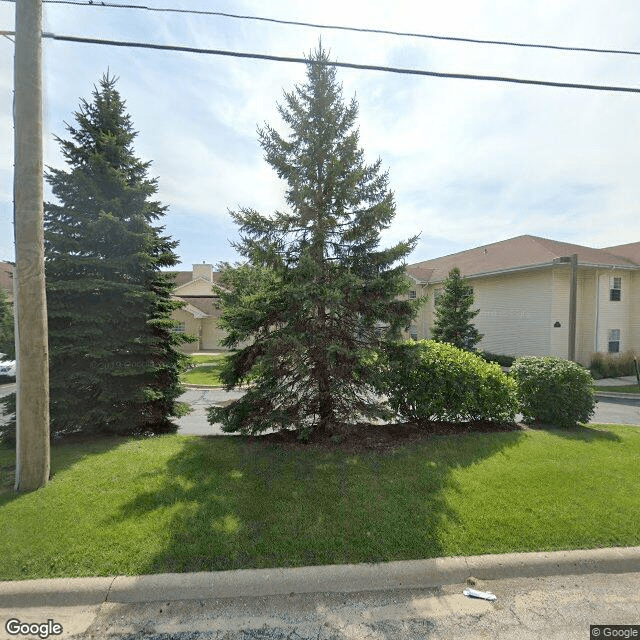
3521 16th Street, Zion, IL 60099
For more information about senior living options: (866) 208-4318
Rolling Hills Place Costs & Pricing
Rolling Hills Place offers a competitive pricing structure for its living accommodations, especially when compared to the broader market in Lake County and across Illinois. For instance, residents can secure a studio for $2,300 per month, significantly lower than the county average of $4,770 and the state average of $4,028. Similarly, the one-bedroom units at Rolling Hills Place are priced at $2,600 - a compelling option when juxtaposed with Lake County's $4,157 and Illinois' $3,527 averages. The two-bedroom offerings also present an attractive alternative at $3,070 compared to $4,502 in Lake County and $4,208 statewide. Even the semi-private accommodations stand out; while they are listed at $55,302 monthly - perhaps indicating a unique amenity or service package - this still reflects favorable positioning against Lake County's rate of approximately $6,875 and state average of around $5,146. Overall, Rolling Hills Place not only provides diverse living options but does so at prices that offer tangible savings compared to regional norms.
| Floor plans | Rolling Hills Place | Lake County | Illinois |
|---|---|---|---|
| Studio | $2,300 | $4,770 | $4,028 |
| 1 Bedroom | $2,600 | $4,157 | $3,527 |
| 2 Bedrooms | $3,070 | $4,502 | $4,208 |
| Semi-Private | $55,302 | $6,875 | $5,146 |
Skilled Nursing Facilities with a similar price nearby
-
from +$196 / mo
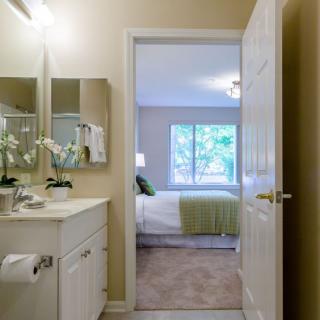
Sedgebrook
$2,496 to $7,925 / month19.8 miles away -
from -$425 / mo
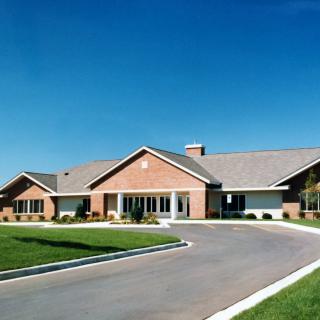
Library Terrace Assisted Living
$1,875 to $3,300 / month6.6 miles away -
from -$259 / mo
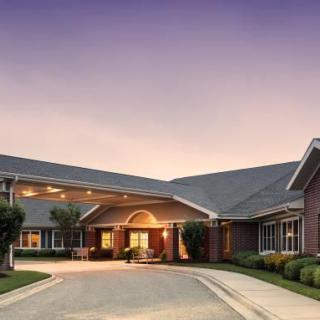
Parkside Manor
$2,041 to $3,856 / month7.6 miles away -
About the same
Crossroads Care Center of Kenosha
$2,295 to $7,448 / month5.8 miles away
Overall Review of Rolling Hills Place
Pros
 Rolling Hills Place was very nice.
- The food was fantastic.
- The staff was spectacular.
- The apartments were clean and beautiful.
- They offered a lot of activities, including bingo, big parties to welcome new residents, Wii bowling, walk-in closets, and movies with popcorn.
- The residents are treated like family.
- The dining area is lovely.
- The administrator on the assisted living side is excellent.
Cons
 The food is inconsistently prepared and served.
- They are always short-handed.
- There is no one to hold the director accountable.
- The residents constantly hear that they are short-handed, yet the prices are huge.
- There is no community—just pretty decorations.
- They have major management issues.
Review
Rolling Hills Place is best suited for families seeking a warm, home-like assisted-living option in Zion, IL, where a smaller campus, bright apartments, and a steady stream of activities offset a more intimate scale. This community excels for residents who value a personable staff that makes an effort to know individuals, plus a straightforward path to higher levels of care within the same campus. Reviewers repeatedly point to cleanliness, cheery décor, and the sense that residents are treated like family, with nursing coordination and on-site physician access supporting daily needs. For families prioritizing accessible transportation, a diverse activity lineup, and a social atmosphere that feels less institutional and more lived-in, Rolling Hills Place presents a compelling, homelike choice.
At the same time, several clear cautions merit attention. Persistent staffing gaps and what appears to be inconsistent director-level follow-through raise legitimate concerns about reliability and accountability, especially given the premium pricing. The campus’ strength in warmth and care can be undermined if coverage is thin or management decisions shift without notice. For families that want a larger community footprint, a more predictable governance model, or a value proposition that aligns more tightly with cost, alternatives should be on the short list. Those seeking extensive self-directed independence, bigger apartments, or in-unit full kitchens may find Rolling Hills Place misaligned with those preferences.
The strongest positives align with care coordination and the homey environment. Staff who take the time to know residents, effective nursing support for complex medication schedules, and the ability to arrange on-site physician visits translate into real, practical value for families managing ongoing health needs. The campus supports independent living alongside assisted and skilled nursing, easing transitions if care levels escalate. Dining is often cited as a standout, and the social calendar, movies, cards, bingo, and community events, helps residents stay connected. An accessible handicap-equipped van adds practical mobility for outings, underscoring a practical, resident-centered approach to daily living.
Yet the downsides temper the upside in meaningful ways. Staffing gaps translate into slower service and visible strain during busy periods, which can erode the otherwise strong impression created by friendly staff. The administration’s inconsistent accountability can erode confidence for families paying a premium for peace of mind. The unit size and kitchen arrangement matter: many apartments feature a mini kitchen with the expectation to dine in the community dining room, which may frustrate residents who value personal culinary autonomy or larger living spaces. Price remains a recurring sticking point; when the atmosphere looks welcoming but the value proposition feels uncertain, some families question whether the premium is justified.
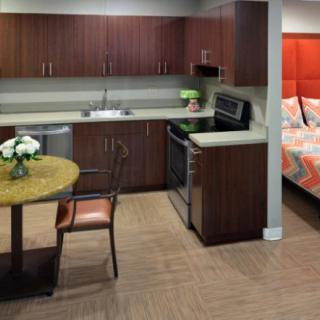
From a practical perspective, the environment is inviting, with pleasant aromas, well-kept spaces, and a positive first impression of warmth. Apartments tend to be cozy, with a home-like feel and walkable common areas that encourage socializing. The size of the campus supports attentive oversight, but it can constrain options for those who want bigger, more private residences or more kitchen autonomy. The dining-centric model is a plus for social engagement, though it limits personal culinary use and control. Prospective residents should weigh the attractiveness of the décor and staff warmth against the realities of smaller units, shared dining arrangements, and the price tag attached to an intimate, service-rich environment.
Bottom line: Rolling Hills Place is a strong choice for families prioritizing a warm, attentive staff, smooth care transitions on a modest campus, and an active social calendar, provided price concerns and occasional staffing gaps are acceptable trade-offs. Those needing a stronger sense of community, tighter governance, or more independent living features should compare alternatives with larger floor plans, clearer accountability, and simpler pricing. Prospective residents are advised to press for candid conversations with the administrator, observe staffing levels during peak hours, and confirm on-site medical support and care coordination arrangements. Schedule visits during mealtime and activity periods to gauge real-world operations, speak with current residents about day-to-day life, and ensure the plan aligns with long-term care needs and budget realities.
 59 resident community capacity
 1-bedroom apartments
 Active Adult Communities (55+)
 Assisted Living
 Independent Living
 Respite Care
 Skilled Nursing Facility
 Activities off-site
 Air-conditioning
 Bath tubs
 Beautician on-site
 Cable or satellite TV
 Computer center
 Devotional services off-site
 Dining room
 Fitness room
 Fully furnished
 Gaming room
 Garden
 Guest parking
 Housekeeping services
 Indoor common areas
 Kitchenette
 Laundry
 Move-in coordination
 Outdoor space
 Party space
 Private bathrooms
 Restaurant-style dining
 Small library
 Telephone
 Wellness center
 Wi-Fi/high-speed internet available
 Community operated transportation
 12-16 hour nursing
 24-hour call system
 Ambulatory care
 Assistance with bathing
 Assistance with dressing
 Assistance with transfers
 Diabetes diet
 Diabetic care
 Hospice care
 Medication management
 Mental wellness program
 Physical therapy
 Special dietary restrictions
 Art classes
 Book club
 Concierge services
 Day trips and outings
 Educational speakers / life long learning
 Games
Games Happy hour
 Live dance or theater performances
 Live musical performances
 Trivia games


 A Detailed Exploration of Assisted Living Medicaid Waivers Across the United States
 Comprehensive Residential Support and Assisted Living Solutions for Individuals with Disabilities
 Comprehensive Supportive Living Arrangements for Adults with Disabilities