

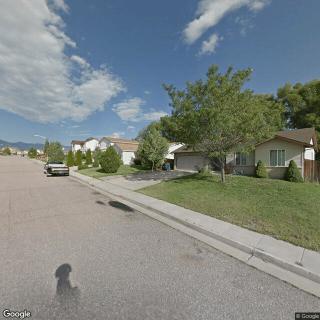
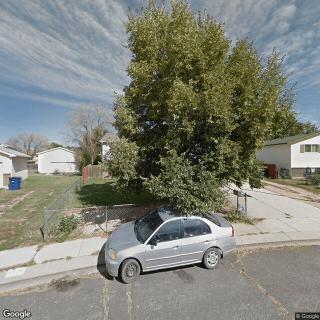
1125 Brockdell Drive, Colorado Springs, CO 80911
For more information about senior living options: (866) 208-4318
Appletree Assisted Living Costs & Pricing
At Appletree Assisted Living, residents can enjoy a 1-bedroom accommodation for a monthly cost of $2,200, which is notably more affordable than both the average costs in El Paso County at $3,564 and the broader state average of $4,119 for similar living arrangements. This presents a compelling option for individuals looking for quality assisted living without compromising on their budget. The competitive pricing at Appletree not only reflects the commitment to providing accessible care but also highlights an opportunity for families seeking economical yet supportive environments for their loved ones in Colorado.
| Floor plans | Appletree Assisted Living | El Paso County | Colorado |
|---|---|---|---|
| 1 Bedroom | $2,200 | $3,564 | $4,118 |
Assisted Living communities with a similar price nearby
-
from +$345 / mo

Bear Creek Senior Living
$2,545 to $5,800 / month9.2 miles away -
from +$300 / mo

Garden Ranch Senior Care
$2,500 / month11.5 miles away -
from +$375 / mo

Winslow Court
$2,575 to $4,075 / month7.5 miles away -
from -$200 / mo

Myron Stratton Home-Res Care
$2,000 / month6.2 miles away -
from +$245 / mo

Brookdale Skyline
$2,445 to $5,795 / month9.9 miles away
Overall Review of Appletree Assisted Living
Pros
 The staff is amazing and makes residents feel like family.
- The company has been responsive, caring, and patient with the family.
- The staff spends extra time to ensure everything is set up and secure, down to the smallest request.
- Residents are comfortable and happy there.
- The food is mostly fresh and home cooked for every meal.
- The facility allows residents to come and go as they please, with a friendly and polite staff.
- Caregivers like Mayra provide fantastic care and exemplify quality support.
Cons
 The facility left only a message to retrieve belongings after the grandmother's death, and her belongings were thrown in a box outside the front door with no further communication.
- Family members were told they had 48 hours to collect belongings or they would throw them away.
- They were notified three weeks after she passed, which was described as disrespectful and undervalued her.
- The office staff showed little concern when an elderly person wandered off and would not provide the manager's contact information.
- They spoke very limited English and repeatedly told the caller to call tomorrow, indicating poor communication.
- There was a perceived lack of accountability, with questions about whether a headcount was performed after a shift change.
- The size of the community did not meet the reviewer’s needs.
Review
Appletree Assisted Living in Colorado Springs is best suited for seniors who prize a warm, home-like atmosphere where independence is respected and on-site, home-style meals are a core feature. The layout, three buildings with resident kitchens, appeals to those who want the option to cook or bake, while still having access to support when needed. Families that value a personal touch from staff and a sense of being treated as individuals, not as a name on a chart, will likely find the most traction here. This is not a glossy, corporate experience; it’s a smaller-feel community that can deliver meaningful warmth when the staff are engaged and responsive.
Conversely, alternatives should be strongly considered by families who place a premium on safety protocols, rigorous communication, and seamless handling of sensitive transitions. Several reviews point to serious failures in how belongings are treated after a loved one passes, with delays in notification and seeming lack of respect. Wandering risk also stands out as a concern, with at least one observer questioning whether the staff fully protects residents or documents incidents adequately. Language barriers and inconsistent responsiveness further complicate trusted care, highlighting a need for a setting that prioritizes proactive, clear communication and robust safety practices. For families needing a more structured, safety-forward environment or more intensive memory-care support, other communities may suit better.
The strongest positives here revolve around staff warmth and resident-centered care. When the team shows up, the experience feels personal: caregivers who develop rapport, a sense that residents are part of a family, and meals that are described as fresh and home-cooked. The independence-forward model, where residents can come and go, with kitchens in every building, is a meaningful advantage for anyone who wants to maintain routine and autonomy. The existence of a reapplication interview to gauge independence signals an intention to align services with actual need, not just capacity. Cleanliness and comfort in several units also appear to be dependable anchors for many residents, which can offset some of the more administratively fragile elements if staff turnover remains low.
Yet the more troubling threads, apparent lapses in communication, unfair or delayed handling of personal belongings, and safety concerns, cannot be brushed aside. The disconnect between what families expect in end-of-life coordination and what was experienced in at least one case is a decisive flaw. The record of wander-risk concerns and a perceived reluctance to provide manager contact information undermines trust, especially for families seeking transparent, proactive updates. In practice, the pros of warmth and autonomy lose their luster quickly if the operational backbone, communication, safety, and accountability, falters. This tension is the core reason many families will compare Appletree against more structured, larger communities.
With that in mind, practical vetting becomes essential. Prospective residents and their families should insist on a thorough tour of all three buildings, meeting front-line caregivers (and specifically noting interactions with caregivers like Mayra, who have earned praise), and reviewing the activity calendar to see how social engagement really unfolds. Ask about wander-management protocols, staff-to-resident ratios, and how incidents are documented and communicated to families. Probe the process for managing belongings after a passing, including timelines and notification practices. Request a sample resident agreement and a realistic daily schedule to ensure reality matches promise. A trial stay or a clearly defined transition plan can illuminate whether the day-to-day experience aligns with expectations.
In the final assessment, Appletree presents as a community with genuine warmth, practical independence, and family-style care that resonates for many families. It is a viable home for seniors who want autonomy paired with accessible, home-cooked meals and attentive staff who treat residents as individuals. However, the risks identified in several reviews, safety lapses, inconsistent communication, and troubling handling of sensitive moments, signal that this is not the right fit for every family. Those prioritizing ironclad safety, seamless family updates, and a highly structured care environment should look elsewhere. For others, the path is to engage deeply during tours, demand clarity on policies, and monitor closely; if the right match is found, Appletree can deliver a genuinely nurturing living experience.
 48 resident community capacity
 Assisted Living
 Respite Care
 Activities on-site
 Beauty salon
 Cable or satellite TV
 Devotional services off-site
 Dining room
 Fully furnished
 Garden
 Housekeeping services
 Indoor common areas
 Kitchenette
 Move-in coordination
 Outdoor space
 Restaurant-style dining
 Small library
 Telephone
 Wi-Fi/high-speed internet available
 City of Colorado Springs Muni (4 miles away)
 24-hour call system
 Ambulatory care
 Assistance with bathing
 Assistance with dressing
 Assistance with transfers
 Diabetes diet
 Diabetic care
 Medication management
 Mental wellness program
 Special dietary restrictions




 Comprehensive Supportive Living Arrangements for Adults with Disabilities
 Funding and Affording Assisted Living: A Thorough Overview
 Assisted Living Expenses and Long-Term Care Insurance: A Comprehensive Exploration