
1260 East Arrow Highway, Upland, CA 91786
For more information about senior living options: (866) 208-4318
Overall Review of Heritage Gardens
Pros
 Inland Valley Recovery Service (IVRS) is loved and described as a home away from home, with NA/AA support and opportunities to give back to others in recovery.
- The place feels welcoming and supportive, with friendly staff and tours that clearly explain all services.
- Heritage Gardens is seen as secure and well-equipped, with alarms and a remarkable range of activities and services.
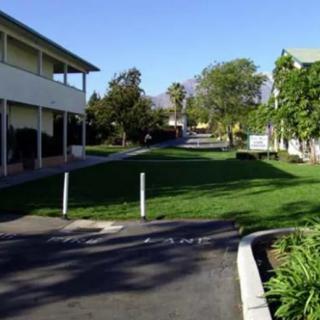
- The campus is conveniently located near a hospital, with a nearby pharmacy for easy access.
- The environment is clean and comfortable, featuring spacious private rooms and helpful, informative staff.
- Emily the resident dog adds a warm, friendly touch, and the facility is fully secured with an elevator for patient use.
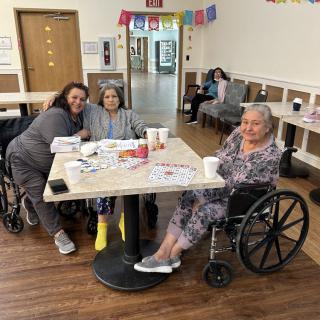
- Residents appear happy, and the overall experience is described as priceless.
Cons
 This is no longer Heritage Gardens.
- The facility charges extra for some services.
- The reviewer was not ready to place their mother in a home.
Review
Heritage Gardens in Upland, CA is best suited for adults pursuing a structured residential recovery program in a secure, home-like setting. The reviews consistently frame the community as a place where recovery takes center stage, often under the Inland Valley Recovery Service banner, with an emphasis on NA/AA involvement and a sense of giving back to a peer community. This is not presented as a generic senior living campus; it operates as a focused recovery environment where residents live in a single, contained building and engage in regular group activities. For families seeking a safe, social, and clearly defined path to sobriety within a supportive housing framework, this facility checks many of the right boxes.
Conversely, families with goals centered on traditional assisted living, memory care, or long-term skilled nursing should consider alternatives. The emphasis here is on addiction treatment rather than routine elder care, medical oversight, or dementia-specific programming. The branding shift and recovery focus mean this may not meet expectations for aging-in-place with typical geriatric services. In addition, the environment appears tailored to women in recovery, which can be a strength for some and a constraint for others who need a mixed-gender or male-inclusive setting. Prospective residents should confirm gender composition, eligibility, and whether the level of medical support aligns with evolving health needs.
On the upside, the community’s strengths are tangible and well-supported by the reviews. Safety is a core design feature: alarms on front doors, fully secured grounds, and an elevator that supports residents with mobility concerns. The layout is described as “one big building,” reducing the logistical fatigue of moving between sites. Proximity to a hospital is cited as a practical advantage, ensuring medical resources are within reach. Staff are repeatedly described as friendly and informative, with tours that clearly outline services and optional add-ons that come with additional costs. The private rooms are noted as spacious, and the atmosphere is described as welcoming, complete with a resident dog that adds a comforting, home-like touch. The presence of long-term occupancy, such as a resident’s family member who spent eight years there, hints at stability and continuity of care.
Yet the reviews also reveal meaningful caveats. The most important is the specialist focus: this is a recovery program first, not a conventional senior living community. Details about the scope of medical oversight, skilled nursing, or medication management are not explicitly laid out, which can be a deal-breaker for elders with complex health needs. The branding as Inland Valley Recovery Service signals that the primary mission remains addiction treatment, which may limit suitability for those seeking ongoing geriatric services, physical therapy on site, or dementia-focused care. Potential residents should verify whether core geriatric services can be coordinated or provided, and understand discharge planning if recovery goals shift or stabilize.
When weighing the positives against the limitations, the fit becomes clear. For a resident whose primary objective is a structured recovery program in a secure, social setting, the pros dominate: a tightly controlled environment that minimizes wandering, clear programmatic structure, access to recovery-specific supports, and a warm, communal living vibe. The private, comfortable accommodations and the on-site dogs and activities contribute to dignity and morale, which are crucial in recovery. The main concerns, namely, the lack of explicit traditional elder-care medical offerings and the gender-leaning environment, do not negate the value for a suitable candidate but do demand careful alignment with the resident’s health status and personal preferences.
The bottom-line recommendation is pragmatic and decision-focused. If recovery and safety within a homelike, community-oriented setting are the priorities, this community is a compelling option in the Inland Empire. Prospective families should schedule a thorough tour, ask for a current daily schedule, and request concrete details about medical oversight, medication administration, and access to nursing care. Confirm who is eligible to reside, whether male residents are accepted, and what the typical length of stay looks like. Finally, obtain a clear understanding of all add-on services and their costs, along with licensing and accreditation specifics. For families whose goals center on traditional senior living, memory care, or multi-discipline geriatric medical support, alternatives that emphasize standard elder-care programming will likely serve better.
 51 resident community capacity
 Assisted Living
 Air-conditioning
 Beauty salon
 Cable or satellite TV
 Computer center
 Dining room
 Fitness room
 Fully furnished
 Gaming room
 Garden
 Housekeeping services
 Kitchenette
 Move-in coordination
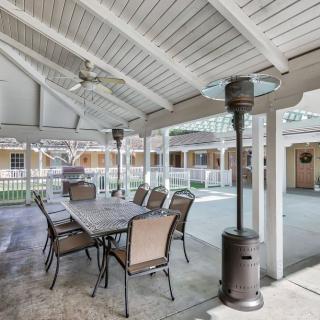
 Outdoor space
 Private bathrooms
 Resident parking
 Restaurant-style dining
 Security gate
 Small library
 Telephone
 Wellness center
 Wi-Fi/high-speed internet available
 Ontario International (4 miles away)
 Community operated transportation
 12-16 hour nursing
 24-hour call system
 Activities of daily living assistance
 Assistance with bathing
 Assistance with dressing
 Assistance with transfers
 Diabetes diet
 Medication management
 Mental wellness program
 Special dietary restrictions
 Concierge services
 Planned day trips
 English




 Choosing the Right Senior Care: A Detailed Exploration of Assisted Living and Nursing Homes
 Understanding the True Cost of Assisted Living in 2025: A Comprehensive Guide
 Understanding Medicaid Coverage for Assisted Living: A Comprehensive Guide