
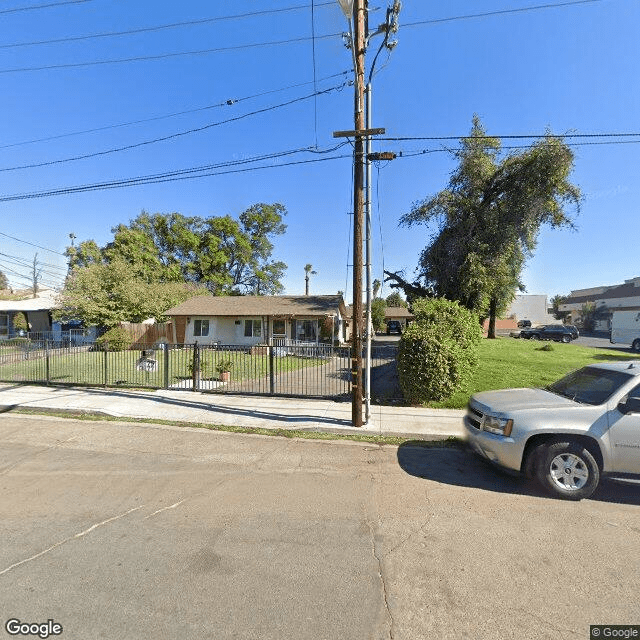
3875 Megginson Lane, Riverside, CA 92503
For more information about senior living options: (866) 208-4318
Megginson Place I Costs & Pricing
Megginson Place I offers competitive pricing for its residential options compared to both Riverside County and the broader California market. The facility provides semi-private rooms at $1,500 per month, significantly lower than the county average of $2,844 and the state average of $3,333. For those seeking more privacy, private rooms at Megginson Place I are available for $2,500 monthly, which is also more affordable than the rates in Riverside County ($3,474) and California overall ($3,939). This pricing structure not only makes Megginson Place I an attractive choice for residents but also highlights its commitment to offering quality care at a reasonable cost within a challenging economic landscape.
| Floor plans | Megginson Place I | Riverside County | California |
|---|---|---|---|
| Semi-Private | $1,500 | $2,844 | $3,333 |
| Private | $2,500 | $3,474 | $3,939 |
Assisted Living communities with a similar price nearby
-
from -$200 / mo
Gem's Senior Living I
$1,300 to $2,500 / month20.3 miles away -
from +$200 / mo

Light's Rancho Linda
$1,700 to $2,000 / month17.3 miles away -
About the same
Rialto Assisted Living
$1,500 to $2,025 / month12.1 miles away -
from +$250 / mo

Vista Cove at Corona
$1,750 to $3,000 / month8.0 miles away -
About the same
Golden Guest Home III
$1,500 to $2,800 / month14.8 miles away
Overall Review of Megginson Place I
Pros
 Fremont Hills is a boutique-style Assisted Living and Memory Care community.
- The community offers great value and great services for residents.
Review
Megginson Place I in Riverside is best suited for families and seniors who want a value-forward, intimate assisted living experience where the environment feels boutique and care services are reliably solid. The model appeals to residents who prize personal attention, predictable routines, and a sense of community that doesn’t come with the scale of larger campuses. In short, this is a strong fit for those who want a hand-in-glove feel with daily life streamlined and approachable.
Those weighing alternatives should consider options if the priority shifts to expansive programming, broader memory care capabilities, or a larger campus with a more extensive social calendar. If higher acuity needs, a more robust clinical footprint, or a higher-profile brand footprint are important, it makes sense to evaluate other Riverside communities that offer more comprehensive memory care suites, greater on-site medical support, or a wider range of specialized services. For families looking for a destination with more visible scale or more diverse activity options, alternatives deserve serious consideration.
The lone review on this community highlights three core pros: a boutique-style atmosphere, strong value, and solid services available for residents. The boutique framing implies an intimate setting where staff can form closer relationships with residents, respond quickly to individual needs, and tailor routines without the friction often found in larger buildings. Great value points to a pricing structure that delivers meaningful inclusions, meals, housekeeping, and care-related services, without hanging costs that erode the budget. Service quality, described as “great,” suggests dependable staffing and attentive daily care, which is precisely what families seek when evaluating ongoing support for an aging loved one.
The main cons aren’t spelled out in multiple reviews, but the implications are clear: there is limited publicly available data, and only one perspective to gauge fit. That means questions about staffing levels, care acuity options, memory care programming, dietary quality, and the breadth of activities remain unanswered in the public record. A smaller or newer property can excel in warmth and responsiveness, yet families must verify through direct engagement how well the operation scales to individual resident needs, especially for memory care or more intensive assistance. Prospective residents should be prepared to do thorough due diligence beyond a single testimonial.
Here is where the pros offset the gaps: for families prioritizing cost-conscious care and a personalized, attentive environment, the boutique approach can translate into meaningful daily advantages, more consistent staff presence, quicker response times, and a calmer, less overwhelming living space. When services are truly well-executed, the perceived value rises because residents receive more hands-on support per hour spent in community life. If memory care is unlikely or kept at a level that fits a smaller, more focused setting, the combination of intimate care and dependable services can meet and even exceed expectations. Nevertheless, when memory-specific programming or specialized clinical care is essential, the absence of clear, published capabilities means extra verification is necessary.
Practical next steps are clear. Arrange a first-hand visit to Megginson Place I, speak with the administrator about care levels and staffing ratios, and request a full breakdown of inclusions and monthly pricing. Review a sample weekly activities calendar, dining menu, and any available memory care options to verify capabilities. Tour resident rooms and common areas to assess cleanliness, safety features, and overall atmosphere. Compare these findings with other Riverside options to determine whether the boutique, value-driven model aligns with the family’s budget, care goals, and desired level of daily engagement. When the fit is right, Megginson Place I can become the stable, compassionate home families seek; when it isn’t, clearer alternatives exist that can better meet higher acuity needs or a larger-scale social program.
 6 resident community capacity
 Assisted Living
 Board and Care Home
 Cable or satellite TV
 Dining room
 Fully furnished
 Garden
 Housekeeping services
 Move-in coordination
 Outdoor space
 Private
 Telephone
 Wi-Fi/high-speed internet available
 Ontario International (13 miles away)
 24-hour supervision
 Activities of daily living assistance
 Ambulatory care
 Assistance with bathing
 Assistance with dressing
 Assistance with transfers
 Diabetes diet
 Meal preparation and service
 Medication management
 Special dietary restrictions
 Transportation arrangement (medical)
 Transportation to doctors appointments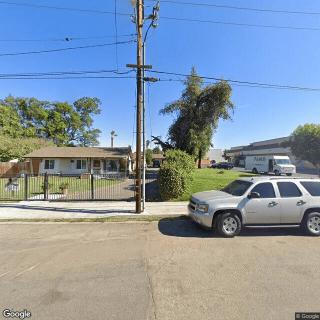



 Comprehensive Insights into Activities of Daily Living (ADLs) and Their Assessment
 Medicare Coverage for Assisted Living: An In-Depth Exploration
 Choosing the Right Senior Care: A Detailed Exploration of Assisted Living and Nursing Homes