
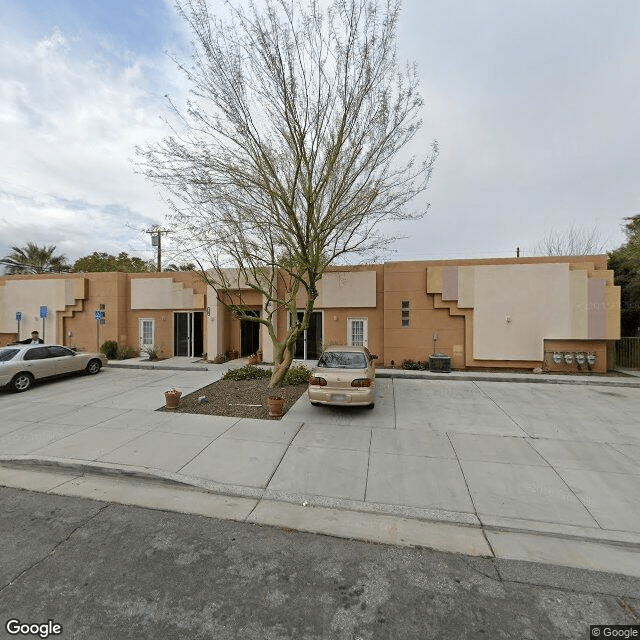
3760 Calle De Carlos, Palm Springs, CA 92264
For more information about senior living options: (866) 208-4318
Kenneth Slaman Costs & Pricing
Kenneth Slaman's housing costs reveal a competitive position within the broader market of Riverside County and California. For a private room, Kenneth pays $3,200 per month, which is notably lower than the county average of $3,474 and significantly less than the state average of $3,939. When it comes to studio accommodations, his monthly expense is $3,350, again more economical compared to Riverside County's average of $3,559 and California's statewide average of $4,145. This indicates that Kenneth is benefiting from relatively favorable rental rates in comparison to both county and state benchmarks for similar living arrangements.
| Floor plans | Kenneth Slaman | Riverside County | California |
|---|---|---|---|
| Private | $3,200 | $3,474 | $3,939 |
| Studio | $3,350 | $3,559 | $4,145 |
Memory care communities with a similar price nearby
-
from -$200 / mo
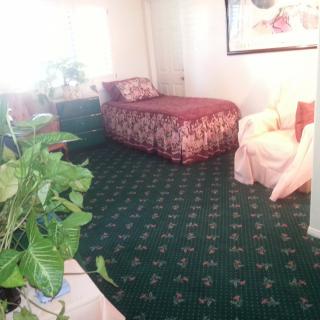
Carino's Quality Home Care
$3,000 to $3,500 / month2.0 miles away -
from -$205 / mo

Stonewall Gardens
$2,995 to $5,450 / month3.4 miles away -
from -$100 / mo

Pacifica Senior Living Palm Springs
$3,100 to $4,200 / month1.3 miles away -
from +$600 / mo
Loving Care Living
$3,800 to $4,000 / month13.4 miles away -
from -$400 / mo
La Quinta Residence Elderly 5
$2,800 to $4,700 / month15.5 miles away
Overall Review of Kenneth Slaman
Pros
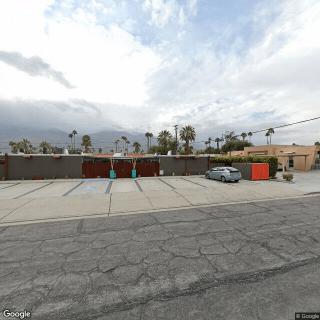
 The place is nice and has a nice exterior appearance.
- The resident has a nice bedroom and is doing fine.
- The staff members are very nice and friendly.
- The person who runs the facility is good.
- The facility seems well run and offers 24-hour care.
- The homey look and feel of the facility is appealing.
- Hospice care and skilled nursing are available as needed with a doctor on call.
- The facility is reasonably priced.
Cons
 They weren’t keeping correct logs on medication.
- They weren’t giving her medication.
- She had three really bad diabetic episodes.
- The food was terrible.
- There was nobody she could talk to.
- They needed to have a better staff.
- There were only dementia residents there.
Review
Kenneth Slaman in Palm Springs is best suited for families seeking a small, homey, budget-conscious option where care is provided in a bungalow-style setting and costs stay predictable. The property groups residents into several compact “houses,” with roughly eight people per facility, which creates a intimate social rhythm without the bustle of larger campuses. Pricing is straightforward: Level 1-2 around $3,200 with a one-year price hold, then reevaluation, and Level 3 around $3,400. The package covers most services, with incontinence care listed as the main exclusion; hospice or skilled nursing can be added as needed with on-call doctors. The staff and administration are described as approachable, and the overall vibe is a straightforward, home-like environment that appeals to those who want simplicity, personal touches, and a path to escalating care if required.
That said, there are clear reasons to consider alternatives. Families should be cautious if a resident’s needs go beyond basic assistance or if strong, consistent medication management is non-negotiable. One review details medication-logging lapses and actual missed medications, accompanied by serious diabetic episodes, which is a red flag for safety and medical oversight. The resident profile described in that account skewed toward dementia residents, leaving non-dementia residents with limited social connection. Food quality was criticized in the same account, suggesting that dining expectations may not align with all family standards. In short, for seniors who require robust clinical governance, diverse resident mix, or superior meal service, other communities may deliver more consistent outcomes.
The positive attributes nonetheless create meaningful offsetting value. Staff are repeatedly described as friendly and personable, and the owner/administrator is praised for hands-on leadership. The 24-hour care option is available, which matters for families balancing long days and overnight coverage. The homey look and feel, plus the bi- or tri-bungalow layout, can foster relationships more quickly than a sprawling campus. The concise pricing and the ability to access hospice or skilled nursing services on call add a layer of practical flexibility for families anticipating changing needs. In a setting that emphasizes personal attention and easier-to-navigate routines, these pros can translate into fewer logistical headaches for caregivers.
Yet the central risk remains tied to the most serious con: medical management. The documented medication-logging failures and missed doses imply a lapse in essential controls that protect residents with chronic conditions. Even with on-call physicians and nursing support, the day-to-day reality of pass-records and administration requires ironclad processes, especially when diabetes and other conditions are in play. This risk is not fully neutralized by the homey atmosphere, small-group format, or the relatively low price. Families will want to press for concrete systems: electronic med-pass logs, consistent nurse supervision, double-check protocols for all medications, and a clear rescue plan if a dose is missed. Without those safeguards, safety margins shrink.
Additional considerations come into focus when evaluating room size, activities, and overall amenities. A comment about “smallish” rooms points to potential privacy or comfort trade-offs, especially for couples or residents with mobility devices. The eight-per-facility dynamic can support social interaction, but it may limit individualized space and private routines. Dining quality, variety, and nutritional oversight are also critical, given the mixed feedback on meals. The presence of four duplexes and a “homey” atmosphere can be a strength for those who value neighborhood-like charm, but the lack of clarity around how care content evolves as needs grow, beyond hospice or skilled nursing, requires careful inquiry.
For families making a decision, a prudent plan is essential. Schedule a formal tour and watch how staff interact with residents across different times of day. Request copies of the current med-management procedures, incident records, and the latest state inspections to corroborate safety practices. Ask about the customization process for care plans, especially how quickly services can be scaled up or adjusted, and confirm exactly what is included in the base price and what would trigger additional charges (for example, incontinence supplies, transportation, or enhanced supervision). Speak with several residents or family members to gauge consistency of care and the reliability of communications with the administrator. If medication accuracy and culinary quality are non-negotiable, be prepared to explore alternatives with stronger clinical oversight and higher programming.
Bottom line: Kenneth Slaman offers a practical, intimate, price-conscious option for seniors who prioritize a home-like atmosphere and straightforward care that can scale with need. The strongest appeal lies in the personable staff, the hands-on management, and the flexible care paths supported by on-call medical staff. However, the facility’s history of med-management lapses and the mixed reviews on dining and social fit mean that families must scrutinize safety protocols and care governance before committing. For residents whose primary needs include robust medication management, engaging social programming beyond dementia-focused environments, or larger private spaces, alternatives with stronger clinical oversight and higher-capacity dining and activity offerings may be wiser choices.
 6 resident community capacity
 1-bedroom apartments
 Assisted Living
 Board and Care Home
 Memory Care
 Cable or satellite TV
 Dining room
 Full kitchen
 Fully furnished
 Garden
 Housekeeping services
 Laundry
 Move-in coordination
 Outdoor space
 Private
 Respite or short term stays offered
 Telephone
 Wi-Fi/high-speed internet available
 Palm Springs International (1 miles away)
 24-hour supervision
 Activities of daily living assistance
 Assistance with bathing
 Assistance with dressing
 Assistance with transfers
 Diabetes diet
 Hospice care
 Meal preparation and service
 Medication management
 Special dietary restrictions
 Transportation arrangement (medical)
 Transportation to doctors appointments
 Fitness programs
 English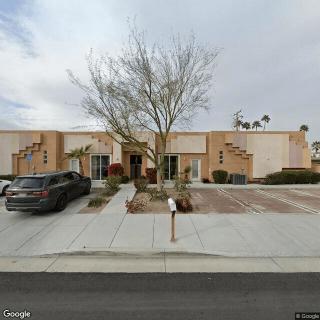



 Exploring the Power of Reminiscence Therapy for Individuals With Dementia
 An In-Depth Look at Reminiscence Therapy in Dementia Care
 Dementia-Related Hallucinations: Causes, Experiences, and Practical Approaches