
231 Glazy Acres Ln, Hot Springs, AR 71909
For more information about senior living options: (866) 208-4318
Abundant Life Care Home Costs & Pricing
Abundant Life Care Home offers competitive pricing for its various room types, reflecting a commitment to quality care within the community. For semi-private accommodations, the cost aligns closely with the county average at $3,795, which demonstrates a fair pricing strategy given local market conditions. In contrast, private rooms at Abundant Life are priced at $4,554, slightly below the Saline County average of $5,133 but higher than the state average of $4,236, suggesting that residents might enjoy enhanced amenities or services. The studio option stands out with a rate of $4,933, significantly above both Saline County's and Arkansas's averages of $3,089 and $2,863 respectively. This indicates that while Abundant Life Care Home may provide additional comforts or specialized care in their studios, potential clients should weigh these factors against their budgetary considerations when exploring options for long-term care.
| Floor plans | Abundant Life Care Home | Saline County | Arkansas |
|---|---|---|---|
| Semi-Private | $3,795 | $3,795 | $3,651 |
| Private | $4,554 | $5,133 | $4,236 |
| Studio | $4,933 | $3,089 | $2,863 |
Assisted Living communities with a similar price nearby
-
from -$445 / mo
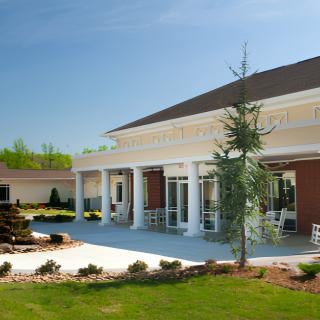
Mt. Carmel Community at The Village
$3,350 to $3,950 / month9.5 miles away
Overall Review of Abundant Life Care Home
Pros
 They take great care with their senior residence.
- The staff provide compassionate care and steady support.
- The facilities are clean, safe, and feel like a home.
- Anna and her team pay meticulous attention to every detail.
- The care is personal and full of empathy.
- Meals are home-cooked, with staff always attending to residents’ needs.
- They ensure comfort and surround residents with love, dignity, and respect.
- The environment is loving, family-like, and intimate.
- The staff go above and beyond, often providing one-to-one attention.
- Families feel the care adds vitality and well-being for their loved ones.
Cons
 None found; the reviews express positive care and gratitude.
Review
This community is best suited for families seeking a truly intimate, home-like setting where a loved one can receive very personalized, compassionate care rather than clinical intensity. The hallmark here is small size: a handful of residents, with staff who cultivate genuine relationships and treat residents as members of a caring household. For seniors who thrive on routine, predictability, and one-on-one attention, Abundant Life Care Home offers an environment where staff know preferences, meals are tailored, and daily routines feel familiar rather than institutional. It is especially well-matched for families prioritizing warmth, dignity, and clear communication over robotic efficiency or large-scale programming.
The strongest appeals come from the consistently compassionate staff, the attention given to comfort and individual needs, and the home-like atmosphere. Residents benefit from clean, safe surroundings and a level of attentiveness that can feel almost familial. Many families note that meals are thoughtfully prepared, home cooked and responsive to individual tastes, and that staff routinely go beyond the basics to accommodate special requests or dietary preferences. The notion of “being kept informed” stands out as a key strength; families feel connected to their loved ones even from a distance, with staff who take the time to explain care plans and changes in a respectful, transparent manner. The care extends into difficult moments as well, with families describing dignity, respect, and a supportive presence during end-of-life phases and transitions, which can be priceless for those navigating grief alongside caregiving.
Yet the most meaningful disadvantage to acknowledge is scale. The small footprint limits the breadth of medical resources, the depth of specialized programming, and the immediacy of on-call medical expertise that larger facilities promise. For residents whose needs edge into high-acuity medical care, or whose conditions require a broader team of specialists, this environment may feel undersized. Families weighing options for memory care, complex wound management, or rapid escalation of care should consider whether the facility’s staff composition and licensure match those expectations. In short, this is not a setting designed to substitute for a nursing home or a hospital-based unit with extensive on-site medical infrastructure; it excels where the priority is consistent warmth and individualized attention rather than a wide array of clinical services.
The upside, exceptional personal attention, the home atmosphere, and cost efficiency relative to traditional nursing facilities, often offsets these limits. The one-to-one or very small caregiver-to-resident ratio ensures that choices about meals, activities, and daily routines can be honored in substantial ways. Family visits feel welcome and frequent, and the staff’s willingness to accommodate evolving needs creates a sense of continuity that is rare in larger operations. The ability to transition smoothly to hospice care without relocating remains a notable advantage, reducing stress for families and preserving continuity of relationships for residents in their final months. In practice, this combination of intimate setting and heartfelt care translates into meaningful improvements in comfort, mood, and overall well-being for many residents.
Decision-makers should approach with a clear picture of priorities. If the objective is a true home environment where staff know residents well, where meals and daily life feel personalized, and where families value open communication and ease of visitation, Abundant Life Care Home stands out as a compelling option. Prospective residents or families focused on maximizing clinical sophistication, extensive medical oversight, or robust programming for memory care may find the arrangement less compatible with those needs and should actively review alternative options that emphasize larger staff rosters, more medical infrastructure, and structured activity calendars. It is also prudent to verify current licensure, the exact care level the facility can sustain, and the availability of on-site nursing coverage during weekends and holidays, even if past reviews describe consistently attentive performance.
In summary, Abundant Life Care Home represents a pragmatic, proven choice for families seeking a warm, intimate, and thoughtfully managed living environment for a loved one who benefits most from personal attention and a home atmosphere. The strongest justification is the care philosophy, staff who treat residents like family, meals that honor familiarity, and a communication model that keeps families engaged and reassured. For those who require the breadth of services found in larger assisted living communities or nursing facilities, alternatives should be pursued; but for families prioritizing dignity, warmth, and individualized care within a compact setting, this community offers a highly credible, value-driven path forward.
 Assisted Living
 Activities on-site
 Devotional services off-site
 Indoor common areas
 Ambulatory care
 Diabetic care
 Meals provided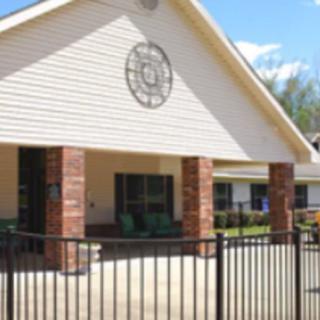

 Assisted Living and Memory Care: Understanding Their Core Differences
 Beyond the Bingo Hall: 50+ Enriching Activities for Seniors in Assisted Living
 Understanding the Distinctions: Assisted Living and Memory Care Explained