At Villas At La Canada - The Villa E, the monthly costs for accommodations are quite competitive when compared to both Pima County and the broader state of Arizona. For a semi-private room, residents can expect to pay $2,700, which is notably lower than the county's average of $2,805 and the state's average of $2,820. In terms of private rooms, the rate is set at $3,390, slightly above Pima County's average of $3,332 but still closely aligned with Arizona's overall average of $3,345. These pricing dynamics reflect a balance between quality living options and affordability within the region.
Floor plans
Villas At La Canada - The Villa E
Pima County
Arizona
Semi-Private
$2,700
$2,805
$2,820
Private
$3,390
$3,332
$3,345
Assisted Living communities with a similar price nearby
Overall Review of Villas At La Canada - The Villa E
common4 reviews mention this
Meals feel home-cooked
Residents describe fresh, home-style meals inside the villas.
Several reviews highlight meal quality, describing fresh cooked meals and a home-like dining experience. Families also mention regular meal support after challenging health transitions, including three meals a day. One reviewer specifically calls out home cooked food within each villa, and another describes staff going out of their way with a special meal request.
common3 reviews mention this
The setting supports home routines
Residents and families point to spacious common areas and outdoor space.
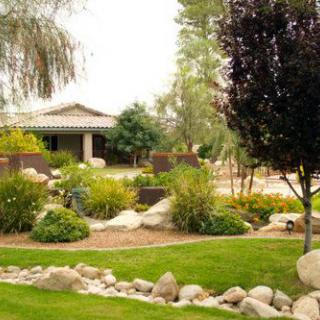
Reviews repeatedly mention the community layout feeling welcoming, with spacious common areas and outdoor space for visitors and residents. One reviewer describes small group “villa” living with outdoor areas and safe sidewalks for getting outside. Another points to the overall home-like setting, including yard and nature around the residence.
differentiator3 reviews mention this
Intake and tours put families at ease
Families describe tours and intake support that made transitions feel manageable.
Multiple reviews credit the intake and touring experience with reducing stress during placement decisions. Reviewers mention that the intake specialist was calming and helped them feel confident about the choice, especially after medical setbacks. Others add that the sales and leadership team approach tours personally, with communication and attention to family needs throughout the move process.
caveat2 reviews mention this
Serious care and safety concerns
Some reviewers raise serious concerns about care planning, medication, and safety.
While most reviews are positive, two low-rated reviews describe major issues, including missing or followed care plans and medication problems. One reviewer also alleges unsafe staff behavior during shifts, and another mentions monitoring due to concerns about staff performance. These comments directly contradict the more reassuring experiences families describe elsewhere in the reviews.
How we summarize
Counts show how many written reviews mention each theme; a review can touch several themes, and only frequently mentioned themes are displayed.
At Villas At La Canada - The Villa E, the monthly costs for accommodations are quite competitive when compared to both Pima County and the broader state of Arizona. For a semi-private room, residents can expect to pay $2,700, which is notably lower than the county's average of $2,805 and the state's average of $2,820. In terms of private rooms, the rate is set at $3,390, slightly above Pima County's average of $3,332 but still closely aligned with Arizona's overall average of $3,345. These pricing dynamics reflect a balance between quality living options and affordability within the region.
Villas At La Canada - The Villa E is located at 1563 West Desert Harbor Circle, Tucson, AZ 85704 in Pima County, Arizona
Nearby Communities
Villas At La Canada - The Villa C
Tucson, AZ
4.4 from 45 reviews
Fully furnished assisted living with 24/7 supervision, medication management, diabetes-friendly meals, and move-in coordination, plus garden and social activities.
Villas At La Canada - The Villa D
Tucson, AZ
4.4 from 45 reviews
Personalized 24-hour supervision with care coordination in a furnished setting.
Villas At La Canada - The Villa F
Tucson, AZ
4.4 from 45 reviews
Fully furnished accommodations with meals and 24-hour supervision
Park Senior Villas - La Cañada
Tucson, AZ
4.1 from 63 reviews
$2,800 / month
Caring, attentive staff in a clean, welcoming environment.
Villas At La Canada - The Villa A
Tucson, AZ
4.4 from 45 reviews
Small, personalized assisted living with fully furnished villas, meals, and transport for medical appointments.
The Villas At La Canada - Villa G
Tucson, AZ
4.4 from 45 reviews
Small, intimate board-and-care setting with 24-hour supervision, personalized care, and diabetes-friendly dining.
Emerine Hills Assisted Living
Tucson, AZ
1 from 2 reviews
$3,850 / month
Private rooms with private bathrooms and a broad range of on-site amenities and care services.
Bridgewater Assisted Living
Tucson, AZ
3.4 from 49 reviews
$3,000 to $5,500 / month
Nice outdoor spaces with a memory-care focus and competitive studio pricing.
The article examines senior housing options, detailing the distinctions between independent living and assisted living, along with the emerging "independent assisted living" model that blends both approaches. It highlights the importance of assessing individual needs, preferences, and financial factors in making informed decisions about suitable living arrangements for seniors.
The deductibility of assisted living expenses on taxes hinges on factors like the individual's medical condition and service nature, typically requiring the resident to be "chronically ill" per IRS definitions. Taxpayers may deduct eligible medical expenses related to personal care services but generally not rent unless primarily for medical care, and they should maintain thorough documentation to support claims while considering itemizing versus standard deductions.
The guide highlights the importance of assisted living facilities for aging veterans needing daily support, discusses unique challenges they face, and outlines available financial assistance from the VA, including the Aid and Attendance program. It emphasizes understanding eligibility criteria and navigating the VA system to access necessary benefits effectively.
Get PricingAsk A QuestionSchedule A TourContact Senior Advisor
By clicking submit, you agree to our Partner's Terms of Use. You
also consent to receive calls and texts, which may be autodialed, from our Partner. Your consent is not a condition to
using our Partner's service. Please visit our Partner's Privacy Policy for information about their privacy practices.







 10 resident community capacity
 Assisted Living
 Board and Care Home
 Cable or satellite TV
 Dining room
 Fully furnished
 Garden
 Housekeeping services
 Move-in coordination
 Outdoor space
 Telephone
 Wi-Fi/high-speed internet available
 Tucson International (15 miles away)
 24-hour supervision
 Activities of daily living assistance
 Assistance with bathing
 Assistance with dressing
 Assistance with transfers
 Diabetes diet
 Meal preparation and service
 Medication management
 Special dietary restrictions
 Transportation arrangement (medical)
 Transportation to doctors appointments
 Fully furnished assisted living with 24/7 supervision, medication management, diabetes-friendly meals, and move-in coordination, plus garden and social activities.

 Exploring the Path to Senior Living: A Comprehensive Look at Independent Living and Assisted Living
 Is Assisted Living Deductible on Your Taxes? Understanding the Complexities of Assisted Living Expenses and Deductions
 Assisted Living Support for Veterans: A Complete and Detailed Overview