
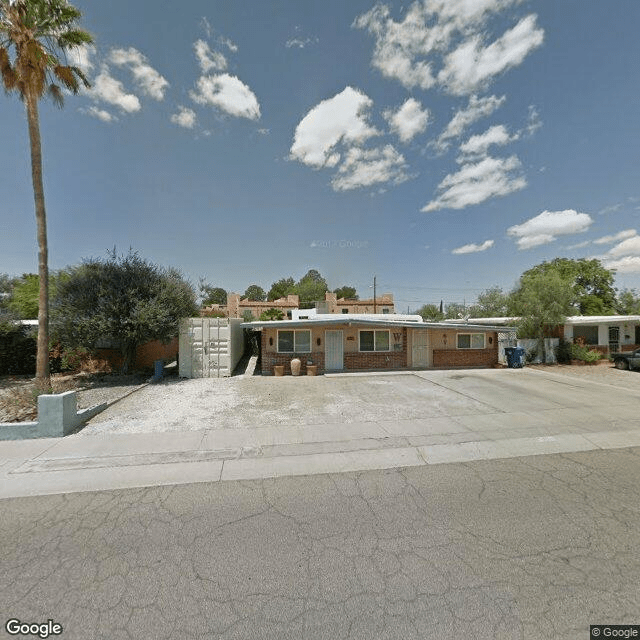
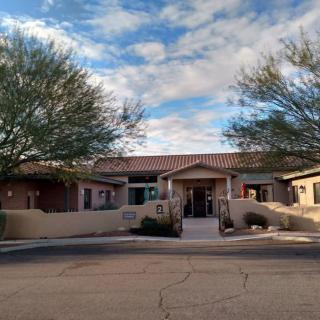
3831 N Reno Ave, Tucson, AZ 85705
To contact a resident: (520) 887-2551
For more information about senior living options: (866) 208-4318
Overall Review of Ridgecrest Adult Care Homes
Pros
 Paul and the staff are true caregivers who provided exceptional care for her aunt.
- Their attention and kindness far exceed the level of care she received at previous places.
- She is very happy here.
- Her family enjoys visiting her.
- This place is great for dementia patients.
Cons
 She can be very hard to handle sometimes.
Review
Ridgecrest Adult Care Homes in Tucson, AZ, is best suited for seniors with dementia or memory-care needs and families who prize true, hands-on caregiving delivered in an intimate, home-like setting. The strongest message from the reviews is a clear confidence in the team’s humanity and attentiveness. Paul and the staff are portrayed as caregivers who truly know how to respond to cognitive or behavioral challenges with patience, kindness, and practical alternatives to medication. Families consistently speak of a warm, respectful approach that keeps residents dignified while inviting family involvement. For a resident whose daily stability depends on consistent, individualized attention and a supportive, low-key atmosphere, Ridgecrest appears to be a reliable match.
On the care front, the pros land decisively. The staff are praised for going beyond expectations, with one reviewer specifically noting that care surpassed what was received at prior places. The emphasis on dementia-friendly strategies, treating agitation, confusion, and resistance with calm, personalized care rather than quick pharmacologic fixes, resonates across accounts. The setting’s small scale matters: staff can monitor subtle changes, tailor routines, and maintain a steady, predictable day that reduces distress for dementia residents. Family visits are welcomed and easy, reinforcing a sense of community and continuity that matters deeply to families managing long-term care decisions.
Yet there is a cautionary note suggested by the collective ratings. While the overall score is high, one reviewer assigned a 1-star rating, signaling that not every experience will align perfectly with every family’s expectations. The lack of specifics in that critique leaves room for interpretation, but it underscores the reality that even strong, person-centered care can feel variable from one resident to the next or from one time to another. Potential families should recognize that in smaller, home-style environments, outcomes may hinge on daily staff availability, individual caregiver compatibility, and how well the care plan adapts to evolving needs.
Those considering Ridgecrest should weigh the strong dementia-care orientation and caregiver-centered culture against the possibility that more intensive medical or nursing oversight may be needed. The reviews do not portray Ridgecrest as a large, hospital-like setting with on-site advanced nursing, rehab programs, or high-volume clinical support. For a resident who requires frequent medical interventions, complex wound care, or round-the-clock nursing supervision, alternatives with broader medical staffing or a structured continuum of care may be a better fit. Families with such needs should pursue direct discussions about staffing, capabilities, and emergency protocols before deciding.
The key to evaluating Ridgecrest lies in aligning expectations with the facility’s strengths. For families prioritizing humane, attentive care for dementia, where staff know the resident by name, celebrate small milestones, and employ non-pharmacologic strategies to reduce distress, Ridgecrest offers a compelling case. The positive testimonials about caregiver dedication and the absence of unnecessary sedation bolster confidence in day-to-day quality of life for residents who respond well to consistency and gentle routines. The main caveat is to confirm that the resident’s medical needs and safety requirements can be met within the home setting, and to probe whether the care plan includes clear escalation paths for changes in health status.
In practical terms, prospective families should plan a focused visit and observe several touchpoints: how staff approach a resident with memory challenges, how care plans are discussed and updated, and how emergencies are handled. Ask for specific examples of dementia-care techniques, staffing ratios during different shifts, and opportunities for family participation in daily routines. Inquire about activities tailored to memory and cognition, safety features in living spaces, and the availability of nursing support or on-call medical professionals. When those conversations confirm a strong match between resident needs and Ridgecrest’s capabilities, the community stands out as a seasoned, candid choice for compassionate, person-centered dementia care.
 Board and Care Home
 Tucson International (11 miles away)



 In-Depth Look at the VA Aid and Attendance Program
 Nurturing Our Loved Ones: A Daughter's Journey in Caring for Her Mother
 Nurturing Our Elders: Linda's Journey of Supporting Her Mother