
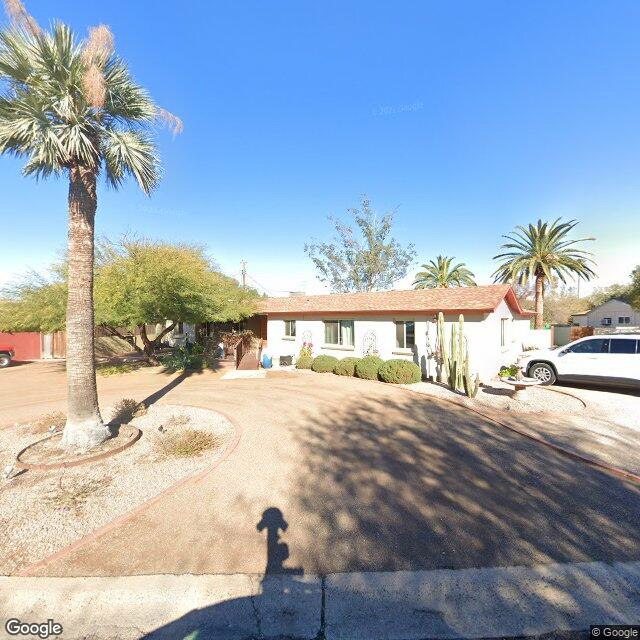
4329 East 14Th Street, Tucson, AZ 85711
To contact a resident: (520) 349-3036
For more information about senior living options: (866) 208-4318
Overall Review of Carrington Assisted Living
Pros
 They highly recommend Carrington to families seeking an assisted living home.
- They felt that their mother, Patricia, received outstanding care.
- The owners, Guy and Maria, are great communicators and run a safe, clean, and caring home.
- The staff is absolutely fantastic.
- The staff are qualified professionals with the training necessary to be some of the best caregivers you can find.
- They found it very comforting to trust Carrington to care for their mother.
- They had placed their mother in a couple of other homes, but Carrington is by far the best.
- The environment at Carrington is safe, clean, and caring.
Review
Carrington Assisted Living in Tucson is best suited for families seeking a small, home-like environment where care is highly personalized and communication with the owners is direct and dependable. This community shines for residents who thrive on a warm, intimate setting rather than a large, impersonal campus. The narrative evidence from families points to a setting where the daily rhythm centers on attentive oversight, a reassuring sense of safety, and hands-on involvement from the people who run the home. In short, Carrington is a strong fit for those who want to feel confident that a loved one is not simply housed, but genuinely cared for in a tightly managed, caregiver-first environment.
Not every family will want to select Carrington, and alternatives deserve consideration. Those who require a larger facility with extensive on-site medical resources, broad dementia care programming, or a wide range of on-site therapists and amenities may find a better fit elsewhere. If cost structures, the desire for a more institutional feel, or access to a more expansive activity calendar are deciding factors, exploring other options could lead to matches that align more closely with those specific needs. Similarly, families prioritizing formal, hospital-style oversight or more comprehensive 24/7 nursing coverage may want to compare higher-capacity communities.
The strongest advantages at Carrington revolve around leadership and team cohesion. The owners are described as excellent communicators, providing a steady, reassuring line of contact for families, which minimizes the anxiety that often accompanies transitions into assisted living. A safe, clean, and caring home environment under their control translates into consistent standards of safety and daily comfort. The staff is singled out as fantastic, qualified professionals with the training necessary to deliver dependable, respectful care. These elements cohere into a trust factor that is hard to match in larger, less personal settings.
Coupled with leadership and culture, the quality of caregiving at Carrington offsets common concerns about small-scale homes. In a landscape where families worry about turnover, responsiveness, and the nuance of daily supervision, the combination of direct owner involvement and highly trained staff produces predictable, high-quality care. The testimonial that Carrington outperformed other facilities already visited reinforces the sense of reliability and continuity, reducing the cognitive burden on families during a fraught decision-making process. When a family needs to feel that a mother or father is surrounded by capable, attentive hands, these strengths matter most.
While the review highlights exceptional results, it remains prudent to acknowledge that a small, owner-operated model may present trade-offs for some residents. For those needing a deeper pool of medical staff on-site, more extensive therapy services, or a up-front cost structure that reflects a broader campus experience, alternatives may offer advantages. Prospective residents should weigh the intimate atmosphere, strong communication, and dependable caregiving against preferences for scale, depth of medical resources, and program breadth. This balance, personal touch versus campus breadth, will determine whether Carrington remains the top choice or if another option better aligns with the care plan and budget.
Ultimately, families weighing Carrington should prioritize three practical steps. First, visit and observe how owners interact with residents and how staff respond to routine questions or concerns; second, verify the level of medical oversight available on-site and the frequency of care plan updates; third, assess the sensory and daily rhythms of the home, the cleanliness, safety features, meal quality, and the perceived warmth of interactions. For families prioritizing trust, responsiveness, and a truly homey feel, Carrington stands out as a compelling, well-run choice. For others, the door remains open to alternatives that align more closely with different care dimensions or financial expectations.
 10 resident community capacity
 Assisted Living
 Board and Care Home
 Activities on-site
 Cable or satellite TV
 Devotional services off-site
 Dining room
 Fully furnished
 Garden
 Housekeeping services
 Indoor common areas
 Move-in coordination
 Outdoor space
 Telephone
 Wi-Fi/high-speed internet available
 Tucson International (7 miles away)
 24-hour supervision
 Ambulatory care
 Assistance with bathing
 Assistance with dressing
 Assistance with transfers
 Diabetes diet
 Diabetic care
 Meal preparation and service
 Medication management
 Special dietary restrictions
 Transportation arrangement (medical)
 Transportation to doctors appointments






 Social Security Benefits and Assisted Living: Navigating Options Across the U.S.
 An Extensive Exploration of the VA Aid and Attendance Benefit
 Senior Transition Services: Understanding Their Role, Cost, and Importance