

1675 West Placita Abreojos, Sahuarita, AZ 85629
For more information about senior living options: (866) 208-4318
Family Loving Kare S2 Costs & Pricing
Family Loving Kare S2 offers a range of accommodation options at competitive price points within Pima County and the broader Arizona state context. For semi-private rooms, residents can expect to pay $3,000 per month, which is slightly higher than the county average of $2,805 but remains close to the state average of $2,820. Private rooms are priced at $3,400 per month, aligning closely with Pima County's average of $3,332 and Arizona's average of $3,345. Similarly, the one-bedroom units also come in at $3,400 monthly - just under Pima County's average of $3,660 and above Arizona's state average of $3,532. Overall, while Family Loving Kare S2's rates may be slightly elevated compared to some local averages, they offer valuable services and community engagement that enrich the living experience for residents.
| Floor plans | Family Loving Kare S2 | Pima County | Arizona |
|---|---|---|---|
| Semi-Private | $3,000 | $2,805 | $2,820 |
| Private | $3,400 | $3,332 | $3,345 |
| 1 Bedroom | $3,400 | $3,660 | $3,532 |
Memory care communities with a similar price nearby
-
from -$500 / mo
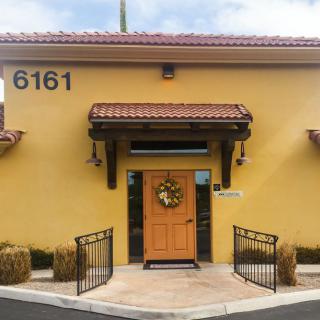
Fairmount Assisted Living
$2,500 to $3,500 / month22.8 miles away -
from +$335 / mo
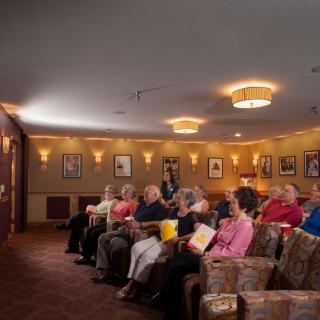
Cascades of Tucson
$3,335 to $5,350 / month22.0 miles away -
from +$400 / mo
Groves Assisted Living - Pima
$3,400 to $5,500 / month22.1 miles away -
from -$405 / mo
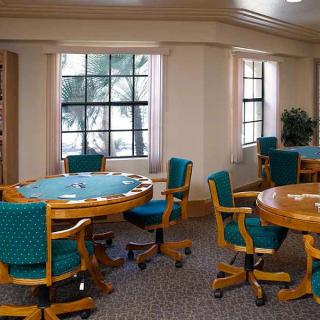
Atria Campana Del Rio
$2,595 to $7,095 / month24.8 miles away -
from -$500 / mo
Ocotillo House At Infinity Wilmot
$2,500 to $3,000 / month21.0 miles away
Overall Review of Family Loving Kare S2
Pros
 Family Loving Kare is the only place Dad was in that had people who seemed to care.
- The staff at Family Loving Kare are caring, with Carrie described as an excellent person.
- Carrie ensures that her staff are always around to care for the residents.
Cons
 Most places he was in were understaffed, and the people couldn't have cared less.
- It was a nice place, but not for them.
Review
Family Loving Kare S2 in Sahuarita is best suited for families that place a high premium on demonstrable caregiver engagement and a dependable, professional staff presence in daily care. One reviewer highlights that this community stands out for having staff who genuinely seem to care, with particular praise for Carrie, whose leadership appeared to keep caregiving consistently in view. That sense of dependable availability and attentive touch is the core strength here, translating into a perception of safer, more personalized attention for residents. For families seeking quiet confidence that a facility can be counted on to show up for needs like monitoring, helping with activities of daily living, and maintaining a respectful, orderly environment, this community delivers.
At the same time, this is not a one-size-fits-all option. Two reviews bluntly state that the place is “nice,” but not for them, signaling that personal fit matters as much as care quality. Prospective residents who crave robust programming, abundant social opportunities, or a particular vibe, whether more energetic, more expansive, or more specialized in memory care, may disappoint if those elements are nonnegotiable. The limited number of reviews also means that critical details, such as how meal services, transportation, or specific care levels are delivered on a day-to-day basis, remain underexplored. Families should be prepared to judge fit through tours and direct conversations, not assumptions from high-level impressions alone.
The strongest offset to potential concerns is clearly the staffing reliability and visible care mindset. The standout praise for Carrie suggests a leadership style that keeps caregiving visible and cohesive, reducing the sense of staff turnover that worries many families. When caregivers are present and responsive, it mitigates fears about missed medication, delayed assistance, or neglected routines. That caregiver continuity can translate into calmer mornings, more consistent help with dressing and mobility, and a culture where residents feel known by name. However, the absence of broader, detailed information about programming, activity depth, and specialized services means this advantage may not translate into a fully satisfying lifestyle for every resident.
Conversely, the limited feedback leaves several practical questions unanswered, and those gaps matter in a decision with long-term implications. Without explicit data on care levels, memory support options, or how the community handles complex needs, families must verify readiness for potential declines or shifts in health status. Likewise, the overall rating, a modest 3.7 from three reviews, signals tentative satisfaction rather than enthusiastic endorsement. This fragility in the public impression underscores the need to verify alignment with personal priorities, whether that means menu quality, transport availability, or the pace of daily life.
The informed move is to treat this community as a compelling option for families who value genuine caregiver attention and a trustworthy, present staff. For those who require richer programming, a broader social calendar, or stronger alignment with specific care goals, alternatives deserve equal consideration. When touring, probe deeply into staffing ratios across shifts, training standards, and how staff integrate with family care plans. Ask to see routine routines, meal service, transportation arrangements, and opportunities for meaningful resident engagement. In the end, this community earns a careful, measured look: it can satisfy a core need for dependable, compassionate care, while potential gaps in programming or personal fit make it essential to compare with other options before committing.
 10 resident community capacity
 1-bedroom apartments
 Assisted Living
 Board and Care Home
 Memory Care
 Cable or satellite TV
 Dining room
 Fully furnished
 Garden
 Housekeeping services
 Move-in coordination
 Outdoor space
 Private
 Telephone
 Wi-Fi/high-speed internet available
 Tucson International (13 miles away)
 24-hour supervision
 Activities of daily living assistance
 Ambulatory care
 Assistance with bathing
 Assistance with dressing
 Assistance with transfers
 Diabetes diet
 Diabetic care
 High acuity care
 Incontinence care
 Meal preparation and service
 Medication management
 Special dietary restrictions
 Transportation arrangement (medical)
 Transportation to doctors appointments




 Five Subtle Dementia Indicators to Observe: An In-Depth Guide to Understanding “Does My Mom Have Dementia?”
 Dementia, Paranoia, and Caregiver Guidance: Understanding the Connection
 Engaging Memory Care Activities That Enhance Quality of Life