
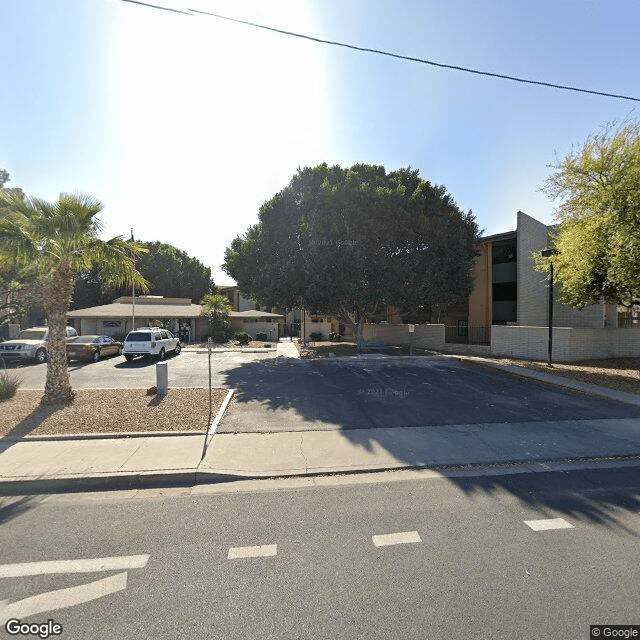
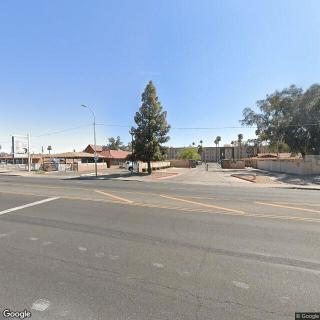
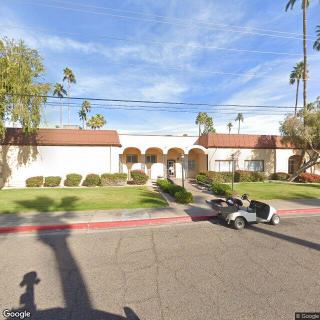
4545 N Maryvale Pkwy, Phoenix, AZ 85031
To contact a resident: (602) 262-1660
For more information about senior living options: (866) 208-4318
Overall Review of Maryvale Parkway Terrace
Pros
 The staff and community have formed a wonderful network of friends for her.
- They stay on top of watching over her to ensure she remains safe in her home.
- The care from the staff and community brings comfort and reassurance to her.
- They are grateful for looking out for her and supporting her through her renovations.
- They hope she will be back in her home after the renovations are complete.
Cons
 She tends to lean into hoarder tendencies.
- She tends to get herself into a position of panic before the inspectors come.
- There is a wish that inspections would be conducted more often, suggesting ongoing safety concerns.
- There is worry about protecting her from fraud and crime in the area.
Review
Maryvale Parkway Terrace in Phoenix is best suited for families seeking a warm, socially connected independent-living environment where an elderly or disabled loved one can stay engaged and safe under steady staff oversight. The community yields a tangible sense of belonging: residents form a network of friends, and the care team actively monitors safety in the home. It works particularly well for residents who require ongoing attention due to behavioral or cognitive challenges, such as hoarding tendencies, where visible accountability and a familiar, consistent staff presence matter. Those who prize safety, routine, and friendship will find this setting compelling. By contrast, those needing more intensive medical management or stronger neighborhood protections should consider alternatives.
Key advantages lie in the social fabric and proactive safety culture. A robust circle of friends within the community reduces isolation and promotes daily engagement that can be crucial for elderly residents. The staff’s vigilant approach to safety, keeping a steady watch over daily living conditions and intervening when concerns arise, provides reassurance to families. Regular inspections, aligned with city standards, reinforce a disciplined approach to maintenance and hazard prevention. Renovation work on a resident’s home signals a long-term commitment to preserving quality living space rather than placing tenants in a static setup. Together, these elements create a dependable environment where oversight and belonging reinforce daily quality of life.
Yet the model carries notable caveats. Relying on routine inspections can leave gaps between visits, creating a window for issues to emerge if a resident’s situation changes rapidly. The reviewer notes occasions of ‘panic’ before inspections, underscoring the potential for temporary safety gaps when oversight timing does not align with immediate needs. Hoarding-related upkeep becomes a live concern requiring ongoing attention, and the cadence of checks may not fully eliminate between-inspection risk. Adding to the calculus, concerns about neighborhood fraud and crime after-hours remind families that external security factors cannot be fully contained within the community’s walls.
These strengths offset drawbacks in meaningful ways. The social network provides emotional resilience that reduces reliance on constant professional intervention, while staff vigilance translates into practical safeguards, quick responses to emerging hazards and a visible commitment to resident welfare. The maintenance mindset, evidenced by regular inspections and ongoing home renovations, demonstrates a long-range investment in living conditions, not merely a tenancy. For families, the net effect is a quiet confidence: their loved one is in a place where people know them, watch over them, and keep their living environment up to date. That combination makes risk manageable rather than insurmountable.
Still, families weighing options should align expectations with care needs. If constant medical supervision, memory-care supports, or rapid escalation of care is essential, alternatives with more in-house clinical staffing may be preferable. For those who require stronger external security measures against property crime or fraud, a community with additional protections or a different security posture could prove more suitable. For residents who prize maximal privacy or independence with minimal routine oversight, other offerings may better match preferences and lifestyle goals.
Overall, Maryvale Parkway Terrace emerges as a practical, community-first choice for families prioritizing friendship, safety-minded oversight, and home-maintenance attention. The two 5-star reviews underline a satisfied resident community and a care team that clearly proves its reliability over time. The main decision hinges on the level of clinical care needed and comfort with possible gaps between inspections; for many, the balance favors the human connection and consistent attention that define this setting. Prospective families should request specifics on inspection cadence, targeted checks for hoarding or safety hazards, and the facility’s plan for mitigating neighborhood risks, then visit to observe whether the culture matches the promises reflected in the reviews.
 Assisted Living
 Activities on-site
 Devotional services off-site
 Indoor common areas
 Phoenix Sky Harbor International (11 miles away)
 Ambulatory care
 Diabetic care
 Meals provided



 Understanding the True Cost of Assisted Living in 2025: A Comprehensive Guide
 Understanding Medicaid Coverage for Assisted Living: A Comprehensive Guide
 How and When Medicaid May Cover Assisted Living Costs