
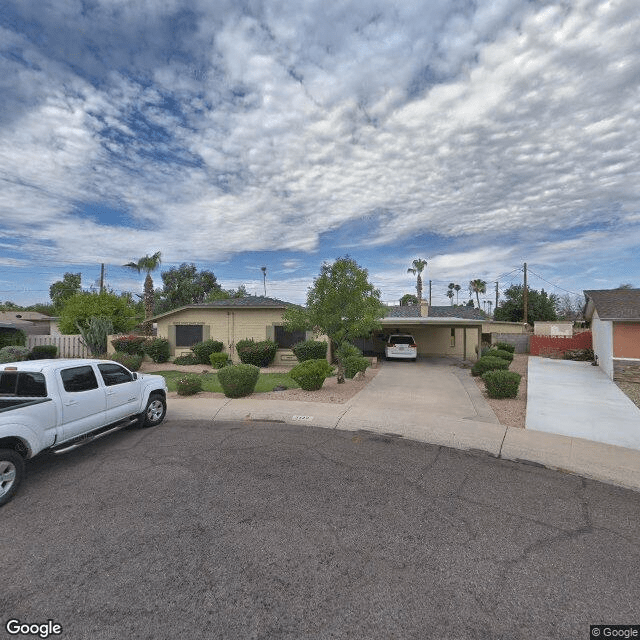
3729 West Lane Avenue, Phoenix, AZ 85051
For more information about senior living options: (866) 208-4318
A Lane Adult Care Home Costs & Pricing
A Lane Adult Care Home offers competitive pricing for its residential care options, particularly when compared to the broader market in Maricopa County and the state of Arizona. For a semi-private room, residents at A Lane pay $2,300 per month, which is significantly lower than the county average of $2,801 and the state average of $2,820. Similarly, for those seeking a private room, A Lane's rate of $3,000 is also more affordable compared to Maricopa County's average of $3,318 and Arizona's statewide average of $3,345. This makes A Lane Adult Care Home an appealing choice for families looking for quality care within a budget-friendly framework.
| Floor plans | A Lane Adult Care Home | Maricopa County | Arizona |
|---|---|---|---|
| Semi-Private | $2,300 | $2,801 | $2,820 |
| Private | $3,000 | $3,318 | $3,345 |
Assisted Living communities with a similar price nearby
-
from +$325 / mo

The Eldercare Home Of Tempe
$2,625 to $3,412 / month18.3 miles away -
from +$200 / mo
Anc Assisted Living Homes I
$2,500 to $3,500 / month18.8 miles away -
from -$300 / mo
All Stars Assisted Living
$2,000 to $2,500 / month15.9 miles away -
from +$100 / mo
Arabian Views Assisted Living One
$2,400 to $3,200 / month11.9 miles away -
from +$400 / mo
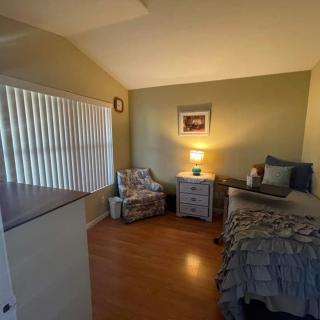
Caring Hearts Senior Care
$2,700 to $3,500 / month15.8 miles away
Overall Review of A Lane Adult Care Home
Pros
 A Lane Adult Care Home is spotless and clean all the time and takes excellent care of all residents.
- Residents look happy and healthy when families visit.
- The facility does an outstanding job and is highly recommended.
- The staff are caring, loving, and very supportive of families, with frequent updates on residents’ conditions.
- The owner visits residents in the hospital nearly every day, and the staff are supportive after a loved one passes, including attending the funeral.
- The home provides a warm, inviting environment for residents’ last months of life.
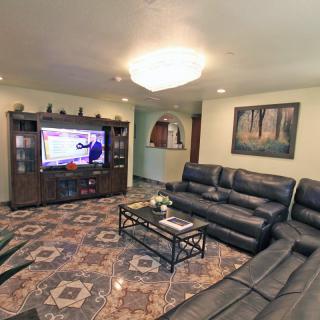
- The staff and owners are very sweet and caring; the home is always clean, pleasantly smelling, with nice decor and a cheerful atmosphere.
Cons
 The staff member on the phone from the facility said she didn’t want to work with any caseworker.
- The reviewer implied that the facility would not be suitable for their mother.
Review
A Lane Adult Care Home in Phoenix, AZ is best suited for families seeking a small, home-like environment where compassionate, hands-on care is the core strength. This community shines for residents who benefit from spotless surroundings, constant attentiveness, and a culture of warmth that permeates both staff and owners. It is especially appropriate for seniors dealing with memory challenges, like Alzheimer's or Parkinson’s, where vigilant supervision and responsive communication matter more than formal square footage or industrial-scale programming. Families that value regular, candid updates and a sense that the care team treats a home as an extension of the family will find the day-to-day experience aligns with those priorities.
Nonetheless, some families should consider alternatives. The strongest caveat surfaces around coordination with external case management. One reviewer recounted a rigid stance against working with a caseworker, which exposes a potential mismatch for families whose care plans rely on ALTCS or other case-management support. For those who need a facility that readily partners with caseworkers or who require a more formal medical-oversight framework, a larger assisted living or memory-care community with established case-management protocols may be a better fit. Additionally, prospective residents who prioritize expansive amenities, robust on-site nursing staff around the clock, or highly structured daily programming could prefer a setting with broader resources.
The positive attributes at A Lane offset the notable con about caseworker collaboration through a combination of intimate care and proactive communication. Cleanliness is a standout that influences daily well-being, visitors consistently note a spotless environment with pleasant, inviting smells. Caregivers are described as genuinely loving and attentive, and the owners participate in daily life with a level of accessibility and accountability that is uncommon in larger operations. This hands-on leadership translates into meaningful updates for families; when a loved one is hospitalized, the owner’s daily visits and ongoing contact demonstrate a commitment that reduces anxiety and fosters trust. Such continuity often mitigates the risk associated with smaller operations.
Evidence from families underscores the depth of emotional and practical support. Instances of sustained involvement include regular phone updates during times when in-person visits aren’t feasible and a notable willingness to attend significant milestones, such as funerals, reflecting a genuine investment in the family’s journey. The environment itself, homey decor, cheerful atmosphere, and consistent staff kindness, reinforces a sense of safety and belonging for residents with dementia or Parkinson’s who may thrive on familiar routines and personal connections. This combination of affective warmth and reliable communication creates a buffer against potential downsides of a smaller setting.
For families evaluating options, practical questions should center on care coordination, daily life structure, and staffing stability. Inquire about how caseworkers or family coordinators are integrated into care planning, what the standard communication cadence looks like, and how emergencies or hospitalizations are handled. Ask about daily routines for residents with memory impairment, what activities are offered to maintain cognitive and social engagement, and how flexibility is managed if a resident’s needs shift. Observe how staff respond to residents’ cues, how clean rooms and common areas stay on a day-to-day basis, and whether the owner or leadership team remains visibly involved in shifts and care planning.
In the end, A Lane Adult Care Home stands out for families prioritizing warmth, cleanliness, and transparent, ongoing communication within a small, personal environment. It is a compelling match for loved ones who flourish under close-knit staff attention and owner involvement, particularly when dementia or neurodegenerative conditions require attentive supervision and easy access to caregivers. Those who depend on formal case-management partnerships or who seek the broad medical infrastructure of a larger facility should approach with specific questions and perhaps explore alternatives. When the priority is a home-like setting where residents are treated with heartfelt care and families are kept in the loop, A Lane is a solid, trusted option.
 10 resident community capacity
 Assisted Living
 Board and Care Home
 Respite Care
 Beautician on-site
 Cable or satellite TV
 Dining room
 Fully furnished
 Garden
 Ground floor units
 Housekeeping services
 Move-in coordination
 Outdoor space
 Private
 Private bathrooms
 Telephone
 Wheelchair accessible showers
 Wi-Fi/high-speed internet available
 Phoenix Sky Harbor International (11 miles away)
 24-hour supervision
 Activities of daily living assistance
 Assistance with bathing
 Assistance with dressing
 Assistance with transfers
 Diabetes diet
 Diabetic care
 High acuity care
 Incontinence care
 Meal preparation and service
 Medication management
 Special dietary restrictions
 Transportation arrangement (medical)
 Transportation to doctors appointments
 BBQs or picnics
 Birthday parties
 Karaoke
 Stretching classes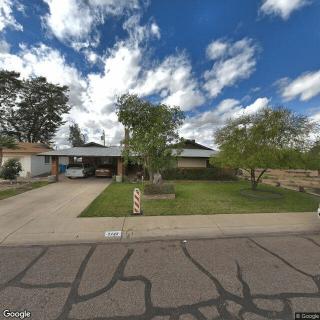



 Vibrant Senior Living: A Comprehensive Guide for Active Older Adults
 When to Transition from Assisted Living to Memory Care: Key Indicators, Steps, and Finding the Right Community
 Assisted Living and Memory Care: Understanding Their Core Differences