
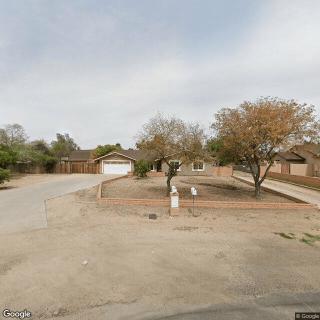
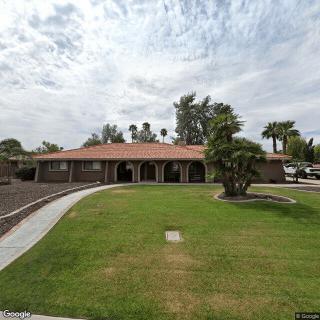
7230 West Grovers Avenue, Glendale, AZ 85308
For more information about senior living options: (866) 208-4318
Overall Review of Grovers Terrace Alh
Cons
 It was a total nightmare when her mother was there.
- Her mother spent less than 30 days there.
- It was very difficult to contact her mother, who was a resident there.
- Staff often answered the phone but did not say anything, hindering communication.
- There was great frustration trying to contact the resident by phone.
Review
Grovers Terrace ALH in Glendale is best suited for seniors who are largely independent and for families that value straightforward operations over high-touch oversight. The reviews indicate a lean, no-frills environment where daily life hinges on basic assistance rather than intensive medical coordination. For residents who do not require constant medical monitoring or frequent, proactive updates to relatives, this community can feel like a practical, low-friction choice. It is not a setting designed for those who depend on thorough, attentive engagement from staff or on transparent, regular communication with family members.
Those who should consider alternatives are families that demand reliable, timely updates about a loved one’s status. If routine, proactive communication, and clear escalation of concerns are non-negotiables, this community will likely disappoint. The experiences shared point to a pattern where getting meaningful information is challenging, and family members may be left uncertain about their loved one’s day-to-day wellbeing. In situations requiring consistent caregiver contact, coordinated care planning, or visible oversight, other options will typically deliver greater reassurance.
There are faint signs of potential strengths in the mix of feedback, but they are overwhelmed by the dominant concerns. A lone five-star review hints that some residents may value certain aspects not clearly described in the broader critiques, yet the lack of detail makes that perspective hard to rely on. In practical terms, whatever perceived positives exist are not reliably experienced by families who need dependable communication and accountable care. The clearer, recurring issue is that basic updates and access to information about a resident’s condition are not consistently delivered.
The core failings center on communication failures that undermine trust and safety. A relative in one account describes extreme difficulty contacting a mother who resides there, with staff sometimes answering the phone but not providing any useful information. When a family is thousands of miles away, and the primary lifeline to the resident hinges on timely, informative phone contact, this shortfall becomes a substantial risk. Such gaps suggest management gaps, limited responsiveness, and a culture where family updates are not reliably prioritized. Even if the living environment itself meets surface expectations, these communication lapses substantially erode confidence in overall care.
For families evaluating Grovers Terrace ALH, a clear due-diligence path is essential. During visits, insist on speaking with the administrator and request a named family liaison who will handle updates and questions. Ask for concrete details: the frequency and method of routine updates, who monitors daily care, how care plans are created and revised, and what constitutes an escalation protocol when concerns arise. Inquire about staffing patterns, including nurse availability, night coverage, and caregiver-to-resident ratios. Observe resident interactions, note how staff respond to questions, and verify that emergency procedures and safety measures are in place. Request sample care plans, incident reports, and recent state inspection findings to anchor decisions in verifiable data.
Bottom line: the strongest argument against Grovers Terrace ALH rests on the communication and transparency gaps that recent feedback highlights. For families where reliable updates and proactive engagement are non-negotiable, this community should be approached with caution, or possibly avoided in favor of options with demonstrably stronger family touchpoints and oversight. If a decision still leans toward this option, enter with explicit expectations, formalized communication protocols, and safeguards that ensure urgent issues never go underreported. In the end, the choice should hinge on whether the resident’s independence can be maintained without dependable family communication, or if clearer, hands-on oversight is essential to peace of mind.
 9 resident community capacity
 Assisted Living
 Board and Care Home
 Respite Care
 Cable or satellite TV
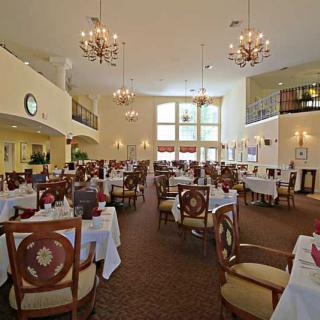
 Dining room
 Fully furnished
 Garden
 Housekeeping services
 Move-in coordination
 Outdoor space
 Telephone
 Wi-Fi/high-speed internet available
 Phoenix Sky Harbor International (19 miles away)
 24-hour supervision
 Activities of daily living assistance
 Assistance with bathing
 Assistance with dressing
 Assistance with transfers
 Diabetes diet
 Meal preparation and service
 Medication management
 Special dietary restrictions
 Transportation arrangement (medical)
 Transportation to doctors appointments
 Competitive pricing with private bathrooms and high-acuity, incontinence care.



 Comprehensive Insights into Activities of Daily Living (ADLs) and Their Assessment
 Guiding Elderly Parents Who Refuse Assisted Living: 6 Practical Steps
 Your Comprehensive Guide to Luxury Assisted Living: Elevated Facilities, Amenities, and Costs