Warm Springs Rehabilitation Hospital Of San Antonio
Warm Springs Rehabilitation Hospital Of San Antonio is a nursing home community in San Antonio, TX.
Information last verified:
5101 Medical Drive, San Antonio, TX 78229
For more information about senior living options: (866) 208-4318
4.1 from 120 reviews
5 stars
81
4 stars
5
3 stars
12
2 stars
4
1 stars
18
Overall Review of Warm Springs Rehabilitation Hospital Of San Antonio
differentiator38 reviews mention this
Therapy teams are a highlight
Residents frequently describe PT and OT as highly professional and motivating.
Across many reviews, residents and families point to physical and occupational therapy as the reason recovery felt possible, including help with mobility, transfers, and learning daily skills. Several comments call out specific therapists and describe them as knowledgeable, compassionate, and willing to push when appropriate. Even when other parts of the stay were criticized, reviewers often emphasize that the therapy itself was strong.
caveat22 reviews mention this
Nursing communication and follow-through
Several reviewers raise concerns about nursing responsiveness and care-plan consistency.
A recurring concern is that residents or families had trouble getting timely help, clear updates, or consistent follow-through on what was planned. Some reviews mention delayed starts, difficulty reaching staff, or staff seeming unaware of the residentā€™s current needs. There are also critiques about medication handling, call button response time, and day-to-day attention, even as some nursing staff are praised by name in other reviews.
differentiator7 reviews mention this
Wound care and hyperbaric support
Wound care and hyperbaric teams earn especially strong praise from multiple reviewers.
Several reviews highlight wound care staff as compassionate and skilled, describing attention to wound dressing changes and comfort during the process. A subset also mentions hyperbaric support and credits the full wound-care team for making the experience feel manageable. In these same comments, residents thank named clinicians and express confidence in the care provided.
common10 reviews mention this
Dining quality is mixed
Dining receives both compliments and complaints in resident reviews.
Some reviewers say the food was good or excellent, while others report meals were disappointing, missing items, or difficult to get consistently. A few comments describe needing food preferences honored and frustration when it was not followed through. Overall, dining comes across as variable, with staff sometimes working to accommodate while other experiences fell short.
common13 reviews mention this
Rooms and cleanliness come up often
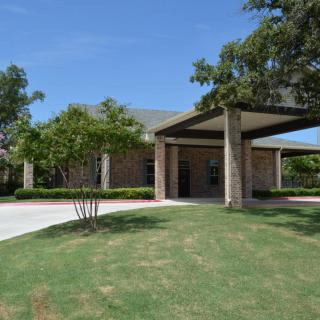
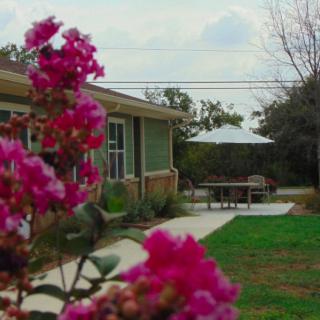
Many residents mention a clean, comfortable setting.
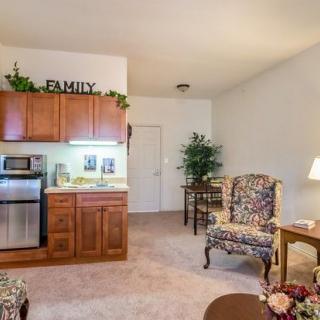
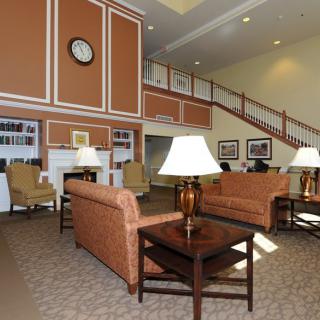
Multiple reviews describe the facility as clean, comfortable, and well kept, with friendly interactions across the environment. Several also note private rooms and say the overall stay felt organized and smooth. At the same time, a few reviews include negative details involving room conditions and odors, which suggests cleanliness and comfort may not be consistent for every stay.
How we summarize
Counts show how many written reviews mention each theme; a review can touch several themes, and only frequently mentioned themes are displayed.
Features
Housing
10 resident community capacity
Types of Care
Skilled Nursing Facility
Amenities
Cable or satellite TV
Dining room
Fully furnished
Garden
Housekeeping services
Move-in coordination
Outdoor space
Telephone
Wi-Fi/high-speed internet available
Transportation
San Antonio International (7 miles away)
Care Services
24-hour supervision
Activities of daily living assistance
Assistance with bathing
Assistance with dressing
Assistance with transfers
Diabetes diet
Meal preparation and service
Medication management
Special dietary restrictions
Dining
Diabetes diet
Special dietary restrictions
Activities
Community-sponsored activities
Scheduled daily activities
Nearby Places of Interest
Physicians
Consultants in Pain Management (0.2 miles)
Gastroenterology Consultants of San Antonio (0.4 miles)
Physicians Plaza II (0.6 miles)
Methodist Cardiology Clinic of San Antonio-Transitional Clinic (0.9 miles)
2040 Building (1 miles)
Alamo City Mri (1 miles)
San Antonio Preventive & Diagnostic Medicine (1 miles)
Pharmacies
CVS Pharmacy (0.4 miles)
Walgreens (0.5 miles)
CVS Pharmacy (1.1 miles)
CVS Pharmacy (2.2 miles)
Walgreens (2.3 miles)
CVS Pharmacy (2.3 miles)
Walgreens (2.7 miles)
Hospitals
Audie L. Murphy Memorial VA Hospital (0.6 miles)
Audie L Murphy Memorial Veterans Hospital (0.6 miles)
University Hospital Sky Tower (0.7 miles)
University Hospital (0.7 miles)
St Luke's Baptist Hospital (0.7 miles)
Methodist Hospital (1 miles)
Foundation Surgical Hospital Of San Antonio (1.1 miles)
Parks
Medical Center Volleyball Courts (0.9 miles)
Phil Hardberger Dog Park (5.1 miles)
Phil Hardberger Park (5.2 miles)
Restaurants
Alamo Biscuit Company & Panaderia (1.3 miles)
Pasha Mediterranean Grill (1.7 miles)
The Magnolia Pancake Haus (1.8 miles)
Mama Margies Mexican Restaurant (1.8 miles)
McDonald's (1.8 miles)
Syrian Kitchen (1.9 miles)
Whataburger (1.9 miles)
Theaters
Cinemark San Antonio 16 (1.7 miles)
Regal Huebner Oaks & RPX (2.4 miles)
Alamo Drafthouse Park North (5.1 miles)
Cafes
Starbucks (2 miles)
Places of Worship
St George Episcopal School (4 miles)
Primera Iglesia Bautista Mexicana-San Antonio (4.2 miles)
Linda's caregiving journey for her elderly mother, Joan, is marked by deep love and challenges as she navigates health changes, emotional support, and practical arrangements while learning to prioritize self-care and utilize community resources. Their evolving relationship highlights resilience and the universal themes of empathy and preparedness in caregiver experiences.
The article clarifies common misconceptions about Powers of Attorney (POA), highlighting the necessity of the principal's consent, the limitations on an agent's authority, and the importance of mental capacity when signing. It also distinguishes between various types of POAs, addresses concerns about potential abuse, and emphasizes the need for legal consultation to ensure valid and up-to-date documents.
Get PricingAsk A QuestionSchedule A TourContact Senior Advisor
By clicking submit, you agree to our Partner's Terms of Use. You
also consent to receive calls and texts, which may be autodialed, from our Partner. Your consent is not a condition to
using our Partner's service. Please visit our Partner's Privacy Policy for information about their privacy practices.

 10 resident community capacity
 Skilled Nursing Facility
 Cable or satellite TV
 Dining room
 Fully furnished
 Garden
 Housekeeping services
 Move-in coordination
 Outdoor space
 Telephone
 Wi-Fi/high-speed internet available
 San Antonio International (7 miles away)
 24-hour supervision
 Activities of daily living assistance
 Assistance with bathing
 Assistance with dressing
 Assistance with transfers
 Diabetes diet
 Meal preparation and service
 Medication management
 Special dietary restrictions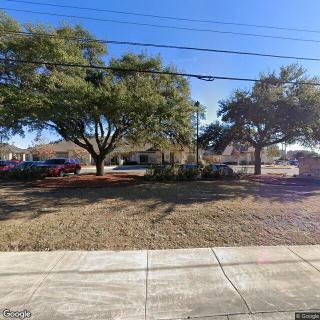
 Strong rehab therapy (PT/OT) and clean, well-equipped facilities.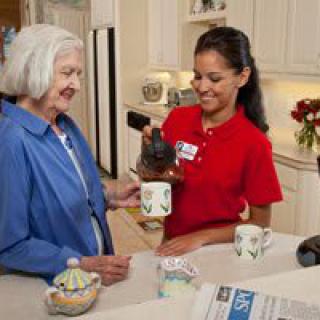
 Nurturing Our Loved Ones: A Daughter's Journey in Caring for Her Mother
 Nurturing Our Elders: Linda's Journey of Supporting Her Mother
 A Comprehensive Exploration of Common Misunderstandings about Powers of Attorney