

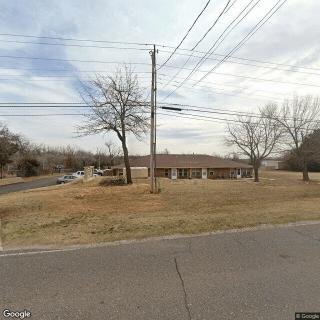
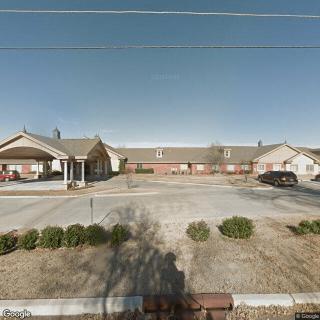
2400 Whites Meadow Drive, Harrah, OK 73045
For more information about senior living options: (866) 208-4318
Overall Review of Harrah Nursing Center
Pros
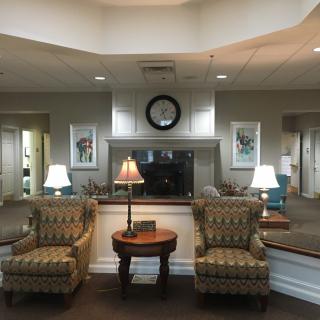
 The rooms are nice and big.
- The staff are nice and seem to enjoy what they’re doing.
- They regularly call family members with updates on residents’ diets.
- The center has caring, informative, and knowledgeable staff across doctors, nurses, aides, social workers, and coordinators.
- They really seem to care about the residents and keep them engaged with activities and projects.
- The residents are often smiling, and the care provided is excellent.
- The cleanliness has improved, and call lights are promptly answered.
- The memory loss unit staff are caring and well-informed.
Cons
 The staff were slow, seemed almost drugged, confused, unprofessional, and of low intelligence.
- The food was horrific, and the staff were zombie-like and unfriendly.
- The staff appear to hate their jobs; it shows.
- It is sad and pathetic for the residents that must stay there.
- The facility is trash and should not be trusted with loved ones.
- The evening shift makes it almost impossible to contact residents by phone, with long holds and frequent hang-ups.
- The staff are rude to families, hide information from them, and do not coordinate well with other caregivers.
Review
Harrah Nursing Center is best suited for families who want a locally accessible, memory-care–focused environment where a loved one can stay close to familiar surroundings and participate in organized activities, with the understanding that ongoing family involvement will help compensate for uneven day-to-day operations. It is not the right fit for those who demand consistently flawless communication, rock-solid safety oversight, and staff stability every shift. If seamless staffing, excellent dining experiences, and a uniformly high level of professional demeanor are non-negotiable, alternatives should be explored rather than assuming a single facility will deliver every goal.
On the plus side, Harrah has several tangible strengths. Rooms tend to be large enough to feel comfortable, and the facility’s Memory Loss Unit provides a defined space where dedicated care teams can coordinate for residents with dementia or related needs. Families report receptive communication around diet and regular updates, which matters when a loved one relies on consistent dietary management. Activity options and social programming appear present, with occasional in-house events that create opportunities for engagement. In the best cases, residents in the unit are described as well cared for by a capable, cohesive team and the overall cleanliness has shown improvement over time.
Yet the loudest and most persistent concerns center on staffing and communication. Several reviews characterize staff as slow, distracted, or disengaged, with callers routinely met by long hold times, unreturned calls, or abrupt, dismissive tones. There are repeated accusations of poor bedside communication with families, including instances of information being omitted or handled inconsistently, and even confrontational or unprofessional exchanges. The evening and after-hours experience appears especially problematic in some reports, which matters when medical or safety questions arise outside regular business hours. These patterns threaten confidence for families who need reliable, timely updates.
Safety and resident handling emerge as another critical fault line. Histories of residents being left unattended in hallways, limited real-time monitoring, and inconsistent follow-through on safety checks generate serious questions about day-to-day risk management. Food quality is another commonly cited drawback, with some families labeling meals as unpalatable or inconsistent, an issue that compounds broader concerns about overall care quality. Taken together, these elements do not simply reduce satisfaction; they can undermine trust and force families to re-evaluate whether the environment is truly capable of meeting long-term safety and well-being needs.
The weighing of pros and cons points to a clear reality: the care value in Harrah hinges on selective strengths that may offset some risks, provided rescue margins are maintained through active family participation and a disciplined on-site leadership approach. For families who can remain involved, insist on direct lines of communication, and prioritize a memory-care setting with dedicated staff, the facility can deliver meaningful support and meaningful moments for a loved one. For others, especially those who cannot tolerate frequent communication gaps, require rock-solid safety oversight, or demand consistently outstanding dining and staff responsiveness, consider alternatives that demonstrate steadier daily operations and a firmer commitment to resident safety.
In the end, Harrah Nursing Center should be evaluated as a local, memory-focused option with real pockets of care and engagement, tempered by notable inconsistencies in staffing and communication. Prospective families should enter with a clear plan: request a robust point of contact, confirm expectations for daily and emergency updates, scrutinize staffing levels on evenings and weekends, and verify safety protocols in the hallways and common areas. If these guardrails can be established and maintained, the community can be a viable match for memory-care needs near home. If not, it is prudent to widen the search to facilities with a demonstrably more predictable cadence of communication, staffing stability, and resident safety.
 100 resident community capacity
 Skilled Nursing Facility
 Air-conditioning
 Beauty salon
 Cable or satellite TV
 Computer center
 Dining room
 Fitness room
 Fully furnished
 Gaming room
 Garden
 Housekeeping services
 Kitchenette
 Move-in coordination
 Outdoor space
 Private bathrooms
 Restaurant-style dining
 Small library
 Telephone
 Wellness center
 Wi-Fi/high-speed internet available
 Will Rogers World (25 miles away)
 Community operated transportation
 12-16 hour nursing
 24-hour call system
 Activities of daily living assistance
 Assistance with bathing
 Assistance with dressing
 Assistance with transfers
 Diabetes diet
 Medication management
 Mental wellness program
 Special dietary restrictions
 Concierge services
 Planned day trips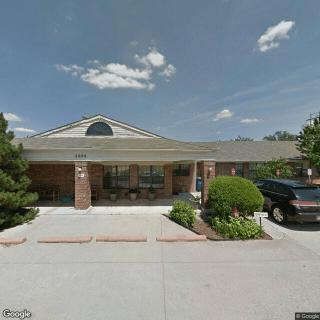



 Comprehensive Insights into Palliative Home Care: What It Is and What to Expect
 Skilled Nursing Facilities vs. Nursing Homes: Making Sense of the Differences
 A Detailed Examination of Nursing Home Costs Across the U.S.