
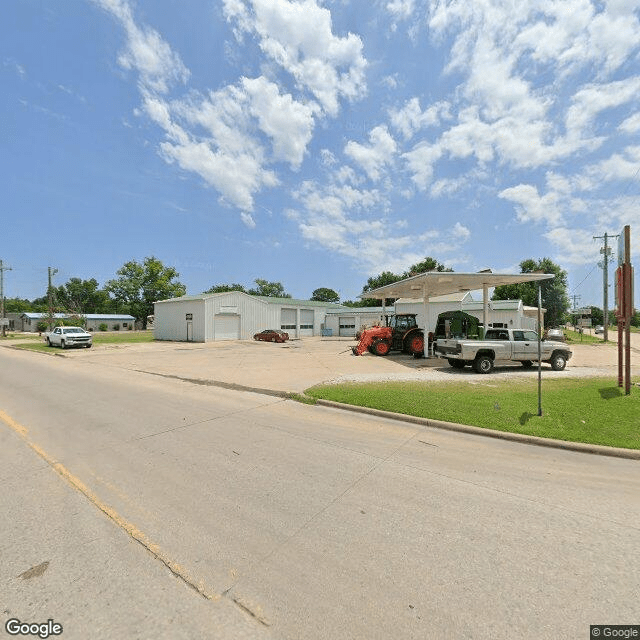
Highway 100, Gore, OK 74435
To contact a resident: (918) 489-2299
For more information about senior living options: (866) 208-4318
Overall Review of Community Health Care of Gore
Pros
 The Gore Nursing Center staff are top notch, kind, and caring.
- The facility is consistently clean and meets residents' needs.
- The staff genuinely care about residents' recovery, demonstrated by their actions.
- The team is compassionate about resident care and takes pride in their work.
- They offer flexible schedules and fair wages.
- The facility is a great place to learn the profession and is wonderful to work with.
- They provide effective physical therapy and great patient care.
Cons
 There was no response from S Montgomery after the caller left their number.
- The reviewer notes poor employee pay.
- The reviewer expresses no tolerance for negligence.
- They would not put their stepdad there.
- They claim the facility tells applicants they are called to start, but never actually follows through.
- They describe the staff as irresponsible, careless, and rude.
Review
Community Health Care of Gore is best suited for families seeking a nursing- and rehab-focused setting where hands-on care and daily clinical attention take priority. The facility earns its strongest approval from those who need post-acute recovery after a hospital stay and want a team that shows up every day ready to support physical therapy, wound care, medications, and monitoring. Clean, well-maintained spaces and a culture that emphasizes compassionate interaction make this a practical choice for families who value steady, attentive care over glitz or exercise in branding. For long-term residents without pressing rehabilitation needs, this community remains solid, but the core mandate, nursing fidelity and active recovery, should be the lens through which the decision is made.
The strongest positives are grounded in the people who deliver care. Frontline staff and administration are consistently described as kind, capable, and genuinely engaged with residents’ recovery. Families note that the center’s daily operations revolve around meeting needs promptly, with staff who take pride in what they do and show care through actions, not slogans. The environment supports recovery well: the facility is clean, organized, and conducive to rehabilitation activities. Therapy services, particularly physical therapy, are highlighted as effective, contributing to meaningful progress. These advantages are reinforced by acceptable turnover and a culture that values mentorship and learning for staff, which often translates into more reliable day-to-day care for residents.
Yet there are meaningful cautions. A subset of reviews flags inconsistencies in how concerns are handled at the administrative level, including difficulties with outreach and responsiveness from leadership. Some observers describe encounters with staff as rude or careless, and one professional reviewer raises concerns about pay practices and what was characterized as negligent treatment. The presence of strongly negative voices, including a few one-star experiences, cannot be ignored. Taken together, these mixed signals suggest that while patient care can be excellent, the experience can hinge on specific shifts, departments, or personal interactions with management and certain staff members.
Those positives offset the risks most effectively when the focus remains squarely on care quality and recovery trajectory rather than on administrative assurances alone. If a resident’s primary need is robust nursing oversight and consistent rehabilitation progress, the strong clinical team and clean environment can deliver tangible value even amid occasional administrative gaps. Families should proactively establish a clear line of communication, identify a primary contact, request regular progress updates, and meet the administrator or director of nursing to understand how concerns are escalated and resolved. In practice, this means asking pointed questions during tours about staffing ratios during peak hours, and requesting examples of how care plans are updated in response to therapy milestones.
Alternatives are worth considering for families who prioritize administrative reliability, transparent finance conversations, or specialized memory- and behavior-focused care. If predictable communication and a consistently responsive leadership style top the list, other communities may better meet those expectations. For families with complex needs, including memory care, high-acuity medical requirements, or tighter budgets, the choice may hinge on whether a facility can guarantee a more uniform administrative experience or provide clearer guarantees around care coordination and billing. It is prudent to compare written policies, tour multiple times, and seek up-to-date references from current families about how administrative concerns are handled in practice.
In the end, this Gore community stands as a pragmatic, capable option for recovery-focused care and hands-on nursing, with enough warmth and clean, functional space to support strong outcomes. The decision should rest on the resident’s rehabilitation goals, the family’s tolerance for potential administrative gaps, and the willingness to insist on a clear, reliable point of contact for ongoing updates. Prospective residents should schedule a visit with the director of nursing, request to observe a therapy session, and meet with current families to hear how care coordination is managed over time. If these confirm consistent, compassionate care and workable communication channels, theCenter represents a solid fit; if not, exploring options with more predictable administration may be the wiser path.
 Skilled Nursing Facility
 Activities on-site
 Devotional services off-site
 Indoor common areas
 Ambulatory care
 Diabetic care
 Meals provided

 Understanding the Sandwich Generation: Stress and Responsibilities for Multigenerational Caregivers
 8 Essential Assistive Devices for Older Adults
 Navigating the Financial Road to Nursing Home Care: In-Depth Guidance and Resources