Heartland At Promedica Flower Hospital Campus in Sylvania, OH
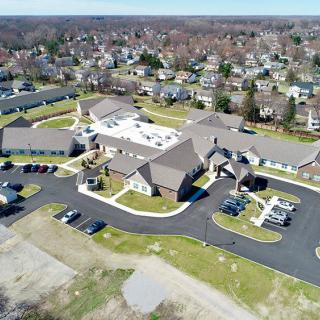
Heartland At Promedica Flower Hospital Campus is a nursing home community in Sylvania, OH.
Information last verified:
5360 Harroun, Sylvania, OH 43560
For more information about senior living options: (866) 208-4318
2.8 from 119 reviews
5 stars
47
4 stars
5
3 stars
4
2 stars
2
1 stars
61
Overall Review of Heartland At Promedica Flower Hospital Campus
common17 reviews mention this
Staff care is often praised
Many reviewers describe staff as kind, attentive, and professional during visits.
Across multiple reviews, people singled out individual nurses, techs, and other caregivers for being calming, efficient, and focused on comfort. Several also describe good communication and feeling supported from arrival through discharge, including for overnight or inpatient stays. Not every review is positive, but positive staff impressions show up repeatedly in the set of comments.
caveat13 reviews mention this
Emergency visits can feel slow
A recurring complaint is long emergency-room waits with limited updates.
Many reviews describe sitting for hours in lobbies, hallways, or waiting rooms before being seen, sometimes without timely communication. Some reviewers also connect the delays to problems with triage, check-in, or perceived lack of urgency. A few comments add that they left for another facility or chose not to return after the wait and follow-through they experienced.
caveat4 reviews mention this
Psych ward experiences are mixed
Reviews describe both supportive mental-health care and alarming psychiatric experiences.
Some reviewers reported positive experiences in the psych ward, including helpful staff and learning coping skills. Other comments are sharply negative, describing traumatic treatment during psychiatric crises, including being restrained and prevented from using a phone, or being held while feeling it was inappropriate. Taken together, the mental-health experiences described range from genuinely helpful to deeply distressing.
common4 reviews mention this
Cleanliness shows up as inconsistent
Reviewers mention both clean conditions and serious cleanliness concerns.
A number of reviews describe clean environments and friendly staff, including during ER visits and calmer periods. At the same time, there are also reports of dirty rooms and even a bed-bug concern, which stands out as a major negative. Because both types of comments appear in the review set, cleanliness can’t be described uniformly from residents’ accounts.
How we summarize
Counts show how many written reviews mention each theme; a review can touch several themes, and only frequently mentioned themes are displayed.
Features
Housing
120 resident community capacity
Types of Care
Skilled Nursing Facility
Amenities
Air-conditioning
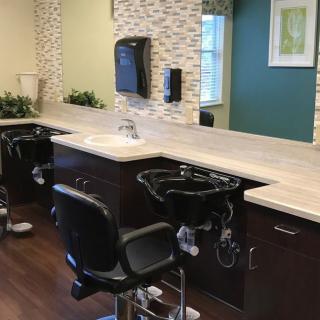
Beauty salon
Cable or satellite TV
Computer center
Dining room
Fitness room
Fully furnished
Gaming room
Garden
Housekeeping services
Kitchenette
Move-in coordination
Outdoor space
Private bathrooms
Restaurant-style dining
Small library
Telephone
Wellness center
Wi-Fi/high-speed internet available
Transportation
Toledo Express (10 miles away)
Community operated transportation
Transportation arrangement
Transportation arrangement (non-medical)
Transportation to doctors appointments
Care Services
12-16 hour nursing
24-hour call system
24-hour supervision
Activities of daily living assistance
Assistance with bathing
Assistance with dressing
Assistance with transfers
Diabetes diet
Meal preparation and service
Medication management
Mental wellness program
Special dietary restrictions
Dining
Diabetes diet
Special dietary restrictions
Activities
Community-sponsored activities
Concierge services
Fitness programs
Planned day trips
Resident-run activities
Scheduled daily activities
Nearby Places of Interest
Hospitals
ProMedica Hickman Cancer Center (0.1 miles)
Regency Hospital of Toledo (1.3 miles)
Saint Anne Mercy Hospital (2.2 miles)
Surgery Center At Regency Park (2.4 miles)
ProMedica Wildwood Orthopaedic and Spine Hospital (2.8 miles)
Mercy Health - St Anne Hospital Pharmacy Anticogulation Coumadin Clinic (3.6 miles)
Pharmacies
Kroger Pharmacy (0.2 miles)
Rite Aid (0.7 miles)
Rite Aid (1.5 miles)
CVS Pharmacy (2.1 miles)
CVS Pharmacy (2.3 miles)
Sylvania Pharmacy (2.4 miles)
Kroger Pharmacy (2.4 miles)
Restaurants
Fricker's (0.3 miles)
Burger King (0.4 miles)
Taco Bell (0.5 miles)
McDonald's (0.6 miles)
Inside The Five (0.7 miles)
Sidelines (1 miles)
Mancy's Italian Grill (1.5 miles)
Physicians
Tao, Stanley Dr - Stanley Tao, MD , MPH (0.8 miles)
Palliative home care focuses on improving the quality of life for individuals with serious illnesses by providing comfort, symptom management, and emotional support in their own homes. This approach includes personalized care plans, regular assessments, and resources for family caregivers, all while prioritizing person-centered treatment that aligns with patients' goals.
Skilled nursing facilities (SNFs) provide high-level medical care and rehabilitation for short-term recovery, typically covered by Medicare after hospitalization, while nursing homes focus on ongoing custodial care for chronic conditions, mainly funded by Medicaid or private payments. The staffing and regulatory structures differ significantly between the two, necessitating clarity for families in choosing appropriate long-term care options.
Nursing home care costs in the U.S. vary significantly based on location, level of care, and amenities, with private room prices ranging from approximately $6,700 to over $30,000 monthly. Families need to explore various payment options and conduct thorough research to manage these expenses effectively.
Get PricingAsk A QuestionSchedule A TourContact Senior Advisor
By clicking submit, you agree to our Partner's Terms of Use. You
also consent to receive calls and texts, which may be autodialed, from our Partner. Your consent is not a condition to
using our Partner's service. Please visit our Partner's Privacy Policy for information about their privacy practices.

 120 resident community capacity
 Skilled Nursing Facility
 Air-conditioning
 Beauty salon
 Cable or satellite TV
 Computer center
 Dining room
 Fitness room
 Fully furnished
 Gaming room
 Garden
 Housekeeping services
 Kitchenette
 Move-in coordination
 Outdoor space
 Private bathrooms
 Restaurant-style dining
 Small library
 Telephone
 Wellness center
 Wi-Fi/high-speed internet available
 Toledo Express (10 miles away)
 Community operated transportation
 12-16 hour nursing
 24-hour call system
 Activities of daily living assistance
 Assistance with bathing
 Assistance with dressing
 Assistance with transfers
 Diabetes diet
 Medication management
 Mental wellness program
 Special dietary restrictions
 Concierge services
 Planned day trips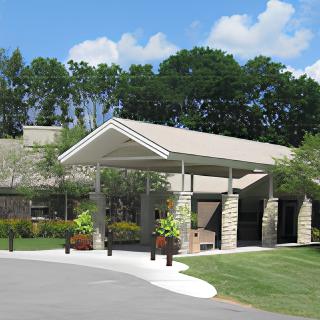
 Friendly, professional staff and pleasant, well-maintained apartments.


 Comprehensive Insights into Palliative Home Care: What It Is and What to Expect
 Skilled Nursing Facilities vs. Nursing Homes: Making Sense of the Differences
 A Detailed Examination of Nursing Home Costs Across the U.S.