
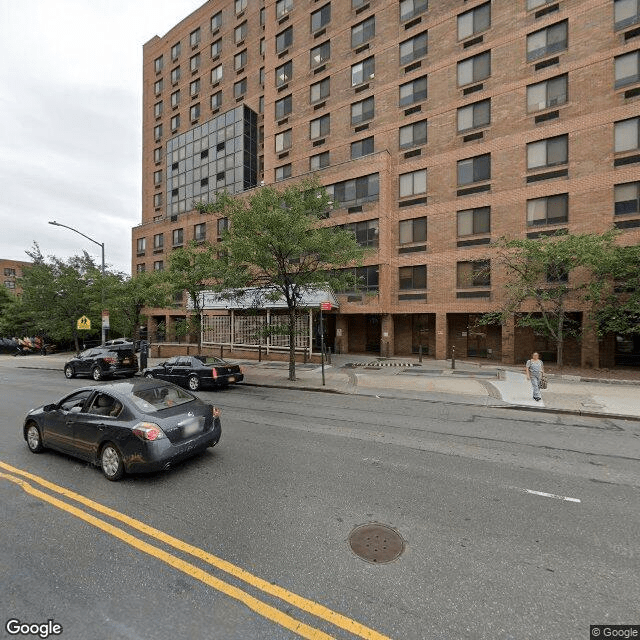
100 W Kingsbridge Rd, Bronx, NY 10468
To contact a resident: (718) 579-0500
For more information about senior living options: (866) 208-4318
Overall Review of Jewish Home & Hospital
Pros
 The Plaza Rehab and Nursing Center seemed like a nice place for rehab after a hip replacement.
- The Alzheimer’s unit was described as clean, with staff who were engaged and knew all the residents, and with aides who cared for him like family.
- The staff were noted to care for residents with compassion, including moments where they showed emotional support.
- The staff at Jewish Home Lifecare were professional and treated residents with dignity and respect.
- Jewish Home Lifecare – Bronx was praised for being convenient, very clean, with a beautiful dining area and a park-like setting.
Cons
 The Plaza Rehab and Nursing Center has atrocious communication; staff do not answer calls or return messages.
- Residents are left in bed all day, and therapies are shortened and rushed.
- The facility is severely understaffed, with as few as one CNA for an entire floor and one nurse for twenty patients.
- The place is filthy, with mice reported in the dining hall.
- Families are not informed about COVID cases, and communications are vague and inconsistent.
- It took a whole month to transfer paperwork between floors, making families feel held hostage.
- The care experience is dehumanizing, with limited attention and little empathy from staff.
- It is not recommended for anyone seeking quality care.
Review
This community is best viewed as a fit for families who value an urban setting with a traditional, established feel and who are prepared to stay actively involved in daily care. It tends to attract residents who are relatively stable and can benefit from routine rehabilitation, but only if a vigilant advocate is available to monitor therapy quality, medical follow-up, and day-to-day responsiveness. For families seeking consistently high-touch rehab, rapid communication, and reliably proactive staff, alternatives should be seriously considered.
The strongest positives noted are uneven but real: in certain units, particularly on memory-care pathways, aides form meaningful bonds with residents and can deliver compassionate care. The physical environment is frequently described as clean and orderly, with a pleasant dining area and convenient access to local amenities, which supports outings and socialization. These features matter, yet they do not compensate for the pervasive problems that recur across many reviews: chronic understaffing, gaps in communication, and therapy that is inconsistently delivered or rushed. When these core issues arise, they undermine progress and erode trust.
Rehabilitation quality and medical oversight emerge as the most inconsistent dimensions. When a resident's functional status aligns with staff capacity, therapy can proceed in a workable fashion; but once mental or physical status declines, there is a pattern of reduced effort and limited progress. The consequence is unpredictable outcomes: some residents improve slowly, others stagnate or regress, and families report delays in doctor input or missed follow-ups. This variability makes it difficult to rely on steady progress, which is a central concern for anyone evaluating post-acute care or long-term rehab needs.
Operational realities and family communications compound the concerns. A clean facility and courteous public areas do not erase the sense that front-desk staff can be absent, phone lines sit unanswered, and multiple departments fail to synchronize updates. In practice, a single floor with too few CNAs or a lone nurse can become overwhelmed, slowing routine tasks, hygiene, medication administration, and even basic care. The result is a persistent feeling that administrative processes outrun clinical care, with families left chasing information and waiting for calls that do not come promptly.
Safety and dignity hinge on proactive advocacy, and the reviews repeatedly underline how essential that is. Instances of delayed fall responses, uncertain explanations after medical events, or lapses in daily living tasks create real anxiety for families and residents alike. Not every resident experiences these failures, but the frequency of reports about gaps in care, and even unsettling notes about the cleanliness of common areas, signal a risk profile that deserves careful scrutiny before committing to placement.
For decision-makers, the practical path is clear. Seek a facility with transparent, verifiable staffing levels, a clearly defined rehab program, and predictable channels for family communication and updates. Ask blunt questions about nurse-to-resident ratios, the typical therapy hours per week, the cadence of physician rounds, and the protocol for daily progress notes. If the answers feel evasive or the facility cannot guarantee timely, informative responses, alternatives should be pursued. For families willing to stay actively involved, plan for ongoing bedside or video updates, designate a dedicated liaison, and insist on concrete, written care plans with measurable milestones. For those who cannot tolerate such variability, exploring other Bronx options with stronger staffing, more consistent rehab delivery, and a proven track record of reliable family communication is not just prudent, it is essential.
 Skilled Nursing Facility
 LaGuardia (6 miles away)






 Understanding the Sandwich Generation: Stress and Responsibilities for Multigenerational Caregivers
 8 Essential Assistive Devices for Older Adults
 Navigating the Financial Road to Nursing Home Care: In-Depth Guidance and Resources