
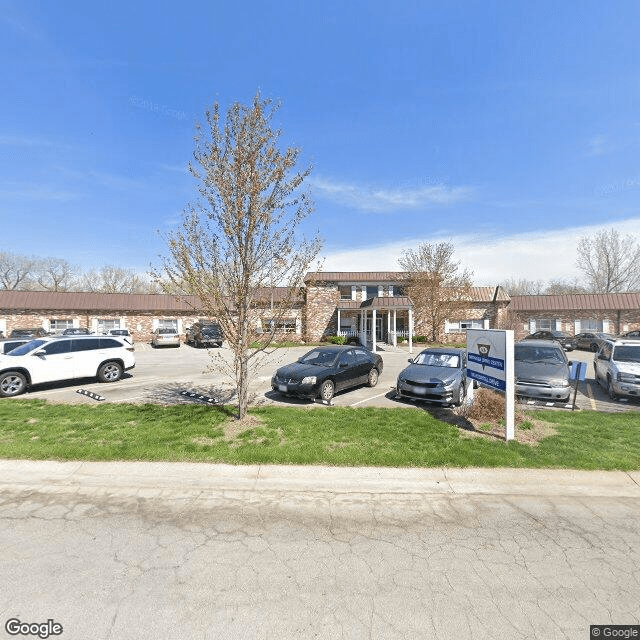
106 Hospital Drive, Smithville, MO 64089
For more information about senior living options: (866) 208-4318
Smithville Living Center Costs & Pricing
Smithville Living Center offers competitive pricing for its private room accommodations, with a monthly cost of $3,717. This rate not only positions the facility as an appealing option within Platte County, where the average cost for similar private rooms is $4,498, but also undercuts the statewide average in Missouri of $4,483. The pricing at Smithville Living Center reflects a commitment to providing quality care while remaining accessible to families seeking long-term care solutions. This favorable comparison highlights the center's dedication to affordability without compromising on the services offered to residents.
| Floor plans | Smithville Living Center | Platte County | Missouri |
|---|---|---|---|
| Private | $3,717 | $4,498 | $4,483 |
Skilled Nursing Facilities with a similar price nearby
-
About the same

Gower Convalescent Center
$3,750 to $4,050 / month16.3 miles away -
from +$483 / mo
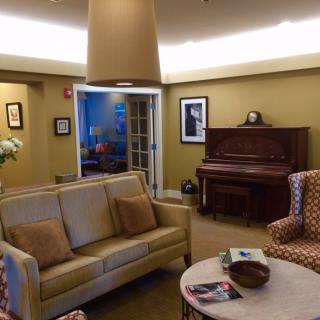
The Piper
$4,200 / month22.1 miles away -
About the same

Norterre
$3,800 to $5,700 / month11.1 miles away -
from -$417 / mo

Twin Oaks Retirement Community
$3,300 to $5,340 / month18.3 miles away -
from -$117 / mo

Liberty Health And Wellness
$3,600 to $4,600 / month11.0 miles away
Overall Review of Smithville Living Center
Pros
 The facility is described as a great place to land after a serious accident.
- It has shown care and a personal touch.
- It has a small-town feel.
- Residents feel they are being cared for.
- The staff are friendly and attentive.
- The environment is relaxing.
Cons
 The facility is described as the worst facility ever.
- The facility discharged a patient with no home plan and no medications.
- The reviewer calls the facility “pretty crappy” and not in a good stage, implying poor care.
- The facility is deemed inferior to others such as Monterey Park or Riverside Nursing and Rehab.
- Employees are unfriendly, and the facility is criticized for poor communication and not returning phone calls or fulfilling promises.
- The facility is accused of prioritizing money over patient care in a corporate-run setting.
Review
Smithville Living Center is best suited for seniors who prize a quiet, small-town atmosphere and personal attention from staff, particularly those who are recovering from a serious medical event and need hands-on support without intensive medical complexity. The facility’s charm lies in its approachable, homey feel and a staff that appears friendly and engaged with residents. For families seeking a calm, low-stress healing environment where residents are encouraged to stay active and connected, this center can be a comfortable transitional setting. It is less appropriate, however, for those who demand meticulous discharge planning, rigorous medication management, or strong, consistent administrative oversight from a centralized leadership team.
There are clear alternatives families may want to consider when evaluating Smithville Living Center. Facilities with a track record of reliable discharge planning and prompt administrative communication are worth weighing, especially for residents who require coordinated transitions from hospital to home care. Names mentioned by others in similar situations include Monterey Park and Riverside Nursing and Rehab, which are often perceived as offering more dependable post-acute planning and more consistent follow-through on promises. For families prioritizing stringent medication oversight, documented care plans, and a more structured governance approach, these options tend to present more predictable risk management and accountability.
The standout positives at Smithville Living Center, the small-town warmth, the perceived personal touch from staff, and the environment that promotes relaxation and social interaction, do carry real value for healing and emotional well-being. When residents are engaged, encouraged to rise and participate, and treated with courtesy, recovery can feel smoother and less isolating. These pros can offset some daily frustrations and create a home-like cadence that reduces anxiety during a fragile recovery. Yet the benefits are fundamentally offset by operational gaps that undercut safety and continuity of care, especially during critical transitions or medication management.
The most troubling drawbacks surface in discharge planning and communication. Reports describe instances of abrupt transitions, including a patient discharged without a clear home plan or an adequate medication regimen, which raises serious safety concerns. Complaints about unfriendly or unresponsive staff, and a sense that promises or commitments from administration are not reliably fulfilled, further erode trust. The perception of a corporate-driven structure, with headquarters out of state, can intensify concerns about responsiveness and individualized attention. Taken together, these cons pose real hazards for vulnerable residents and create anxiety for families monitoring complex post-acute needs.
Practical steps define the evaluation path for families considering this community. First, request a meeting with the facility administrator to review the center’s discharge planning processes, medication management protocols, and care coordination practices. Seek a concrete sample care plan for a post-acute resident, and verify the frequency and quality of physician and therapy oversight. Ask to speak with current residents’ families or a resident representative about communication responsiveness and accountability. During a tour, observe staffing levels during peak times, note how staff interact with residents, and inspect how safety and daily living activities are facilitated. Finally, review state regulatory surveys and any recent corrective actions to gauge ongoing quality control beyond the surface impression.
In the end, Smithville Living Center may serve well for families seeking a warm, low-stress setting with attentive caregiving and a calm atmosphere, provided that expectations around discharge planning, medication oversight, and administrative responsiveness are managed proactively. For families where reliable transitions, transparent communication, and strong governance are non-negotiable, stronger alternatives should be prioritized. If certainty in care continuity matters most, consider Monterey Park or Riverside Nursing and Rehab as benchmarks and use them as a yardstick during visits, ensuring the chosen option delivers both the comforting environment and the indispensable reliability required for post-acute and long-term needs.
 100 resident community capacity
 Skilled Nursing Facility
 Air-conditioning
 Beauty salon
 Cable or satellite TV
 Computer center
 Dining room
 Fitness room
 Fully furnished
 Gaming room
 Garden
 Housekeeping services
 Kitchenette
 Move-in coordination
 Outdoor space
 Private
 Private bathrooms
 Restaurant-style dining
 Small library
 Telephone
 Wellness center
 Wi-Fi/high-speed internet available
 Kansas City International (9 miles away)
 Community operated transportation
 24-hour call system
 Activities of daily living assistance
 Assistance with bathing
 Assistance with dressing
 Assistance with transfers
 Diabetes diet
 Medication management
 Special dietary restrictions
 Concierge services
 Planned day trips



 Weight Training for Seniors: Building Strength and Vitality
 Understanding the Sandwich Generation: Stress and Responsibilities for Multigenerational Caregivers
 8 Essential Assistive Devices for Older Adults