
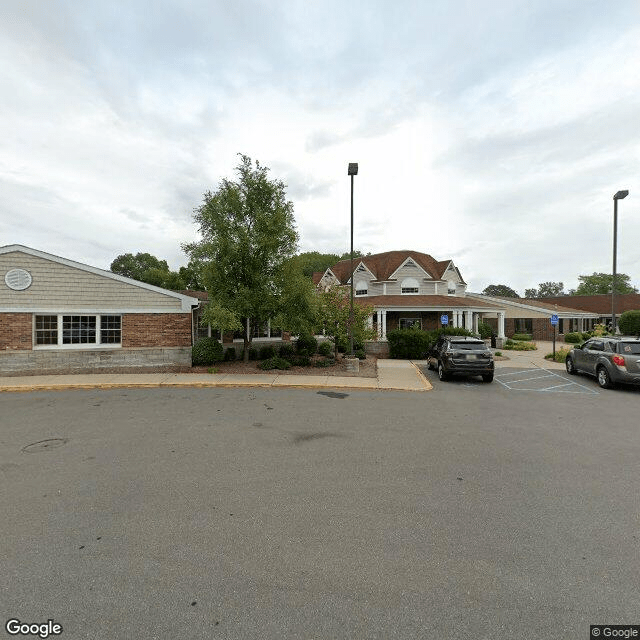
22950 Northline Rd, Taylor, MI 48180
To contact a resident: (734) 287-1230
For more information about senior living options: (866) 208-4318
Overall Review of Taylor Total Living Ctr
Pros
 The facility offered a range of activities, including bingo, magicians, memory games, and manicures.
- Church services were available for residents.
- Families reported being very happy with the rehab experience there.
- It provided engaging programs that contributed to a positive atmosphere.
Cons
 The facility’s rooms and equipment are outdated and small.
- The hospital bed controls lack a button to call nurses or to control the TV.
- There is no phone in the rooms.
- There is no basket for soiled linens and towels.
- The kitchen staff give patients what they think they need, not what’s on the menu, and the trays are frequently wrong.
- Although there is a menu in the room to choose alternatives, the staff do not follow it.
- They do not check blood work and vitals on a daily basis.
- Not able to access a port.
Review
Taylor Total Living Ctr in Taylor, MI is best suited for seniors who are focused on post-acute rehabilitation and value a structured activity schedule more than modern amenities. The center can work for individuals who want organized therapy, social programming, and routine, especially if daily medical monitoring is not the first priority. It is less appropriate for residents who require frequent bedside medical oversight, high-end room comforts, or consistently cheerful, highly responsive staff interactions. Families seeking a facility with the latest equipment, very private rooms, and a consistently upbeat service mood should consider other options.
The most burdensome gaps apparent across the reviews are related to basic comfort, communication, and medical responsiveness. Rooms and equipment are described as outdated and cramped, with hospital beds lacking a call-button or easy nurse access, and with no in-room telephone to reach caregivers quickly. Such omissions can create friction for residents who rely on timely assistance for mobility, pain management, or simple daily routines. In addition, there is no on-site phone or direct TV control, limiting independent use of personal entertainment and urgent contact with family or clinicians.
On the flip side, the rehabilitation and activity structure appears to be a real asset. Reviewers who used the rehab services report meaningful engagement through a mix of traditional and special programming, bingo, memory games, magicians, manicures, and regular church services, suggesting a vibrant social calendar that can aid mood and cognitive stimulation. While staff mood is described as not particularly buoyant, the care team is perceived as capable given the high-needs population, and the presence of purposeful activities provides a tangible counterbalance to some architectural shortcomings.
Still, the strong points do not fully offset the main drawbacks. The clinical oversight concerns loom large: reports indicate irregular daily vitals checks and inconsistent blood work monitoring, which raises questions about medical continuity and safety for residents with evolving or complex health needs. Dining appears to be another friction point, with reports of menu preferences not consistently reflected on trays and a kitchen staff that often misses the intended selections. These issues undercut the rehab-focused benefit by compromising overall daily satisfaction and confidence in everyday care.
Families should explicitly weigh whether a rehab-centered environment with a lively activity lineup aligns with the resident’s priority: meaningful therapies and social engagement versus a higher comfort standard, more robust bedside attention, and more predictable clinical monitoring. If a resident values modern conveniences, private rooms, and seamless in-room communication as a baseline expectation, alternatives should be explored. Conversely, for a senior who judges recovery programming and daily engagement as the dominant factors, Taylor Total Living Ctr offers a practical, if imperfect, setting.
Practical next steps include requesting a tour focused on therapy spaces, dining operations, and a resident room that illustrates current equipment and accessibility. Ask directly about nurse-call protocols, the availability of in-room telephones, and how TV or other controls are managed. Inquire about the dining process: who approves tray substitutions, how often menus are updated, and what remedies exist if a meal doesn’t arrive as planned. Finally, gather recent staff stability and patient outcome information, and compare with nearby facilities that offer newer rooms, stronger daily medical oversight, and equally solid rehab programs to ensure the best match for the resident’s priorities.
 Skilled Nursing Facility
 Detroit Metropolitan-Wayne County (5 miles away)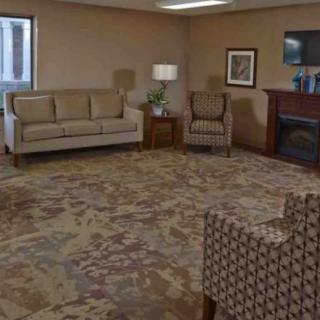



 Exploring Palliative Care in the Home: A Comprehensive Overview
 Comprehensive Insights into Palliative Home Care: What It Is and What to Expect
 Skilled Nursing Facilities vs. Nursing Homes: Making Sense of the Differences