
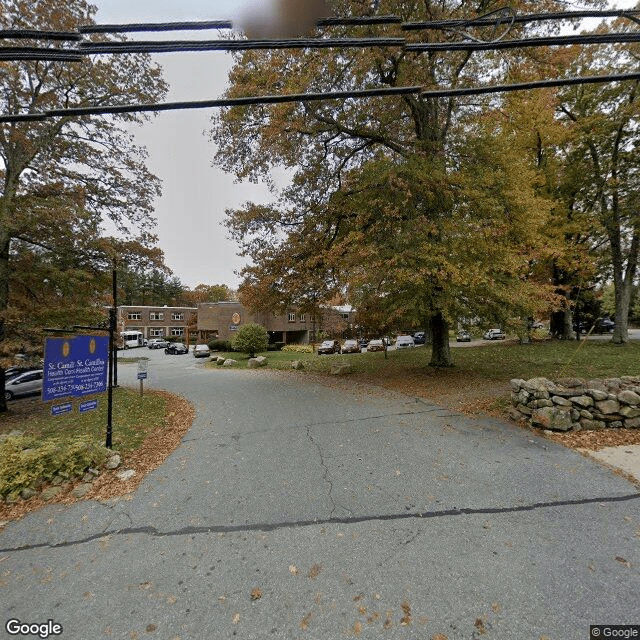
447 Hill St, Whitinsville, MA 01588
To contact a resident: (508) 234-7306
For more information about senior living options: (866) 208-4318
Overall Review of St Camillus Nursing Home
Pros
 The staff really cared about the residents.
- It is a lovely place to work.
- The staff treated patients and visitors with kindness and respect.
- The environment was peaceful and the units were very clean.
- The lead finance person really knew what she was doing.
- It is regarded as one of the best care centers available.
Cons
 It seemed like every patient in the facility was on Cymbalta and in a wheelchair.
- They put her on new meds without talking to the medical proxy, basically to keep her and everyone else quiet.
- They went to court and forced the reviewer into a nasty custody battle.
- The Saint Camillus "Debilitation" Center is short staffed, very depressing, and the perfect place to heighten a family member’s decline.
- Suspect they keep their patients overly medicated so they will not press the buzzer.
Review
St Camillus Nursing Home in Whitinsville, Massachusetts is best suited for families that prize a visibly caring frontline staff and a homey, respectful atmosphere where residents are treated with kindness day after day. The community appears to work well for long-term residents who rely on attentive caregiving, appreciate straightforward financial arrangements, and value interactions with staff who know residents by name. It is a reasonable choice for seniors who need sustained, compassionate support, particularly those who may require memory care or end-of-life assistance and who want a facility where caregivers demonstrate genuine warmth and engagement. Those seeking a pristine, ultra-modern campus or intensely oversight-heavy governance may want to consider alternatives.
The strongest, recurring positives center on the people who provide care. Families consistently describe staff as caring, patient, and respectful toward both residents and visitors, with management that emphasizes resident-first principles. Reviews highlight a peaceful, clean environment and a culture of teamwork among the caregivers and clinicians. Financing is repeatedly praised as manageable and competently handled by the financial staff, reducing a common source of family stress in transitions to care. Taken together, these elements create a trustworthy baseline of daily experience: residents are seen, attended to, and treated with dignity, which is not a given in many other facilities.
However, the track record is not uniformly reassuring, and several reviews raise serious concerns that cannot be dismissed. A 2015 case involving a family medical proxy alleges that medications were adjusted without consent, culminating in a hospital evaluation that revealed severe malnutrition and dehydration and ultimately lasting tragedy for the resident. The reviewer’s ongoing blame reflects the damage such events cause to trust and underscores the imperative for families to demand meticulous oversight, transparent decision-making, and prompt, clear communication from all levels of the operation. This episode stands as a potent reminder that individual experiences can diverge sharply, and that safeguarding a loved one requires proactive advocacy and documented care plans.
On the rehab and stabilization side, another stark contrast appears. A separate account characterizes the facility’s rehabilitation unit as short-staffed, depressing, and conducive to decline if relied upon without vigilant monitoring. The accusation that patients might be overmedicated to suppress alarms or requests for help introduces a fear that the very levers intended to restore function could instead erode independence and dignity. These reports should not be dismissed as isolated; they point to systemic risks that can overwhelm a family’s ability to ensure patient-centered, timely care, especially during periods of acute need or transition.
Despite the cautions, the positive testimonials provide a meaningful counterweight. One aunt’s relative describes a facility that felt like “the best available” option in its region, praising the people, staff, nurses, and administration, over and over for kindness, respect, and genuine love for residents. A professional observer who trained at St Camillus notes a care-oriented management team, calm surroundings, clean units, and a teamwork culture that supports residents’ growth and well-being. Taken together, these signals suggest St Camillus can deliver high-quality, compassionate care when staffing is sufficient, communication is strong, and care plans are coordinated around the person rather than the schedule.
Bottom line: St Camillus Nursing Home offers a solid foundation for families prioritizing compassionate caregiving, a respectful environment, and straightforward financing. It remains a viable choice for residents who benefit from stable, person-centered care and who can tolerate the possibility of variability in rehab performance or anecdotal concerns about medication practices. For families with heightened caution about medication management, staffing consistency, or oversight during rehabilitation, it is essential to widen the evaluation to alternative communities or insist on stringent, written care protocols, frequent updates, and direct conversations with leadership. In the decision-making process, insist on current staffing ratios, confirm the resident’s care plan in writing, request to meet the front-line team, and seek candid explanations about how choices are made when resident needs shift. A careful, proactive approach will reveal whether St Camillus matches the family’s risk tolerance and care expectations, or if another option better aligns with those priorities.
 Skilled Nursing Facility
 Worcester Regional (15 miles away)


 In-Depth Look at the VA Aid and Attendance Program
 Nurturing Our Loved Ones: A Daughter's Journey in Caring for Her Mother
 Nurturing Our Elders: Linda's Journey of Supporting Her Mother