
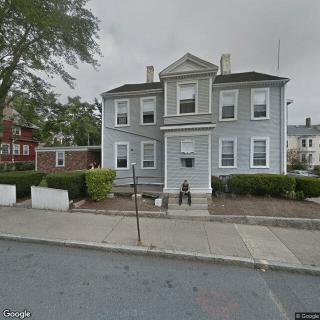
200 Hawthorn Street, New Bedford, MA 02740
For more information about senior living options: (866) 208-4318
Overall Review of New Bedford Jewish Convalescent Home
Pros
 The facility remains great after the name change to Vantage.
- Erin, Leroy, and David were attentive and kind, providing great care.
- Erin is amazing and advocates for her patients.
- The place is old but very clean.
- The housekeeping staff are absolutely lovely and an important part of the healthcare team.
- All the staff and management are great.
- The therapy team was phenomenal, and Gail, the unit manager, helped with whatever was needed.
- The care provided helped the patient return home to their family.
- The staff are wonderful, caring, and great listeners.
- The cleaning staff, laundry, physical therapy, occupational therapy, CNAs, activity staff, social workers, nurses, and behind-the-scenes staff are all hard-working and caring.
- It is the best nursing, convalescent, rehab the reviewer has experienced.
- The staff look past challenging attitudes and provide compassionate care.
Cons
 The facility is not at all like the Jewish home.
- There is a large number of agency nurses.
- Staff morale is very low.
- What needs to get done does not get done.
- Food portions have recently declined.
- Snacks with meds have run out, leaving residents lucky to get a saltine cracker.
- Coffee is only a half cup and cream is rarely available.
- Diabetics are fed an unbelievable amount of sugar.
Review
This community is best suited for seniors who need short-term rehabilitation or convalescent care and who will benefit from a highly engaged therapy team and hands-on, attentive nursing leadership. The facility’s strongest selling point is the therapy program and the staff who actively advocate for residents. Cleanliness remains solid and housekeeping is treated as a valued part of the care team, not an afterthought. For families prioritizing recovery with the goal of returning home, this site offers a compelling package when the primary need is skilled rehab rather than long-term stability.
What stands out most in favor are the therapy services and the people delivering care. Reviews consistently highlight a “phenomenal” therapy team and a unit manager who is responsive to patient needs. The nurse leaders, sometimes singled out by name, are described as attentive and compassionate, with advocacy for patients at the core. Across multiple accounts, staff across disciplines, nurses, CNAs, physical and occupational therapists, social workers, and even housekeeping, are praised for their dedication, reliability, and genuine willingness to support residents in practical, day-to-day ways. This combination creates a recovery-focused environment that can shorten hospital-to-home timelines when rehab is the objective.
However, a meaningful caveat surfaces in the form of staffing consistency and daily operations. One review paints a stark contrast to the others, noting heavy reliance on agency nurses and indicating that “what needs to get done does not get done” amid low staff morale. Such feedback suggests that shifts and staffing mix can swing, potentially affecting routine tasks, timely medication handling, and overall responsiveness. For families evaluating long-term care or residents who require steady, predictable support, this inconsistency is a material consideration. It is not a verdict on care quality across the board, but it is a reality that can color the daily experience.
Nutrition and basic comforts also emerge as potential drawbacks. While overall food quality is described as good, portions have reportedly declined, and the system for snacks with medications has faltered in at least one account. Tiny portions, limited coffee, and minimal cream can feel inconsequential in rehab, yet they matter for appetite, satisfaction, and overall well-being, especially for residents who rely on precise dietary management (such as diabetics) and on consistent, respectful dining service. The alignment between dietary needs and menu execution is not universal in the reviews, signaling that families should verify current meal practices and dietary accommodations before committing.
The advantages, exceptional therapy, strong advocacy, and a culture of attentive care, do not vanish when cons are present; rather, they offset them selectively. For short-term rehab, the depth of therapy and the demonstrated willingness of staff to go the extra mile can translate into meaningful functional gains and safe discharge planning. The clean, well-maintained physical environment and the sense that housekeeping is an integral part of the care team further support recovery. But for those seeking a durable, long-term residence with unwavering staffing consistency and flawless daily operations, these positives may not fully counterbalance the potential variability in staffing and the nutrition-related concerns described.
Families weighing options should plan a candid, on-site conversation that probes staffing patterns, especially the mix of agency versus full-time staff, and the facility’s current approach to nutrition management. Ask to meet the therapy team and the DON or unit manager to understand how they monitor quality and address gaps when they arise. Request explicit examples of how meal plans are customized for diabetics and how snack and medication routines are handled on different shifts. Consider contrasting this community with other local options that emphasize stable staffing and dependable daily routines if long-term residency or highly predictable care is a priority. A carefully timed visit will reveal whether the current strengths align with the resident’s specific recovery goals and daily care expectations.
 80 resident community capacity
 Skilled Nursing Facility
 Air-conditioning
 Beauty salon
 Cable or satellite TV
 Computer center
 Dining room
 Fitness room
 Fully furnished
 Gaming room
 Garden
 Housekeeping services
 Kitchenette
 Move-in coordination
 Outdoor space
 Private bathrooms
 Restaurant-style dining
 Small library
 Telephone
 Wellness center
 Wi-Fi/high-speed internet available
 Marthas Vineyard (23 miles away)
 Community operated transportation
 12-16 hour nursing
 24-hour call system
 Activities of daily living assistance
 Assistance with bathing
 Assistance with dressing
 Assistance with transfers
 Diabetes diet
 Medication management
 Mental wellness program
 Special dietary restrictions
 Concierge services
 Planned day trips




 Essential Knowledge on Pneumonia in Older Adults
 Exploring Palliative Care in the Home: A Comprehensive Overview
 Comprehensive Insights into Palliative Home Care: What It Is and What to Expect