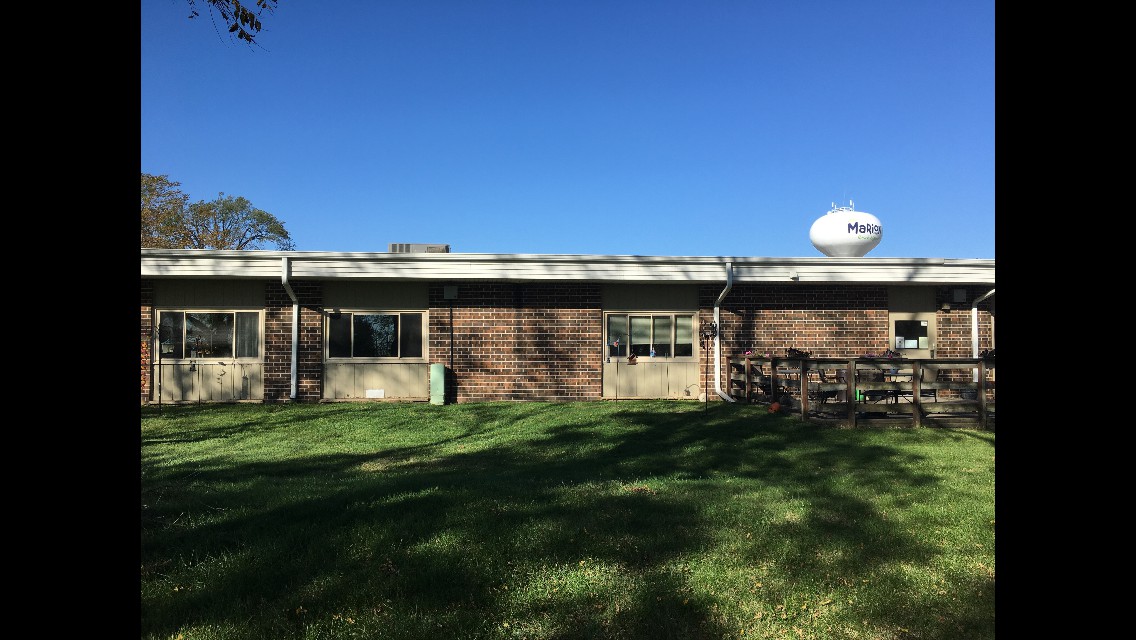
455 31St Street, Marion, IA 52302
For more information about senior living options: (866) 208-4318
Overall Review of Willow Gardens Care Center
Pros
 Willow Gardens such a nice place for dad.
- The aids brighten his day, joking with him to get him up and moving in the morning.
- His care has been so good, he had such a time taking care of himself at home and then he moved here and they have helped him so much.
- He likes the food, especially the cake that the kitchen makes, and the cooking club that the activity department does.
- There is something for him to do every day.
- Staff is kind to my friend, and has been keeping his spirits up ever since visits got limited for COVID.
- The food is good and the people who work there are nice.
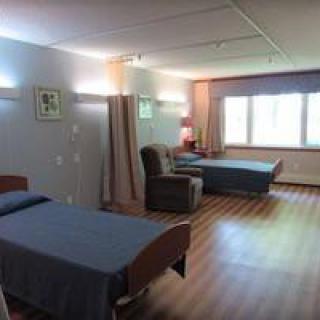
- The rooms are bright, with big windows.
- Activities are always going on, mostly games and music.
- Nell the social worker has been great at helping me navigate applying for Medicaid, to keep this affordable.
- Staff is friendly.
- Activities lady, Jody, does a great job keeping up with activities that everybody enjoys, even on weekends.
- Care staff is kind.
- The food is always good.
- They have activities every day, including weekends.
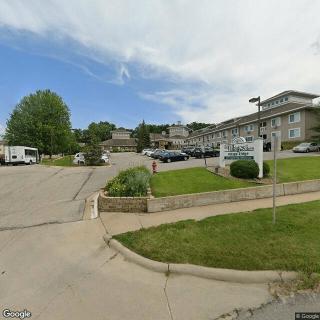
- The building is all one level, and all of it is wheelchair accessible.
- Willow Gardens Care Center offers a van with a wheelchair lift to get residents out to outings, activities and appointments.
- It had good care, lots of activities, and happy people in it.
Cons
 They are very disrespectful, and they kicked me out of the nursing home when my mom was dying from dementia.
- The service was poor in Willow Gardens.
- The meals were served and then wheeled back out within about 10 minutes, and the food was lackluster.
- The rooms were overcrowded.
- The staff talk in the hallway openly about how unfairly they’re treated, and the owner should shut it down.
- The administrator Cassie was involved in overbilling and told the family to pick up their loved one if they didn’t like it.
Review
Willow Gardens Care Center in Marion is best suited for seniors who need daily assistance but do not require intensive medical supervision, and for families who value an active, sociable environment at an affordable price. The building is all on one level and wheelchair-friendly, with a lift-equipped van for outings, helping residents stay connected to the community. The program emphasizes daily activities, music, games, and club-style experiences alongside regular meals the kitchen staff takes pride in. Medicaid and Medicare are accepted, and rooms range from semi-private to private, offering some budget flexibility. In short, it serves budget-conscious families seeking liveliness and livable care rather than upscale refinement.
Those evaluating Willow Gardens should consider alternatives if high clinical needs or pristine privacy are priorities. The reviews show a noticeable quality spread, and management issues reportedly surface in some cases, including concerns about discharge decisions and billing. For a loved one with advanced dementia or fragile end-of-life needs, Willow Gardens may not provide the steady oversight or crisis responsiveness some families require. Families who expect quiet, meticulous housekeeping or modern, renovated spaces may prefer other options. The facility’s age and its multi-generational footprint can be a strength for social life, yet a drawback for those chasing a newer, more polished feel.
The strongest positives are staff warmth, a design that supports mobility, and a robust activity slate that keeps residents engaged daily. Aides are described as attentive and uplifting, with staff who help residents get moving in the morning. The activity team, including noted organizers, keeps weekends busy with games and music, and the kitchen delivers meals that residents appreciatively enjoy. The presence of a social worker who can navigate Medicaid adds practical value, and the all-on-one-floor layout plus wheelchair-accessible transportation reduces friction for mobility. These advantages often translate into a brighter daily experience, even if some rooms feel compact or the building shows its age.
Yet the facility carries significant caveats that cannot be dismissed. Some reviews recount experiences of disrespect or questionable administrative handling, including a distressing report of a discharge during a loved one’s end-of-life phase. Billing disputes and communication gaps have colored certain family experiences, signaling potential governance inconsistencies. The building’s age and room configurations, mostly semi-private with some crowding, give the impression of a budget option rather than a polished environment. Cleanliness, while fair, is not uniformly praised, and housekeeping staffing is frequently noted as lean. These factors matter because they shape daily comfort and the ability to maintain a dignified routine for residents.
Families evaluating Willow Gardens should conduct a thorough on-site evaluation before deciding. Observe how staff interact with residents and whether call bells are answered promptly. Request a current care plan and ask how changes are communicated to families. Secure a clear breakdown of room types, rents, and what is included in Medicare/Medicaid coverage, and probe any past or ongoing billing disputes. Review the activity calendar in detail and verify transportation schedules and accessibility. Speak with several residents and family members to gauge consistency of care and to understand how the facility handles emergencies and daily routines. Arm with concrete questions and a clear sense of what matters most in the resident’s daily life.
Ultimately, Willow Gardens offers a viable option for families prioritizing affordability, mobility-friendly design, and an active social environment. The main caveats, signs of administrative friction, occasional care-quality inconsistencies, and an older physical plant, mean alternatives should be considered for those demanding seamless privacy, flawless housekeeping, and very high clinical oversight. If choosing Willow Gardens, approach with clear expectations, structured oversight, and a plan to stay engaged with staff and management. For others, shortlist newer or better-rated facilities with stronger reputations in dementia and end-of-life care, and use the findings here as a concrete benchmark during tours and negotiations.
 91 resident community capacity
 Skilled Nursing Facility
 Air-conditioning
 Beauty salon
 Cable or satellite TV
 Computer center
 Dining room
 Family education and support services
 Fitness room
 Fully furnished
 Gaming room
 Garden
 Housekeeping services
 Kitchenette
 Located close to restaurants
 Located close to shopping centers
 Move-in coordination
 Outdoor patio
 Outdoor space
 Private bathrooms
 Restaurant-style dining
 Small library
 Telephone
 Wellness center
 Wi-Fi/high-speed internet available
 Eastern Iowa (12 miles away)
 Community operated transportation
 24-hour call system
 24-hour nursing
 Accept incoming residents on hospice
 Activities of daily living assistance
 Administer insulin injections
 Assistance with bathing
 Assistance with dressing
 Assistance with transfers
 Care with behavioral issues
 Dementia waiver
 Diabetes diet
 Medication management
 Mental wellness program
 Physical therapy
 Preventative health screenings
 Respite program
 Same day assessments
 Special dietary restrictions
 Transportation arrangement (medical)
 Concierge services
 Planned day trips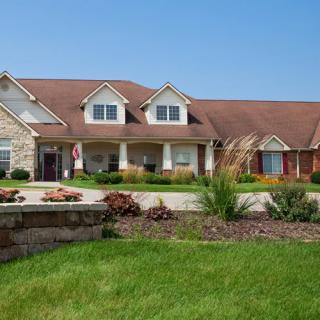

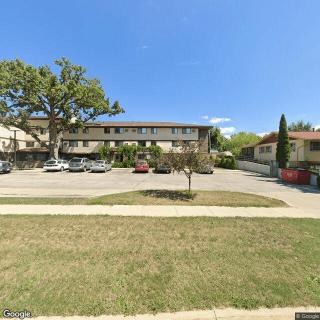




 Comprehensive Guide to Medicare Coverage for Hospice Care
 Caring for Those Who Care: Recognizing, Understanding, and Overcoming Caregiver Burnout
 Caregiver Exhaustion: Recognizing the Signs and Restoring Your Well-Being