
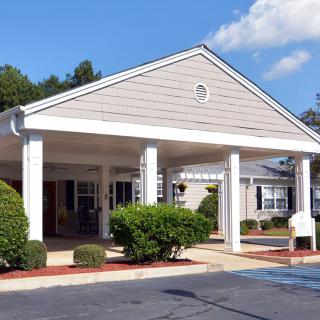
921 Old Newnan Road, Carrollton, GA 30117
For more information about senior living options: (866) 208-4318
Overall Review of The Oaks - Carrollton Skilled Nursing
Pros
 The Oaks was clean and nice.
- The staff were fabulous, very helpful, and kind.
- The Oaks offered three meals a day with snacks, and meals could be enjoyed in the dining room or in the room.
- Residents could walk to the dining area with a walker and sit at the same table each day, with a printed lunch menu offering choices.
- There were activities available, contributing to a lively community.
- The Oaks provided a clean, homey environment with good care and good-tasting food.
Cons
 Some staff were not good.
- The rooms were too small, with two people in a one-person room.
- There was not enough space for residents to live; bathrooms had to be shared and the doors were heavy.
- There was very limited space for clothing.
- There were no clearly marked numbers on the doors, making it hard to find rooms.
- The mother felt confined to her room for an extended period after check-in and was not being processed.
Review
The Oaks in Carrollton is best suited for seniors who need short-term skilled nursing with attentive wound care, a clean, home-like environment, and a staff that can deliver consistent daily support. It works well for families that value reliable meal service, the option to dine in a shared dining room or in-room meals, and a reasonably intimate setting where staff can know residents by name. For recovery or convalescence, the combination of clean rooms, practical routines, and a built-in activities program provides the kind of steady, supervised pace that supports healing. Proximity to home is a meaningful plus, enabling frequent visits and hands-on involvement in daily care decisions.
Those who should consider alternatives are residents who prize expansive private living space, greater privacy, or a layout with more straightforward wayfinding. Several reviews note room sizes that feel cramped, including shared bath arrangements and limited closet or clothing storage. If private rooms and easier navigation are non-negotiables, families may prefer newer or larger facilities with more clearly marked doors and better spatial segregation. Additionally, if a broader range of activities beyond religious programming and structured classes is essential, exploring other communities with more diverse social calendars may be wise.
The Oaks’ strengths largely offset its drawbacks when care needs drive decision-making. Cleanliness and a homey ambiance are repeatedly highlighted, and the staff is described as kind, capable, and responsive, capable of managing daily wound dressings and individualized requests. The dining model, three meals daily with the option to eat in a dining room or in-room, adds flexibility, while the open-kitchen concept at The Oaks promotes a sense of availability and freshness in food service. The availability of regular activities, including Sunday programs and Bible studies, plus accessible religious gatherings, helps sustain social ties and a sense of community that can ease transition for families seeking meaning and routine for their loved ones.
On the other hand, the more persistent cons, small, sometimes two-person rooms with shared baths, limited wardrobe space, heavy bathroom doors, and sporadic concerns about some staff performance, can erode satisfaction if space and autonomy are priorities. A notable friction point is inefficient or unclear check-in processes, with one resident feeling effectively confined during early days of admission. When memory or recovery-related challenges are at play, this dynamic can become more consequential, underscoring the importance of clear protocols and proactive communication. In practice, these issues do not negate the overall care quality, but they do cap the facility’s appeal for residents who value seamless logistics and generous personal space.
Social life and family experiences paint a distinctly positive picture of The Oaks when operations run smoothly. Families report consistent, well-informed staff who know the residents and maintain a steady routine, and they frequently note the value of the facility’s activities program and open dining philosophy. The fact that staff, administrators, and long-time residents have built trusting relationships contributes to a stable atmosphere, and families repeatedly mention strong care and good-tasting meals as practical comforts. Where the experience shines, it shines through team coherence, a sense of home, and programs that accommodate both worship and social engagement. These strengths matter deeply for families seeking a place that feels like a reliable village rather than a sterile institution.
For families weighing options, The Oaks presents a compelling package for post-acute care, wound management, and short-term stabilization within a warm, resident-focused milieu. The key decision hinges on space preferences and the value placed on logistics and autonomy. If private rooms, easier navigation, and a broader, more varied activity slate are non-negotiable, it is prudent to compare with alternatives that emphasize larger accommodations and more shopper-friendly check-in flows. If the priority is dependable, compassionate care punctuated by a community life that includes regular religious and social programming, The Oaks delivers decisively. A tour should include a room demonstration, a close look at the check-in process, and conversations about menu flexibility, room configurations, and staff assignments to confirm alignment with specific care goals.
 42 resident community capacity
 Continuing Care Retirement Community (CCRC)
 Skilled Nursing Facility
 Beauty salon
 Cable or satellite TV
 Dining room
 Fully furnished
 Garden
 Housekeeping services
 Kitchenette
 Move-in coordination
 Outdoor space
 Restaurant-style dining
 Small library
 Telephone
 Wi-Fi/high-speed internet available
 24-hour call system
 Activities of daily living assistance
 Assistance with bathing
 Assistance with dressing
 Assistance with transfers
 Diabetes diet
 Medication management
 Mental wellness program
 Special dietary restrictions





 Seniors and Modern Transportation: Exploring Uber, Lyft, and Other Ride-Hailing Options
 Comprehensive Guide to Qualifying for Home Health Care Services
 Powerful Realities of Elder Abuse and the Most Effective Ways to Report It