

107 Park Place Way, Carrollton, GA 30117
To contact a resident: (770) 837-0078
For more information about senior living options: (866) 208-4318
R & R Group Home Costs & Pricing
R & R Group Home offers competitive pricing for its accommodations compared to both Carroll County and the broader state of Georgia. The cost for a semi-private room at R & R stands at $2,000, which is significantly lower than the county average of $3,059 and also more affordable than the state average of $2,529. For studio apartments, R & R's rate is $2,500, again reflecting value in comparison to Carroll County's average of $3,578 and Georgia's statewide average of $3,520. When it comes to private rooms, R & R remains competitive with a rate of $2,500 - slightly below Carroll County's $2,750 and somewhat favorable compared to Georgia's average of $2,864. Overall, R & R Group Home positions itself as an appealing option for those seeking quality care at reasonable rates within the region.
| Floor plans | R & R Group Home | Carroll County | Georgia |
|---|---|---|---|
| Semi-Private | $2,000 | $3,059 | $2,529 |
| Studio | $2,500 | $3,578 | $3,520 |
| Private | $2,500 | $2,750 | $2,864 |
Memory care communities with a similar price nearby
-
from +$365 / mo
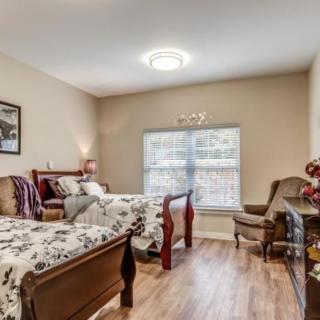
Laurel Glen At Carrollton Senior Living
$2,365 to $5,235 / month2.9 miles away -
from +$200 / mo

Wesley Woods of Newnan - Peachtree City
$2,200 to $3,710 / month23.0 miles away -
from +$295 / mo
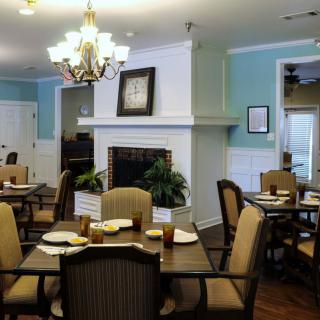
Grace Senior Living
$2,295 to $3,295 / month21.2 miles away -
from -$200 / mo

Bella Gardens Senior Living PCH
$1,800 to $2,500 / month22.7 miles away
Overall Review of R & R Group Home
Pros
 The facility is described as a lovely and happy place.
 - The owner demonstrates a passion for caring for those who cannot care for themselves.
- There are group activities, and every birthday and holiday is celebrated with parties and decorations.
- Great care is taken to monitor health needs and doctor visits.
- The home is a loving, caring environment where residents bond like family.
- Residents enjoy birthday celebrations, movies, and holiday festivities.
- The facility is immaculate in cleanliness.
- The owner treats residents as family and provides attentive care, including doctor visits and outings.
- The experience with R&R is pleasant and rewarding, and the staff truly care for their clients.
- The community is small but well-managed, with residents receiving very good care, staying active, and seeming to enjoy themselves.
Review
R&R Group Home in Carrollton, GA is best suited for families seeking an intimate, home-like setting where a small, devoted team cares for about six residents with a steady, personal touch. The environment feels less like a facility and more like a family residence, thanks to the owner’s evident passion for caring for those who cannot care for themselves. Daily routines are anchored by attentive health monitoring and regular doctor visits, while celebrations of birthdays and holidays punctuate the calendar with warmth. This arrangement strongly benefits seniors who value predictable structure, genuine social connection, and the reassurance of consistent, hands-on oversight.
This option should be weighed by families whose loved ones require more formal medical support or a broader suite of services than a tiny home can plausibly offer. The very advantage of a small community, the close-knit, family atmosphere, also hints at potential limits: programming breadth may be narrower, and access to on-site specialists or memory-care design features is unlikely to match larger facilities. If a resident needs robust rehabilitation services, routine complex medical management, or frequent clinical interventions, alternatives with bigger staffs and more comprehensive clinical capabilities will serve better.
The principal advantages, high staff-to-resident attention, a culture of care that treats residents like family, and consistent celebrations, work in concert to offset the constraints of size. With roughly six residents, staff can tailor daily activities, monitor health needs closely, and respond quickly when changes arise. The owner’s hands-on approach translates into dependable routines, timely doctor visits, and outings that preserve a sense of normal life beyond the home. The cleanliness described as immaculate reinforces a safe, comfortable living environment that supports ongoing well-being.
Beyond basic care, the social fabric of R&R Group Home stands out as a practical, measurable benefit. Residents bond in a way that resembles a familial circle, which translates into improved mood, better communication, and a nicer overall quality of life. Movie nights, routine social activities, and holiday parties create meaningful engagement that many larger facilities struggle to sustain at the same level. In short, the intimate setting not only nurtures companionship but also fosters a steadier emotional state, which can reduce stress for residents and families alike.
That said, the intimate model carries a few inherent trade-offs. A small staff pool can mean slower responses during absences or busy periods, and activity menus will naturally be far more limited than those offered by bigger communities. For residents with complex medical needs, 24/7 skilled nursing oversight, or extensive therapy requirements, this setting cannot replace a traditional skilled-nursing environment. Yet the core strengths, personalized attention, reliable daily care, and a home-like atmosphere, often offset these gaps for families prioritizing comfort, continuity, and daily normalcy over clinical breadth.
Bottom line: R&R Group Home represents a strong, practical choice for seniors who flourish in an intimate, family-style environment and benefit from highly personalized care, steady health oversight, and genuine social engagement. It is ideally suited for residents who value routine, meaningful interaction, and the reassurance that comes from a small, cohesive community. Families should consider alternatives only if advanced medical needs, a broader activity slate, or expansive rehabilitation services are non-negotiable. Prospective buyers should visit, observe daily rhythms, meet the owner and caregivers, confirm staffing depth, and review emergency planning to ensure alignment with care goals and expectations. In the right circumstances, this setting delivers steadiness, dignity, and tangible quality-of-life gains.
 Board and Care Home
 Memory Care
 Activities off-site
 Bath tubs
 Beautician on-site
 Devotional services on-site
 Indoor common areas
 Outdoor common areas
 Private
 Respite or short term stays offered
 Wheelchair accessible showers
 Ambulatory care
 Diabetic care
 High acuity care
 Incontinence care
 Medication management
 Meals provided




 Memory Care Pathways: A Holistic Guide to Dementia Support
 Comprehending Evening Confusion in Dementia: Causes, Manifestations, and Support
 Delirium and Dementia: Unraveling the Key Differences