

1944 W Sunnyside Dr, Phoenix, AZ 85029
To contact a resident: (602) 861-3970
For more information about senior living options: (866) 208-4318
Overall Review of Christian Care Manor
Pros
 She flourished after moving to Christian Care.
- The staff at Christian Care consistently exceeded expectations.
- The daily routine encouraged her to join activities, which she hadn’t done at her previous home.
- They create a warm, loving atmosphere that makes her feel cared for.
- The staff were incredible in preparing her for the holiday visit to Washington.
- They ensured she had warm clothes, medications, and shoes.
- They packed her favorite Christmas jewelry to share with her granddaughter.
- Every employee there deserves praise.
- The reviewer is forever grateful.
Cons
 The reviewer was petrified of her mother's mental decline.
Review
Christian Care Manor in Phoenix is best suited for seniors with memory-care needs who respond best to a warm, highly engaged caregiving culture. The review paints a picture of a community where residents are gently coaxed into social activity, not kept isolated in rooms, and where staff consistently move beyond routine tasks to create meaningful moments. For a parent with early-stage dementia, the environment appears to translate into real improvement in mood, participation, and daily functioning. The emphasis on practical help, packing meds, clothes, and even jewelry for travel, alongside structured activities and a personable, affectionate staff tone, signals a setting that prioritizes livability and dignity over mere supervision. This is a place where care feels personalized, not procedural.
Those considering alternatives should note that Christian Care Manor may not be the right fit for every situation. Families seeking intense medical oversight, highly skilled nursing around the clock, or programs tailored to advanced dementia stages could require a setting with more clinical intensity or specialized memory-care protocols. Similarly, residents who desire minimal daily structure or a more independent lifestyle may find the level of activity and staff-driven engagement at Christian Care Manor too prescriptive. For respite stays or short-term recovery needs, other communities with clearer short-term care options might be preferable. In short, this community excels where people value warmth, proactive involvement, and social engagement as core pillars of care.
The strongest pro, the staff’s reliability and willingness to go “above and beyond” consistently, directly offsets the absence of any stated drawbacks in the account. The review showcases care teams that actively encourage movement out of rooms for games, coordinate travel logistics, and handle practical details with foresight. The ability to prepare a resident for a holiday trip, with warm clothes, medications, and favorite jewelry, illustrates a level of operational fluency and emotional support that is rare to find in ordinary memory-care settings. When the primary concern for families is whether their loved one will be treated with consistent kindness and purposeful attention, these pros largely neutralize potential concerns about impersonal care or neglect.
Beyond the explicit strengths, the care culture itself stands out as the defining feature. The staff’s collaborative approach, anticipating daily needs, integrating residents into activities, and crafting experiences that feel meaningful rather than routine, creates a sense of belonging. The reviewer’s emphasis on the “warm, fuzzy feeling of love” and the sense that every employee deserves praise signals a culture where caregivers are empowered to act with empathy and initiative. For families weighing a move, that culture translates into less stress around transitions and more confidence that the new environment will honor the resident’s history, preferences, and personality.
Practical considerations matter in this decision. The only publicly noted data point is a single five-star rating from one reviewer, which, while compelling, is not a broad consensus. The absence of detail on medical acuity, staffing ratios, daily schedules, or dementia-specialist programs means that families should verify these elements during tours and conversations. Location in Phoenix is convenient for many families, but any transition should include direct observations of staff-resident interactions, a review of activity calendars, and a clear understanding of how emergencies and medical needs are managed. Pricing, contract terms, and availability will also shape whether the positives can be sustained over time.
Bottom line: for families prioritizing a humane, engaged memory-care environment with proactive, deeply involved staff, Christian Care Manor presents a compelling option. The account suggests a community where a resident with early-stage dementia can experience genuine improvement in engagement and mood, supported by logistics-focused and compassionate caregiving. Prospective movers should proceed with targeted questions about medical oversight, dementia-program specifics, and staffing in practice, while arranging a firsthand visit to confirm consistency across shifts and staff interactions. If those criteria align with what the family values most in care, this community warrants serious consideration; if not, exploring alternatives with stronger clinical depth or more independence-oriented models is advisable.
 Skilled Nursing Facility
 Phoenix Sky Harbor International (12 miles away)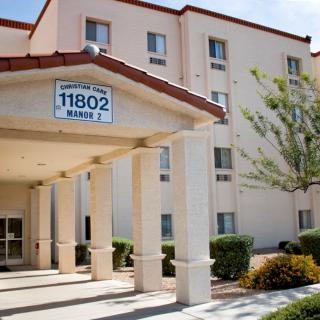



 Engaging Brain Games and Innovative Apps to Keep Senior Minds Active
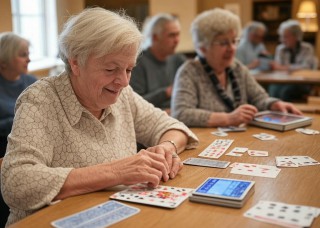 Effective Strategies for Keeping Seniors' Minds Active: A Deep Dive into Brain Games and Apps
 In-Depth Look at the VA Aid and Attendance Program